Smart Adaptive Eyeglasses™
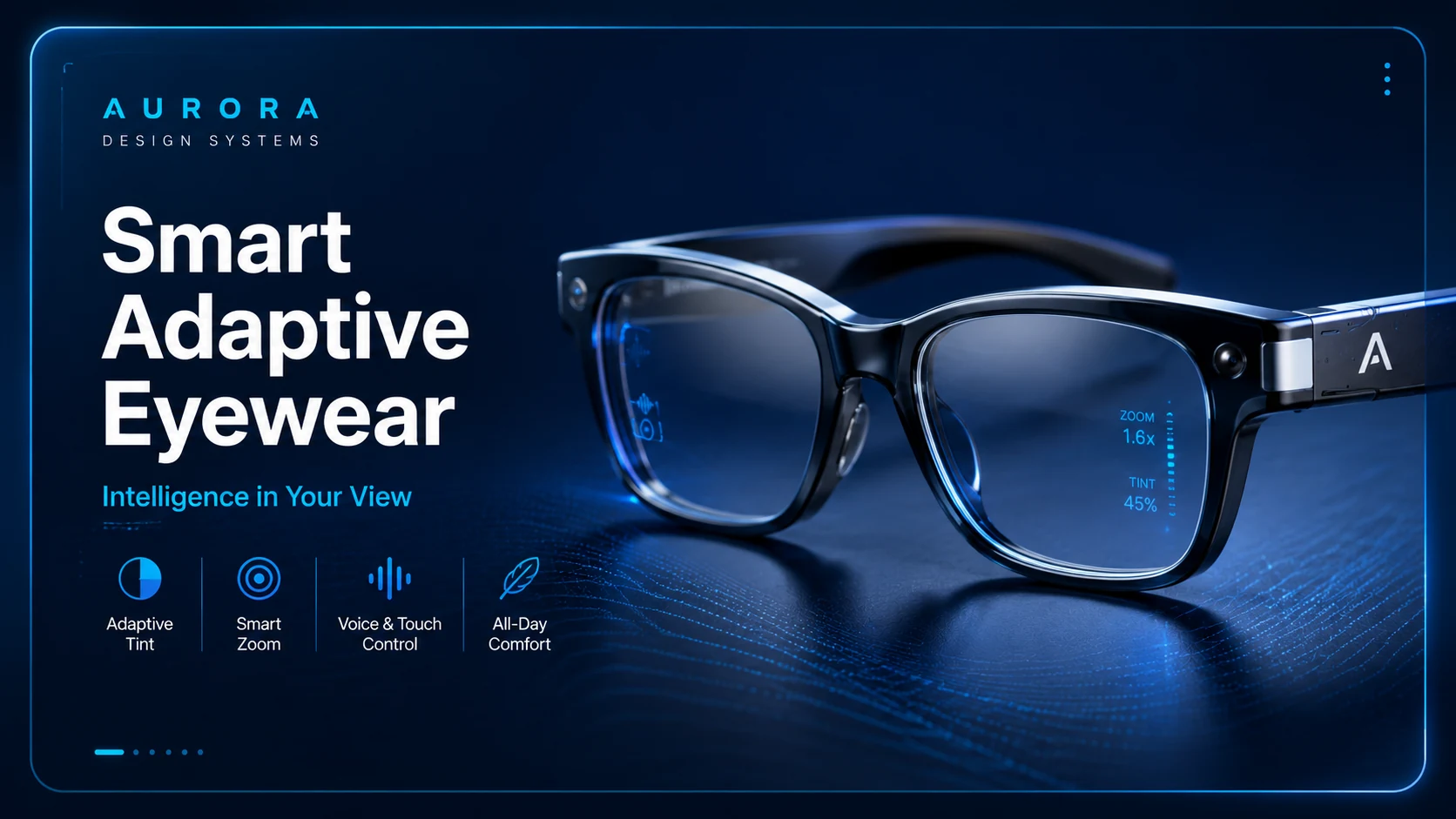
Eyewear that adapts without becoming a headset
The baseline concept stays visually familiar while exploring automatic focus adjustment, adaptive tint, controlled optical zoom and future thin optical architectures. The commercial story is simple: one pair of glasses that can respond to more of the viewing situations people encounter during a normal day.
Product Positioning
Smart Adaptive Eyeglasses are designed to help users see clearly across reading distance, room distance, outdoor distance, and zoom-enhanced viewing without constantly switching between multiple pairs of glasses. The concept emphasizes real-world visual clarity rather than entertainment overlays or headset language.
Core Features
Why someone would buy it
Related Diagnostics Branch
The Dioptron-X Mini concept is treated as a separate portable eye-diagnostics branch that may support future calibration, prescription workflows, rural clinics, home diagnostics, and space-station use cases. It should not be merged into the baseline eyeglasses product until regulatory and medical-device strategy are defined.
Smart Adaptive Eyeglasses webpage copy and rendering brief.
Portable eye diagnostic tool concept for digital prescription and biometric eye scan workflows.
Smart Adaptive Eyeglasses™
Adaptive everyday eyewear focused on optical correction, tint, zoom, and convenience rather than positioning the baseline product as AR or VR glasses.
Many users move between reading, distance viewing, changing light levels, and magnification needs throughout a normal day.
A familiar-looking pair of glasses that explores adaptive focus, instant tint, controlled zoom, and future metalens-based optical architectures.
Everyday eyewear users, aging populations, professionals, travelers, specialty visual-assistance markets, and premium optical channels.
Optical licensing, premium frames, lens-module partnerships, professional channels, and eventual prescription/custom configurations.
The strongest value proposition is not a futuristic headset; it is eyewear that behaves more intelligently while remaining comfortable and socially familiar.
Validate optical quality, eye safety, focus range, tint response, power consumption, weight, durability, ergonomics, and regulatory pathway.