P1–P10 Gate Family
Scale classes, intended use, deployment envelope, and progression from proof hardware to strategic gates.
 AURORA DESIGN SYSTEMSEngineering Systems • Applied Research • Product Architecture
Contact
AURORA DESIGN SYSTEMSEngineering Systems • Applied Research • Product Architecture
Contact
Systems Edition · Technical Design Handbook
Technical Design Handbook
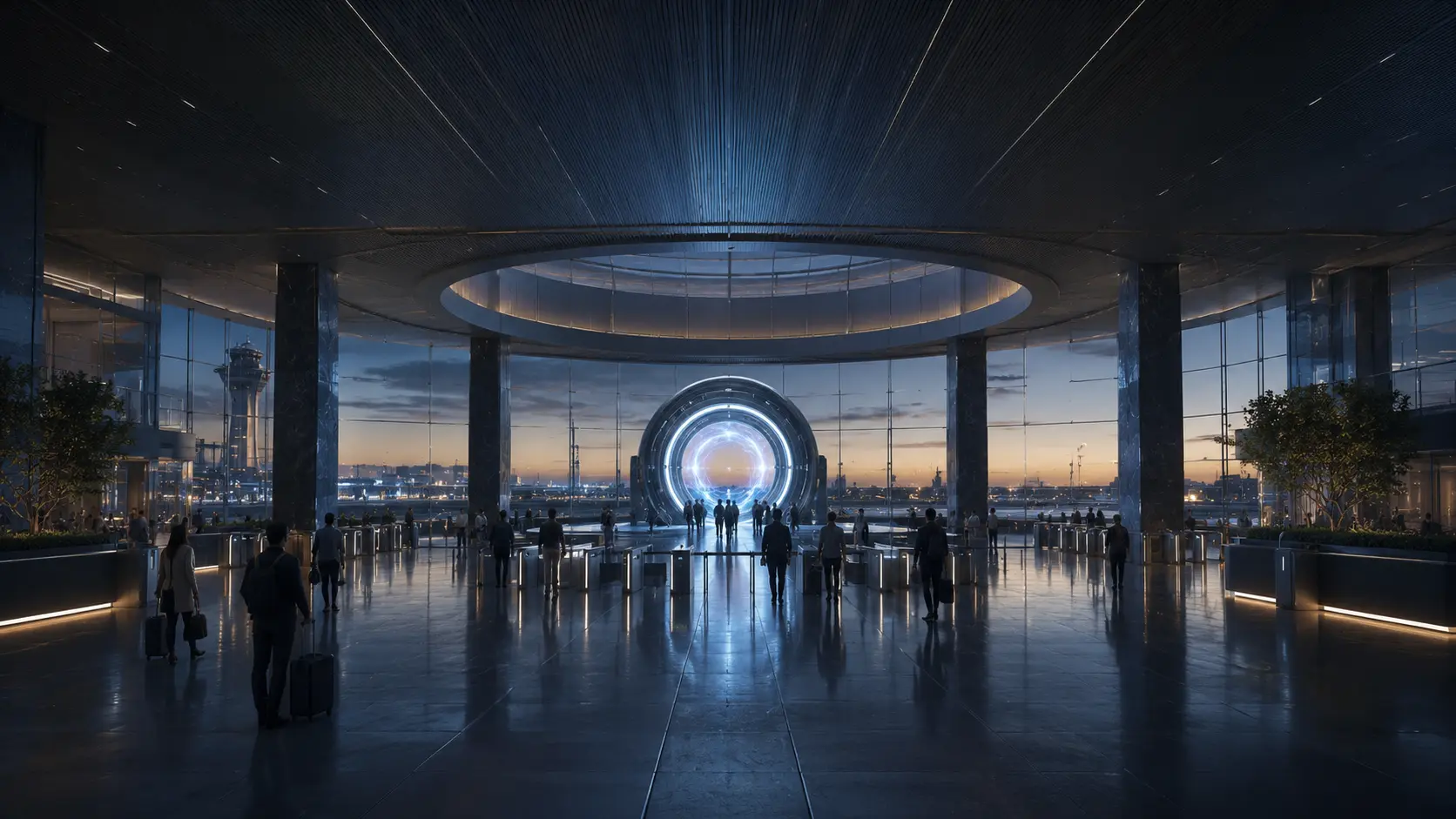
The Systems-side engineering companion for the Portal Planet program: gate classes, passenger and cargo operations, architecture, power, safety, security, global infrastructure, operator interfaces, and eventual off-world expansion.
Technical Design Handbook · Program Map
Each gateway opens a focused part of Portal Planet. The round cards echo the system itself while keeping the public experience readable, organized, and ready for deeper engineering and CGI development.
Systems Handbook Structure
The Studios branch can carry story-facing and people-facing material; this Systems branch is the engineering companion. It focuses on product classes, interfaces, operations, safety, infrastructure, and visualization suitable for design development and CGI reference.
Scale classes, intended use, deployment envelope, and progression from proof hardware to strategic gates.
Readiness states, boarding control, baggage, accessibility, multilingual guidance, and emergency procedures.
Freight handling, hazardous-material controls, industrial interfaces, logistics, and throughput planning.
Paired-terminal organization, destination coordination, public-safe interface boundaries, system integration, and controlled infrastructure relationships.
Readiness states, operator interfaces, human authority, Portal Guide training, degraded service, and emergency recovery.
Energy supply, isolation, interlocks, shutters, verification, aborts, inspections, and lifecycle maintenance.
Identity, authorization, restricted items, logging, border functions, lawful controls, and public oversight.
Global destinations, resilience, cost recovery, infrastructure integration, and staged regional growth.
Later lunar, Martian, orbital, and strategic deployment after terrestrial safety and governance maturity.
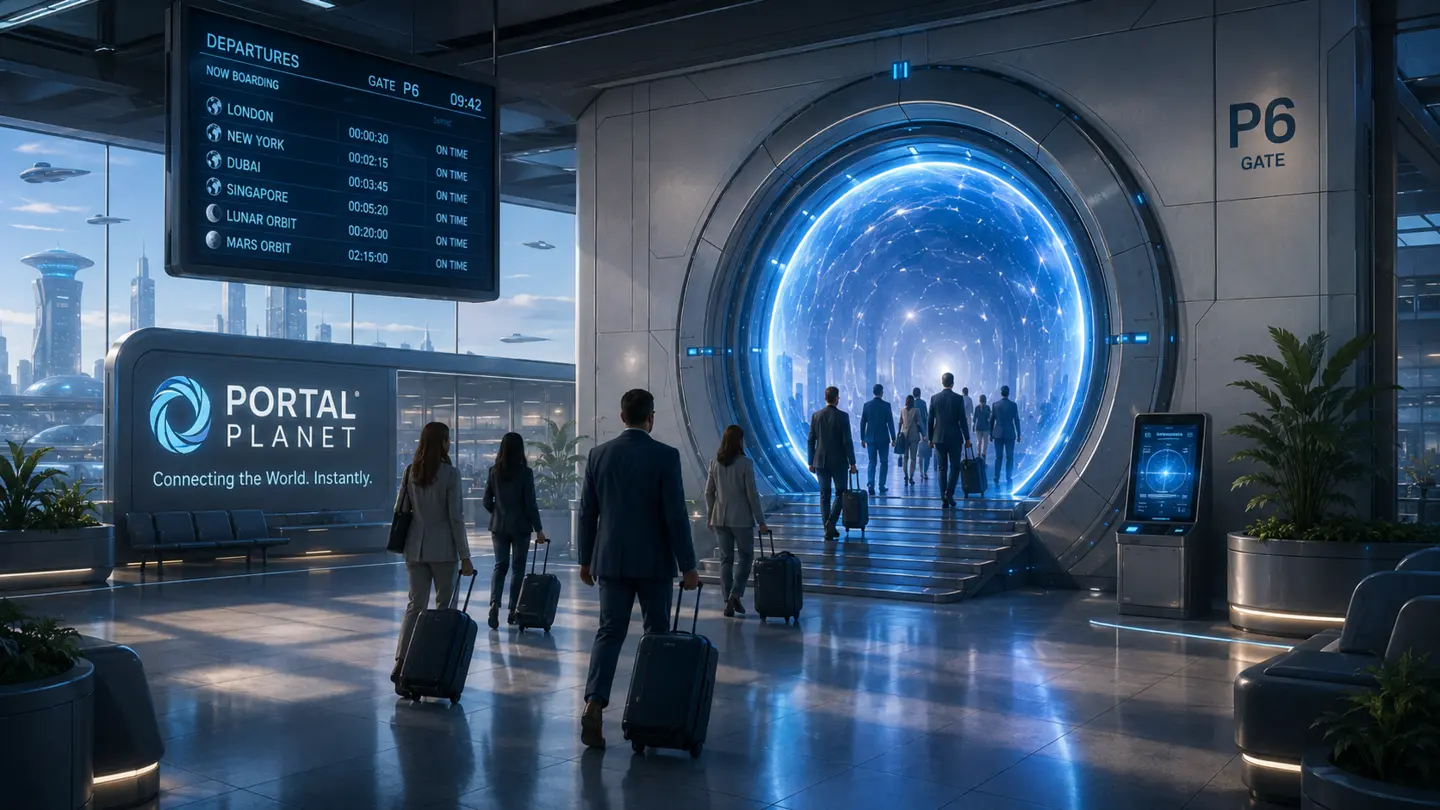
Passenger & commuter networks
Portal Planet begins with a practical question: what could families, hospitals, communities, and businesses do with the time now lost to distance?
Portal product family
The P1–P10 ladder keeps one idea from pretending to be one perfect machine. Each class serves a different scale, environment, risk profile, and public purpose.
Controlled research systems and secure short-range validation.
Human-scale terminals designed to return hours to people and families.
Freight, emergency response, vehicles, and industrial infrastructure.
A future strategic gate class for lunar and Martian operations.
Global destination network
Paired public terminals preserve familiar wayfinding, security, identity, and human scale. The technology may be extraordinary; the passenger experience should feel understandable.
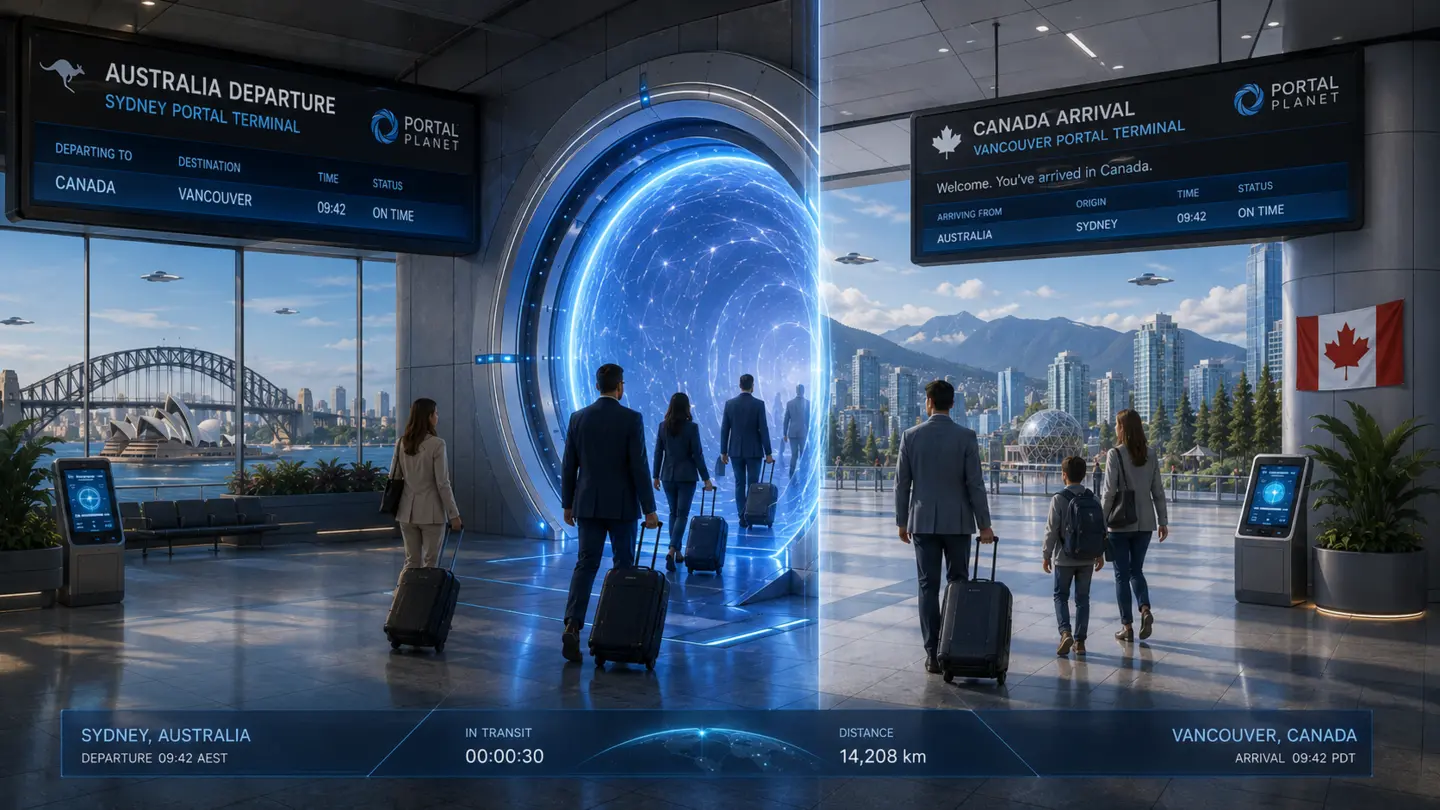
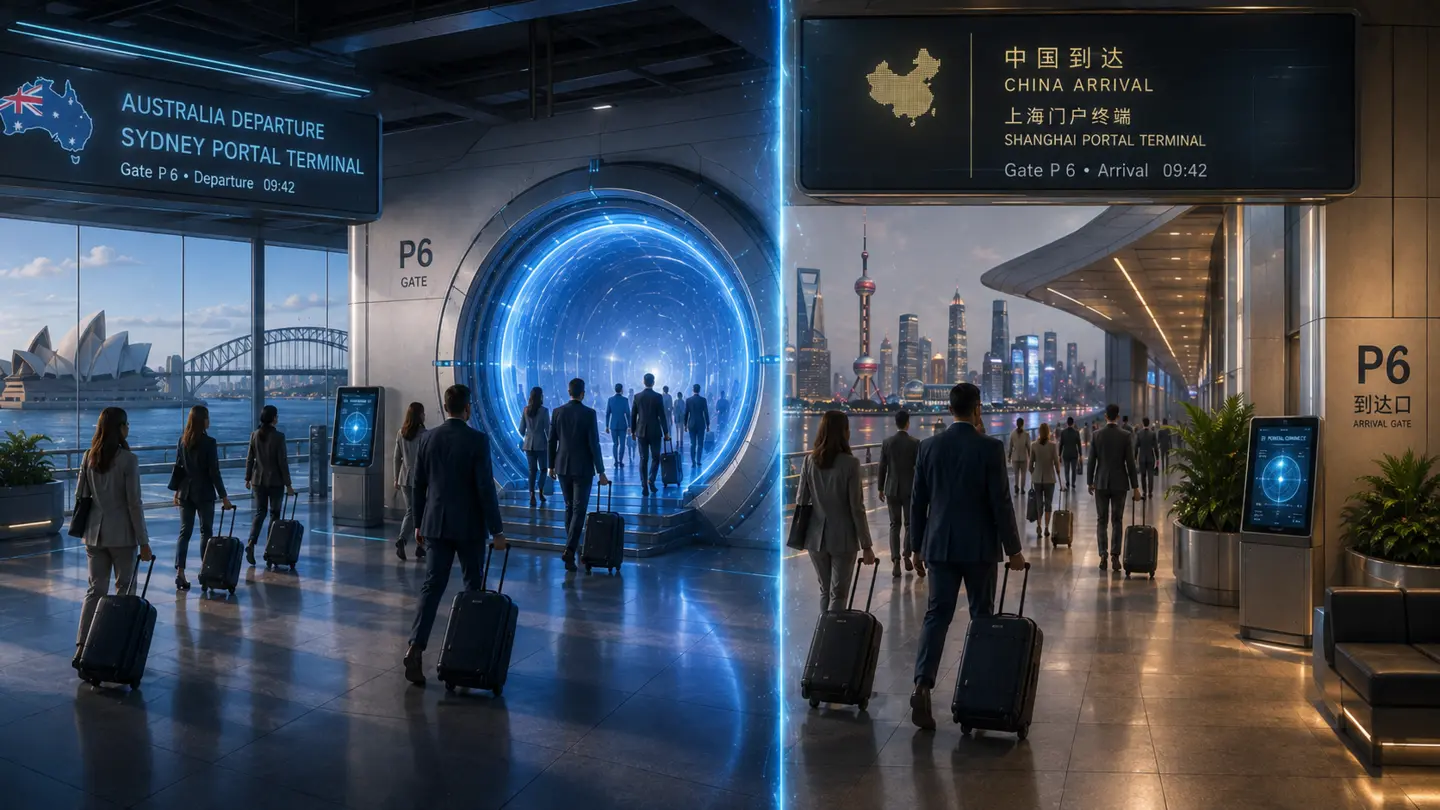
Public architecture overview
The public program is organized around paired gates, verified synchronization, power continuity, controlled access, safety interlocks, and network operations. Detailed speculative mechanisms remain private.
Deployment & social transition
If portal transport ever became technically real and independently certifiable, a dominant global network could still require roughly 50–150 years. That is a scenario range, not a forecast.
Paired terminals, power, data, materials, service capacity, and local transit connections would grow region by region.
Years of testing, cross-border agreements, land rights, accessibility rules, and independent oversight would precede broad use.
Workforce transition, public pricing, rural access, size limits, and fair service rules would be part of the architecture.
Cars, rail, aviation, roads, and ports would remain feeders and backups, then be selectively repurposed—not simply erased.
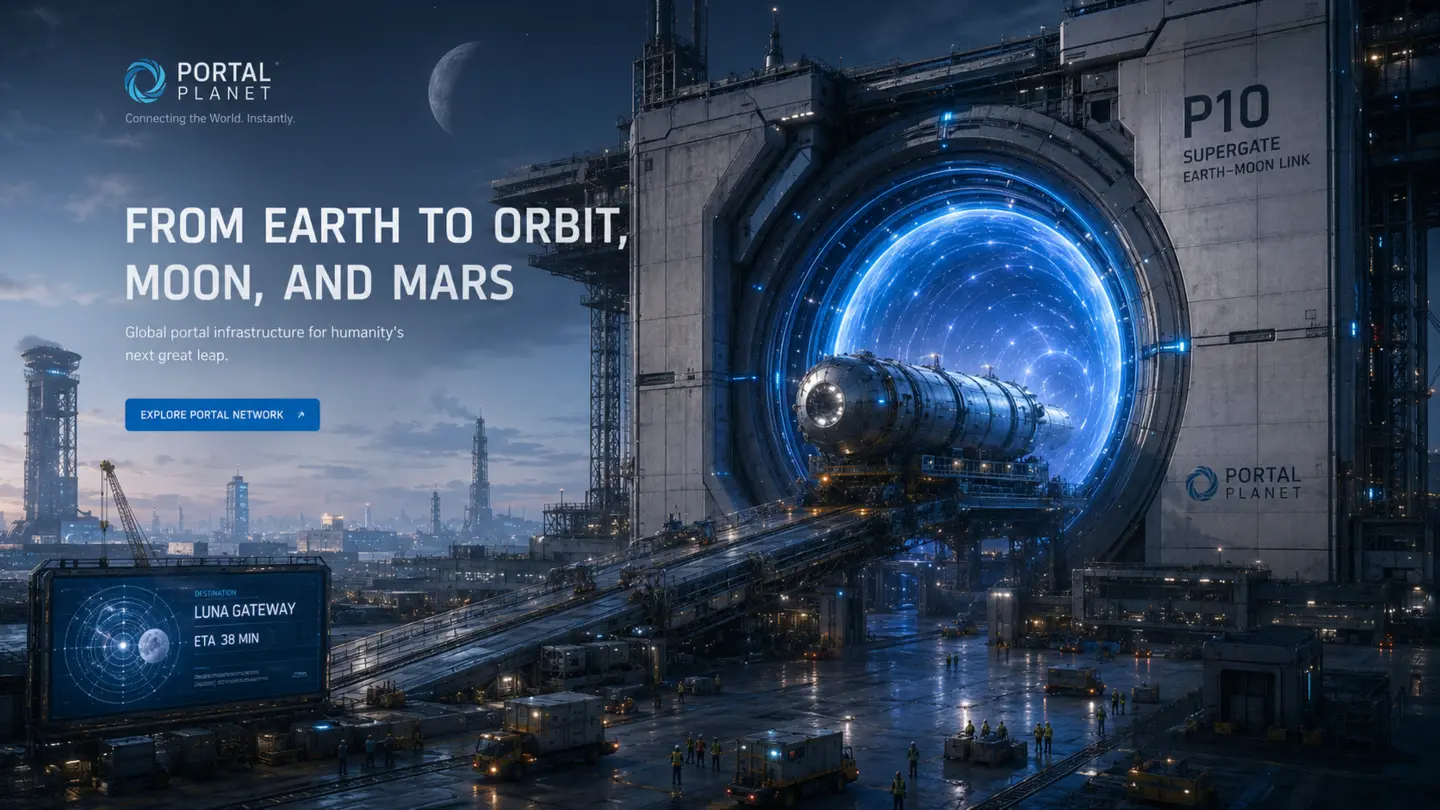
Future expansion
Off-world expansion belongs at the far end of the roadmap. It follows terrestrial proof, safety maturity, public governance, and controlled infrastructure deployment.
Open future expansion →Reality / Frontier / Speculative boundary
Modern transit planning, accessibility, resilient logistics, cybersecurity, safety engineering, and infrastructure governance are real disciplines. Stabilized human-scale portals and off-world transfer remain speculative. Detailed operating logic, equations, internal documents, and patent-sensitive implementation concepts are intentionally excluded.