COGNITIVE INFRASTRUCTURE

Cognitive Systems Division

Structured intelligence, learning architecture, human-machine interface design, semantic memory systems, and public-safe cognitive research frameworks for Aurora Design Systems.
AI CognitionLearning SystemsKnowledge GraphsInterfaces
Cognitive systems hero graphic
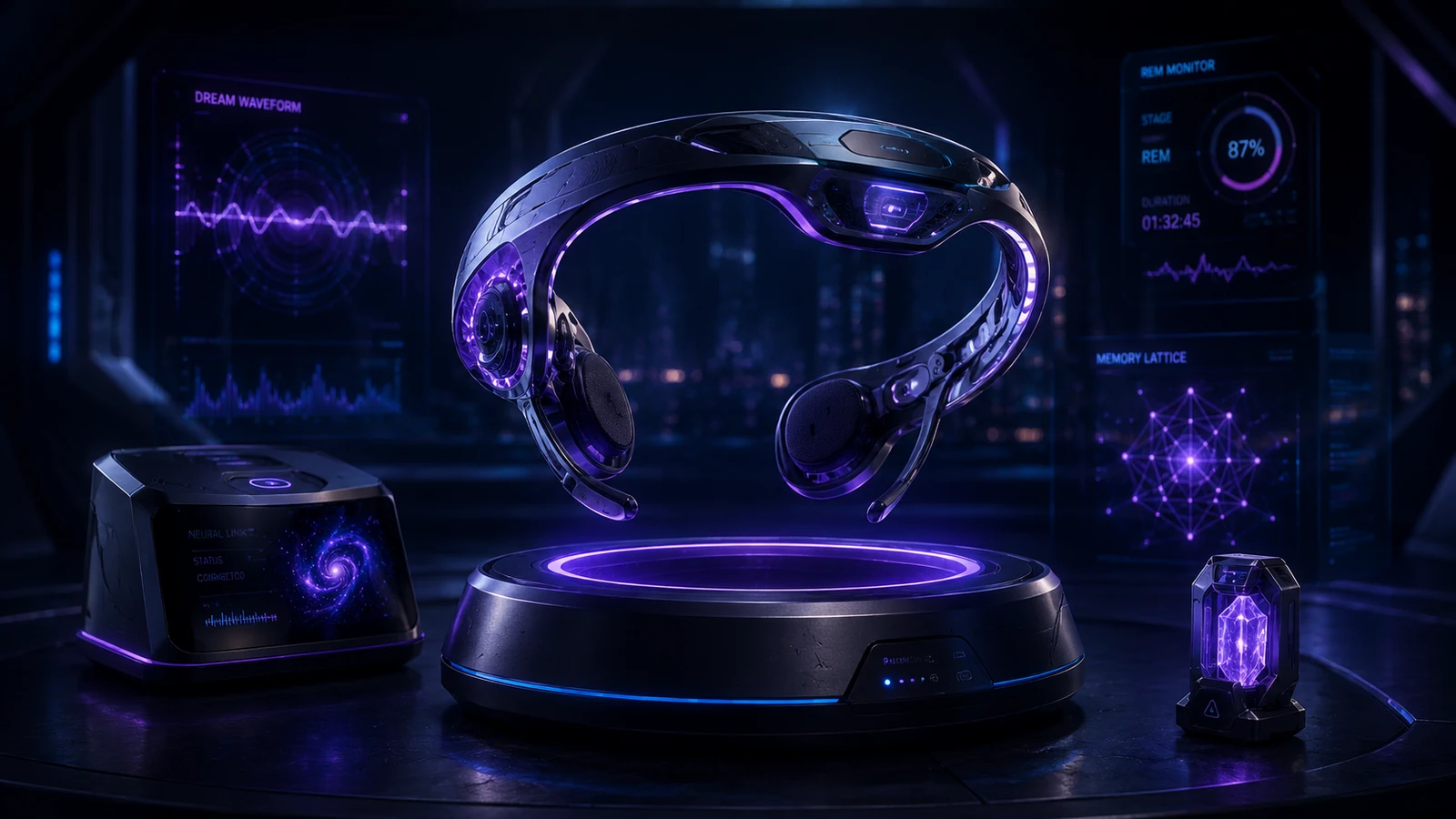
Brainwave Atlas visual identity graphic
NEURAL MAPPING & COGNITIVE SIGNAL REFERENCE

Brainwave Atlas

Brainwave Atlas is the cognitive-signal reference branch for mapping human attention, sleep-state behavior, mental workload, memory formation, and altered-state cognition into a structured research framework. The purpose is not to make medical claims or replace clinical neuroscience, but to create a public-safe conceptual atlas that can organize EEG-like states, cognitive rhythms, dream-state observations, learning r...

Open Section →
ChatGPT Bible visual identity graphic
PROMPT DOCTRINE & AI WORKFLOW LITERACY

ChatGPT Bible

The ChatGPT Bible is an instructional and doctrinal framework for learning how to work with advanced language models as structured thinking partners rather than novelty chat tools. Its purpose is to organize prompt methods, workflow rules, revision patterns, project-memory practices, document expansion techniques, AI safety boundaries, and practical human-AI collaboration habits. Within Cognitive Systems, this projec...

Open Section →
EduForge visual identity graphic
ADAPTIVE LEARNING ARCHITECTURE

EduForge

EduForge is a modular learning-systems architecture focused on adaptive education, AI-assisted tutoring, structured curriculum design, and long-term knowledge delivery. The concept treats education as an engineered pathway rather than a static pile of lessons. It can support learning capsules, personalized pacing, skill ladders, topic maps, visual explanation systems, and future AI tutor frameworks that help students...

Open Section →
Hyper-Reading visual identity graphic
ACCELERATED COMPREHENSION & INFORMATION FLOW

Hyper-Reading

Hyper-Reading explores structured methods for faster comprehension, deeper retention, and more efficient movement through dense technical, legal, scientific, and creative material. The project is not simply about speed-reading; it is about cognitive routing: identifying structure, extracting concepts, building memory anchors, summarizing arguments, and converting complex documents into usable knowledge. Within Aurora...

Open Section →
Attention Engineering visual identity graphic
FOCUS ARCHITECTURE & COGNITIVE LOAD CONTROL

Attention Engineering

Attention Engineering is a practical cognitive-systems branch focused on focus management, task sequencing, information overload, creative momentum, and structured work behavior. It treats attention as an engineering resource: limited, interruptible, trainable, and highly affected by environment, workflow design, emotional load, and tool friction. This project can support ADHD-aware work methods, deep-work protocols,...

Open Section →
Cognitive Interface Systems visual identity graphic
HUMAN-MACHINE INTERACTION & NEUROADAPTIVE UI

Cognitive Interface Systems

Cognitive Interface Systems covers the design of interfaces that adapt to human understanding rather than forcing users to adapt to rigid software structures. This project sits between human factors, AI assistance, neuroadaptive design, semantic navigation, and future augmented cognition. It can include dashboards, decision-support layouts, cognitive overlays, attention-aware interfaces, learning-state indicators, an...

Open Section →
Dream Mapping visual identity graphic
SLEEP COGNITION & SYMBOLIC PATTERN LOGS

Dream Mapping

Dream Mapping is a public-safe cognitive exploration branch for organizing dreams, symbolic memory fragments, sleep-state observations, and recurring narrative patterns. It is not a clinical diagnosis system and should not be treated as medical analysis. Its purpose is to give structure to personal and creative dream material so that patterns can be logged, compared, and interpreted cautiously over time. Within Cogni...

Open Section →
Knowledge Graph Systems visual identity graphic
SEMANTIC LINKS & AI-READABLE PROJECT ARCHITECTURE

Knowledge Graph Systems

Knowledge Graph Systems is the semantic infrastructure branch for connecting Aurora projects, documents, tags, references, dependencies, and concepts into a searchable architecture. The goal is to move beyond ordinary folders and build a system where related ideas can be discovered across divisions: AI, medical systems, space systems, physics research, publications, and business doctrine. This project supports metada...

Open Section →
Memory Architecture visual identity graphic
HUMAN & SYNTHETIC MEMORY SYSTEMS

Memory Architecture

Memory Architecture explores how information is stored, retrieved, compressed, forgotten, reinforced, and transferred across human and machine systems. It can include human memory models, semantic memory structures, project-memory methods, AI context preservation, long-term archive design, and future synthetic-memory concepts. In the Cognitive Systems division, this project helps explain how knowledge survives across...

Open Section →
OAIS Cognitive Interface visual identity graphic
SEMANTIC INTERPRETATION & SENSORY INTELLIGENCE BRIDGE

OAIS Cognitive Interface

OAIS Cognitive Interface is the bridge between OAIS-MITI style sensory intelligence and human-facing cognitive interpretation. The project can organize how scent, signal, behavior, language, pattern recognition, and adaptive AI interpretation could be presented to users through understandable interface layers. It should not be framed as a completed product or as validated medical or surveillance technology. Instead, ...

Open Section →
Synthetic Learning Systems visual identity graphic
AI TEACHING LOOPS & ADAPTIVE KNOWLEDGE GROWTH

Synthetic Learning Systems

Synthetic Learning Systems focuses on how artificial intelligence systems can assist, model, scaffold, and accelerate learning without replacing human judgment. It overlaps with EduForge, but its emphasis is more on the machine-learning and instructional-loop side: adaptive feedback, concept reinforcement, curriculum generation, synthetic tutors, learner-state estimation, and knowledge-progress modeling. The project ...

Open Section →