STS • 40–120 kHz current UST study envelopeHuman operation only in validated STS modes; no animal use on this modelExperimental / calibration / future quantum-sensor modes: empty-only
STS • Personal Hygiene / Accessible Hygiene
Sonic Shower
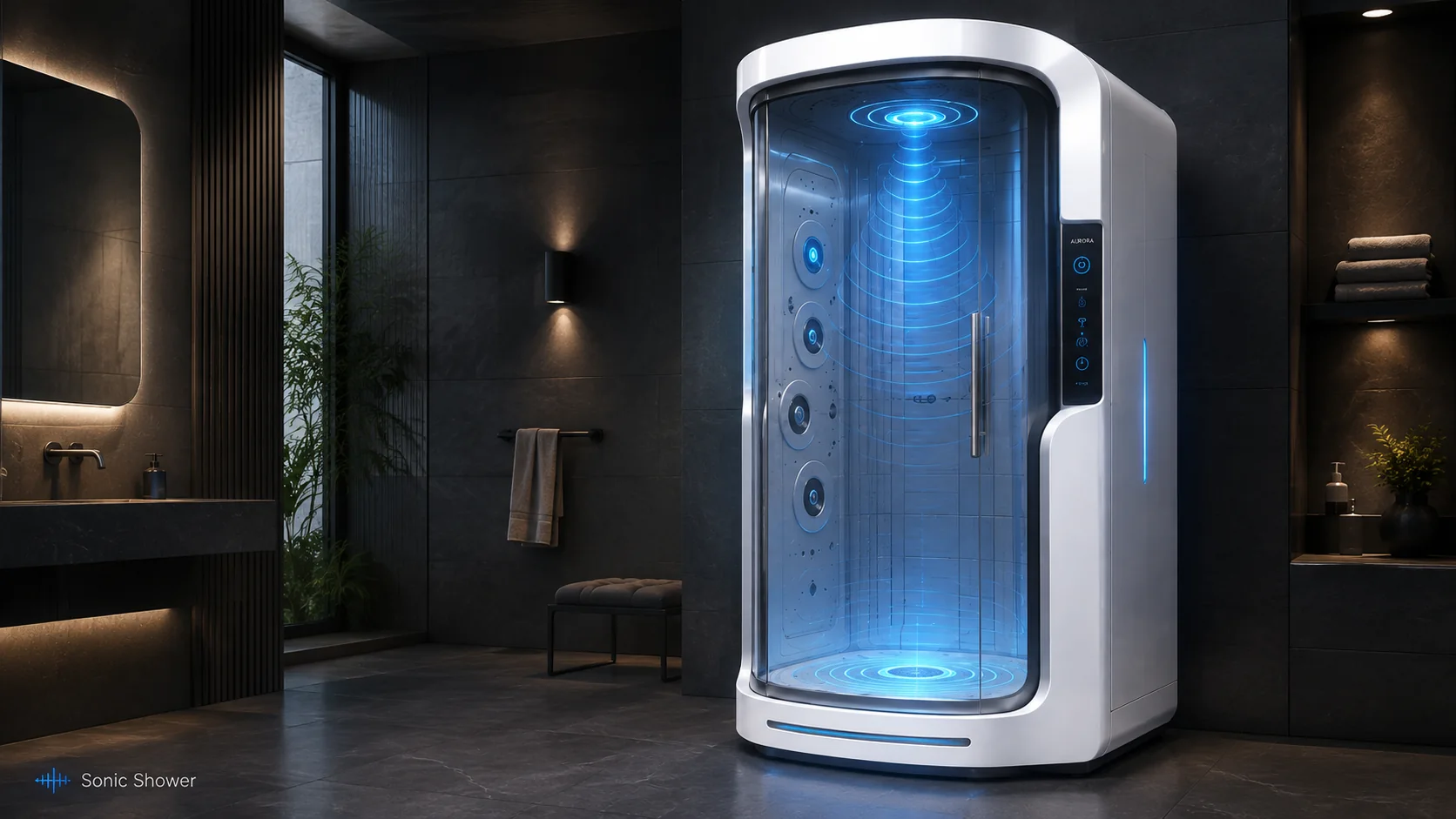
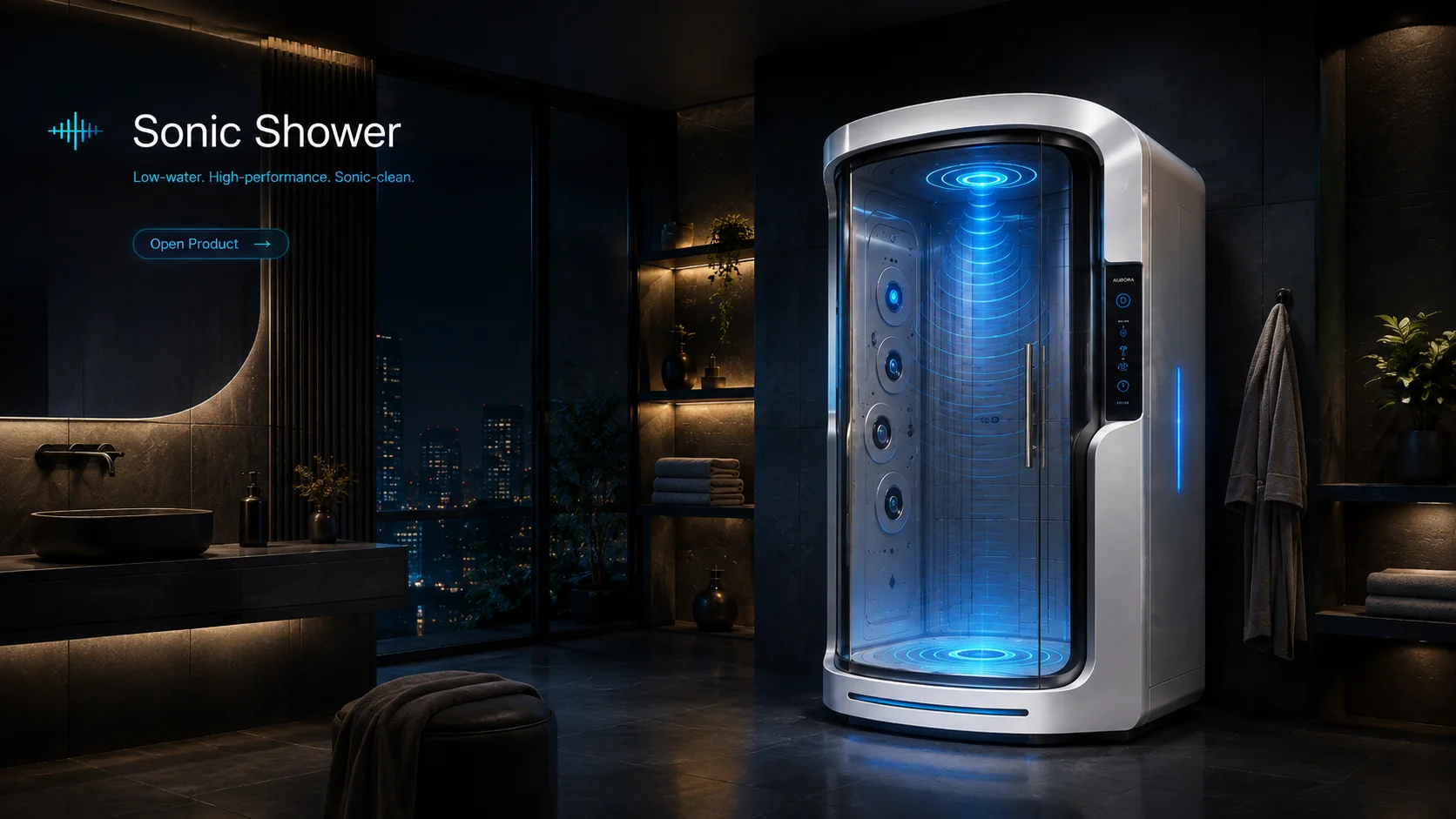
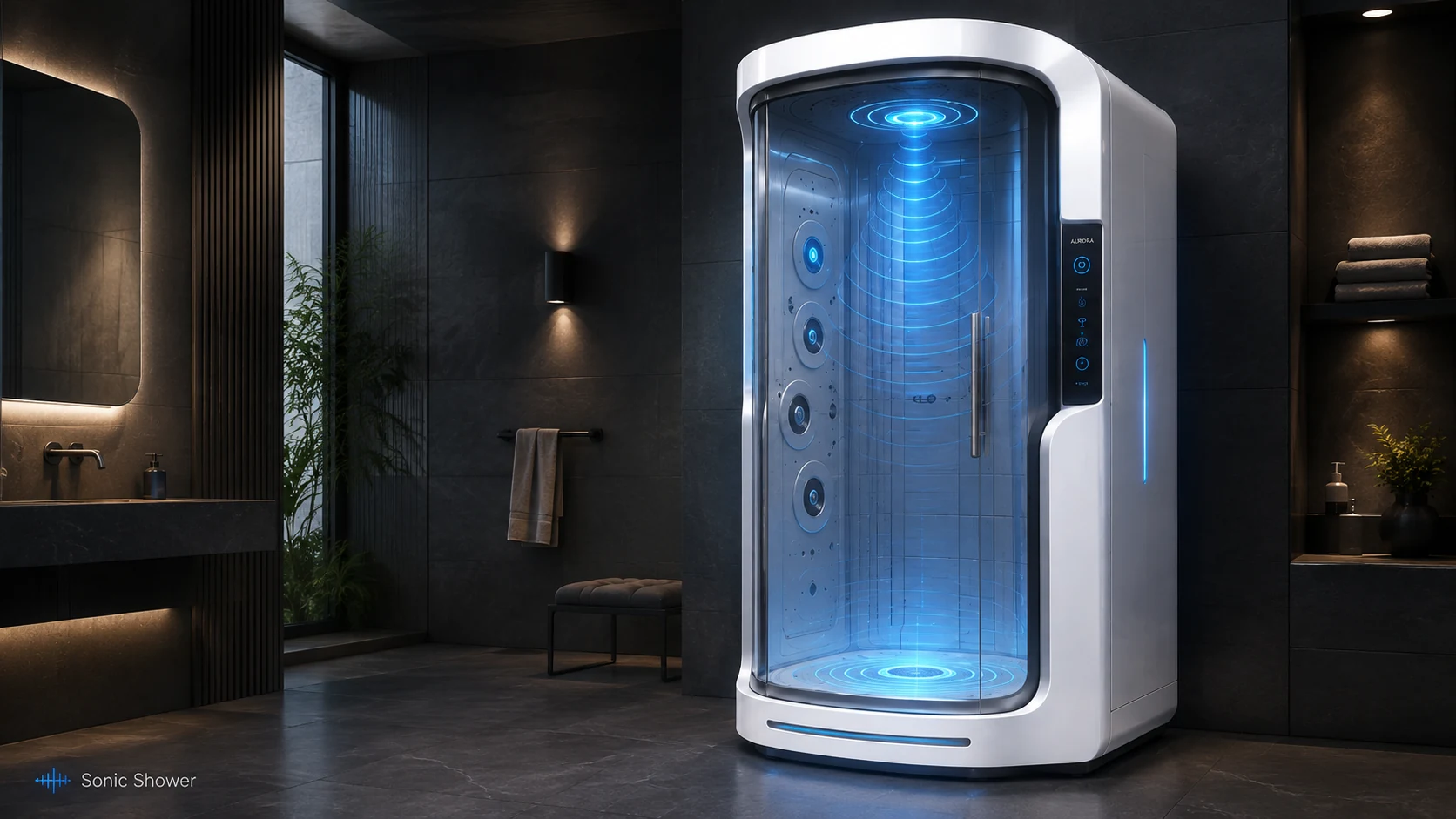
A low-water, human-facing hygiene enclosure built around controlled mist, bounded acoustic surface interaction, directed extraction, adaptive comfort and safety monitoring.
These renderings are design studies rather than frozen production SKUs. Final dimensions, controls, finishes and component packaging will be established in 3D CAD and prototype testing.
Occupancy RuleDesigned for validated human-use modes only
Water / Fluid InterfaceSmall reservoir or low-volume building feed
ElectricalCommon UST electrical architecture; final rating TBD
Frequency values shown here are current UST concept-study ranges from the program architecture, not released product specifications or human exposure limits.
Operating Experience
Selectable modes
Neutral Hygiene
Body-neutral comfort and standard cleaning sequence.
Warm Comfort
Gentle thermal assist within bounded safety limits.
Cool Refresh
Reduced thermal input and increased comfort airflow.
Sensitive / Assisted
Reduced acoustic, airflow and thermal envelopes.
Quick Cycle
Short bounded refresh cycle.
Adaptive
Sensor-driven selection within approved limits.
Control Interface
Ten control / status functions to define
The final interface may use physical buttons, sealed switches, touch controls, indicators or a combination. The website shows functions, not a frozen hardware layout.
Power / standbyFinal label, icon, hardware and control behavior remain subject to HMI engineering.
Mode selectionFinal label, icon, hardware and control behavior remain subject to HMI engineering.
Temperature comfort levelFinal label, icon, hardware and control behavior remain subject to HMI engineering.
Cycle duration within hard maximumFinal label, icon, hardware and control behavior remain subject to HMI engineering.
Acoustic status indicatorFinal label, icon, hardware and control behavior remain subject to HMI engineering.
Mist / reservoir statusFinal label, icon, hardware and control behavior remain subject to HMI engineering.
Airflow / extraction statusFinal label, icon, hardware and control behavior remain subject to HMI engineering.
Door / occupancy interlockFinal label, icon, hardware and control behavior remain subject to HMI engineering.
Emergency stopFinal label, icon, hardware and control behavior remain subject to HMI engineering.
Complete / service / fault indicationFinal label, icon, hardware and control behavior remain subject to HMI engineering.
Public-Safe Architecture
How the system works without exposing proprietary geometry