STD • 60–150 kHz current UST baseline; alternate mechanisms under studyNo human or animal occupancy during operationService / calibration / future quantum-sensor modes: empty-only
STD • Moisture Extraction / Textile Care
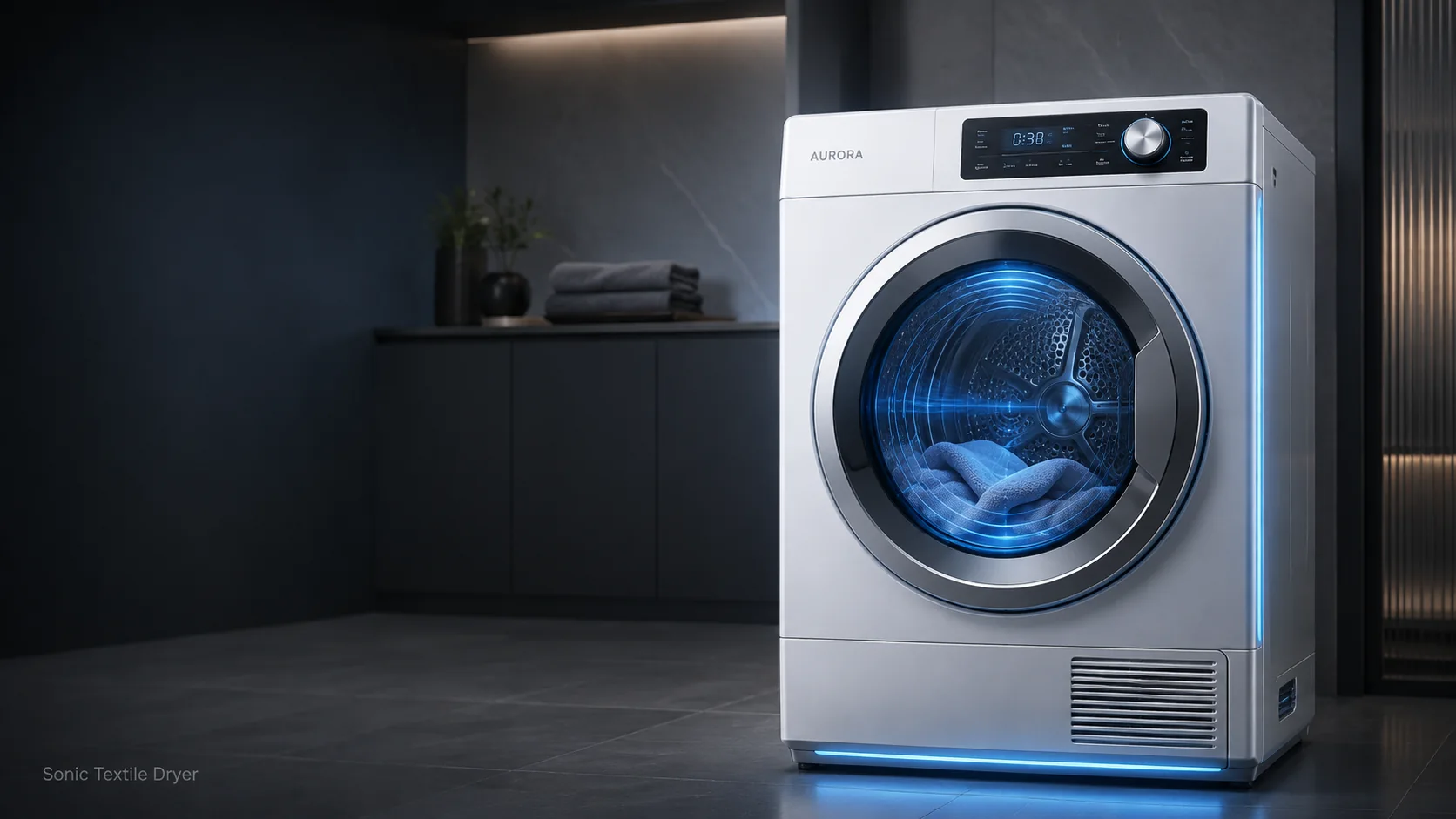
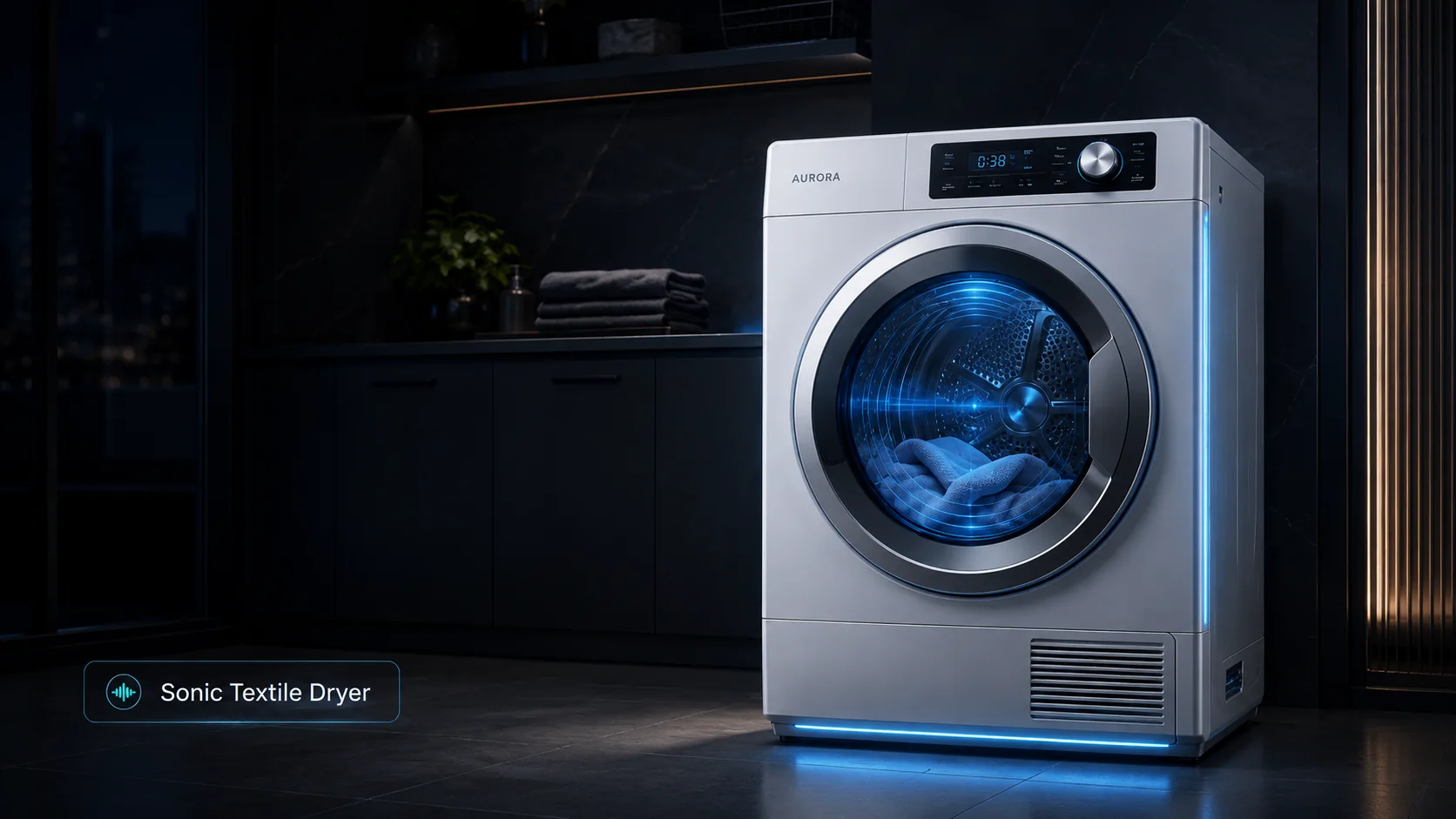
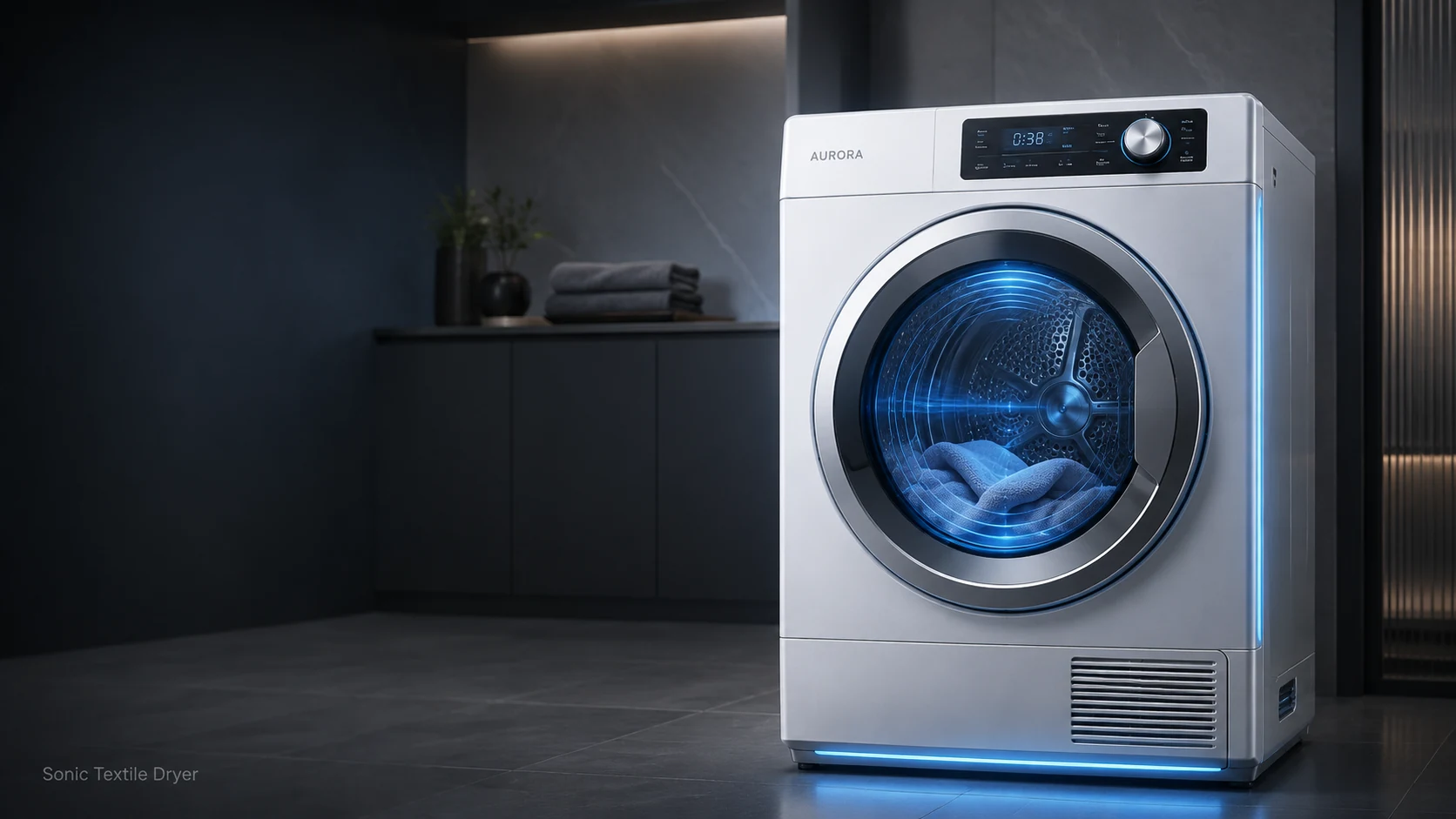
Sonic Textile Dryer
A textile-drying research platform combining acoustic moisture mobilization, controlled drum motion, airflow extraction, mist separation, condensate handling and low-temperature finishing.
These renderings are design studies rather than frozen production SKUs. Final dimensions, controls, finishes and component packaging will be established in 3D CAD and prototype testing.
Frequency values shown here are current UST concept-study ranges from the program architecture, not released product specifications or human exposure limits.
Operating Experience
Selectable modes
Gentle
Lower mechanical/acoustic stress for sensitive fabrics.
Normal
Balanced moisture removal and airflow.
Rapid
Higher extraction rate within thermal and textile limits.
The final interface may use physical buttons, sealed switches, touch controls, indicators or a combination. The website shows functions, not a frozen hardware layout.
Power / standbyFinal label, icon, hardware and control behavior remain subject to HMI engineering.
Fabric / mode selectionFinal label, icon, hardware and control behavior remain subject to HMI engineering.
Target drynessFinal label, icon, hardware and control behavior remain subject to HMI engineering.
Estimated timeFinal label, icon, hardware and control behavior remain subject to HMI engineering.
Acoustic assist statusFinal label, icon, hardware and control behavior remain subject to HMI engineering.
Humidity / moisture statusFinal label, icon, hardware and control behavior remain subject to HMI engineering.
Blower / airflow statusFinal label, icon, hardware and control behavior remain subject to HMI engineering.
Door / occupancy interlockFinal label, icon, hardware and control behavior remain subject to HMI engineering.
Pause / emergency stopFinal label, icon, hardware and control behavior remain subject to HMI engineering.
Complete / filter / condensate / fault indicationFinal label, icon, hardware and control behavior remain subject to HMI engineering.
Public-Safe Architecture
How the system works without exposing proprietary geometry