Vessel Compensator
High-redundancy installation tied to navigation, anchor alignment, sensor fusion, and mission evidence systems. It publishes a common reference state plus uncertainty to every dependent subsystem.
The current Chrono-Anchor Temporal Compensator architecture reconciles clocks, coordinates, ephemerides, motion, and reference-frame ancestry for vessels, field teams, suits, and personal units without treating clock disagreement as time control.
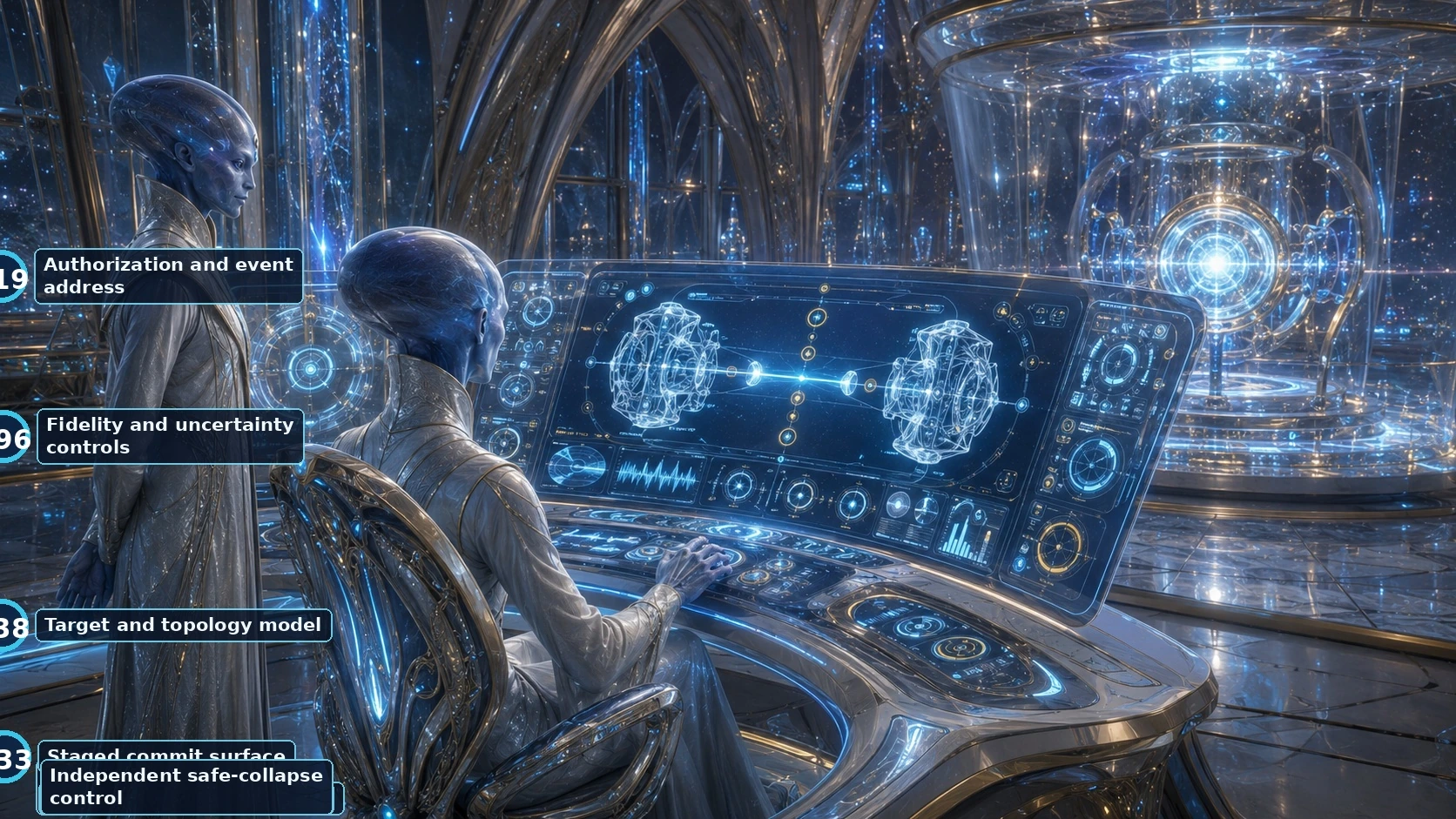
The Temporal Compensator is the reference-frame and clock-reconciliation layer used when a vessel, suit, field team, or temporal instrument must compare local proper time, declared coordinate time, ephemerides, motion state, and network references without confusing disagreement among clocks with evidence that time itself has been altered.
Reference inputs may include disciplined optical/ion clocks, pulsar timing, local ephemerides, inertial state, gravimetry, environmental measurements, network time ancestry, and the active STCRS reference declaration. The estimator carries uncertainty and covariance rather than forcing incompatible clocks into a false single truth.
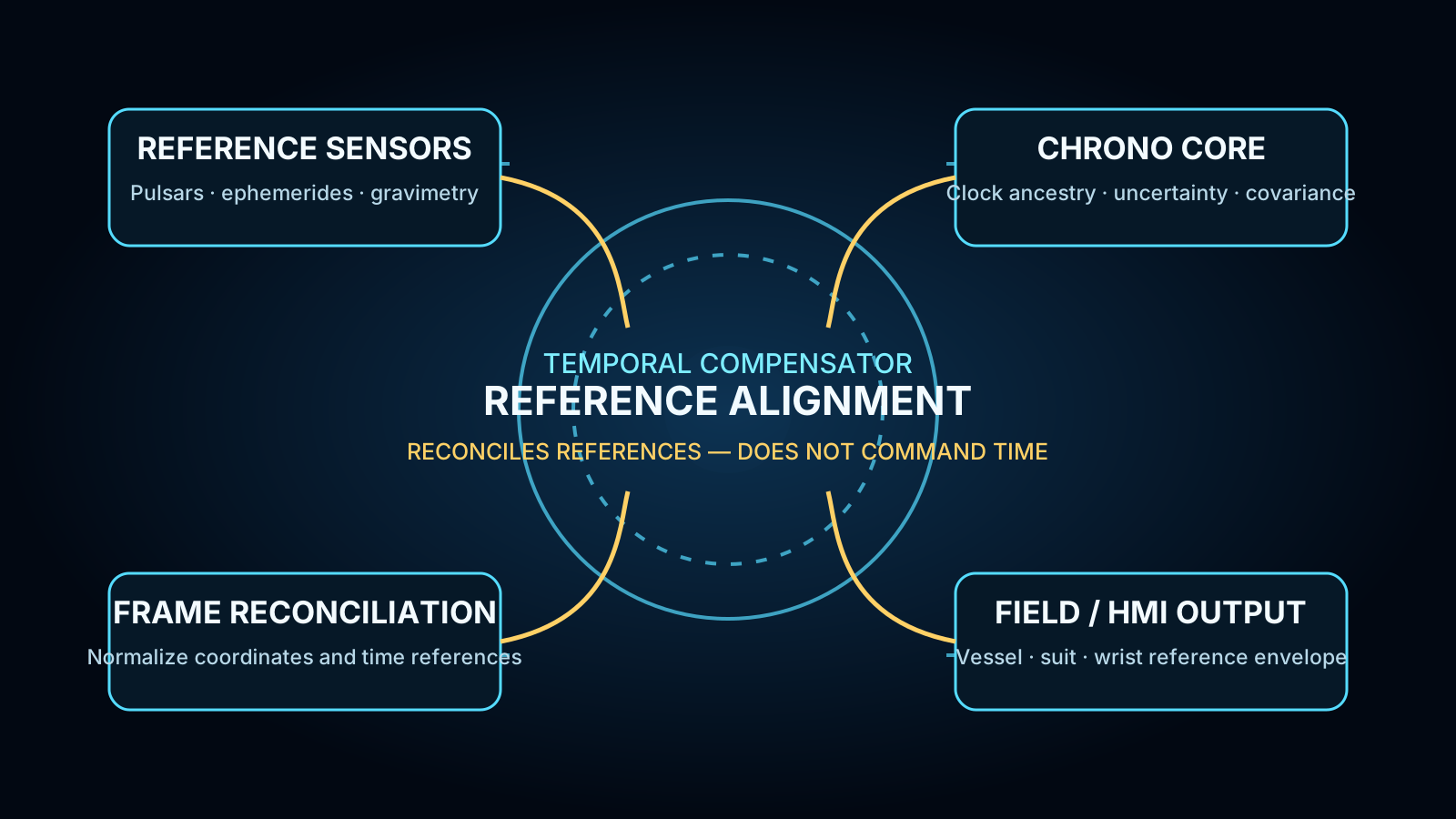
High-redundancy installation tied to navigation, anchor alignment, sensor fusion, and mission evidence systems. It publishes a common reference state plus uncertainty to every dependent subsystem.
Portable survey and rescue version for teams working across large gravitational, kinematic, or network-reference differences. It favors traceable confidence over display richness.
A compact reference companion that shows local proper time, declared mission time, synchronization quality, frame ancestry, drift warnings, and whether the user is inside a certified compensation envelope.
Named frame, parent frame, coordinate origin, active transform, and confidence.
Source clocks, discipline chain, calibration history, drift, covariance, and degraded-state flags.
Aligned, bounded disagreement, unresolved degeneracy, quarantine, or refuse-to-certify.