
← Back to Sustainability & Infrastructure
Modular & Distributed Reactor Systems
Explore established fission systems, emerging modular reactors, fusion research, and future compact-energy concepts.
Reactor Technology
Fission and fusion are separate physical pathways with different maturity, fuel-cycle, plant, and evidence requirements. This directory keeps them inside one systems-engineering architecture without implying that every family is equally mature.
Fission Reactor Systems
Fifteen reactor families with short maturity and industry examples. Company names are references, not endorsements.
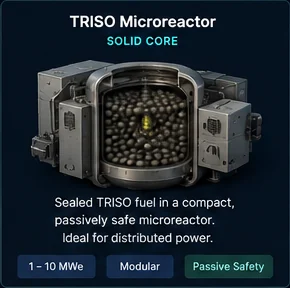
TRISO-Fueled Microreactor
Compact reactors using coated-particle TRISO fuel.
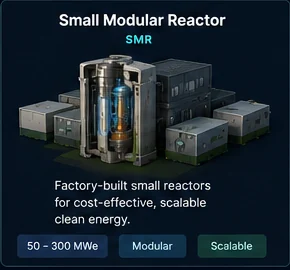
Small Modular Reactor
Factory-built modules for scalable electricity and heat.
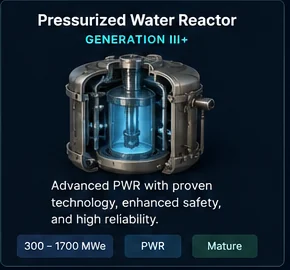
Pressurized Water Reactor
Pressurized water transfers core heat to a separate steam loop.
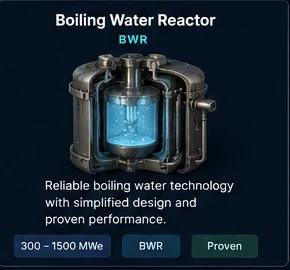
Boiling Water Reactor
Water boils in the vessel and sends steam directly to the turbine.
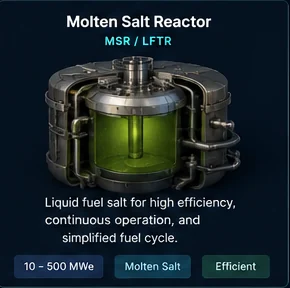
Molten Salt Reactor
Molten salt carries heat and may also contain the fuel.
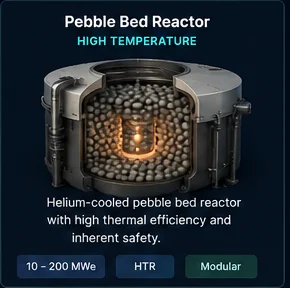
Pebble-Bed Reactor
Helium-cooled reactors using spherical TRISO fuel pebbles.
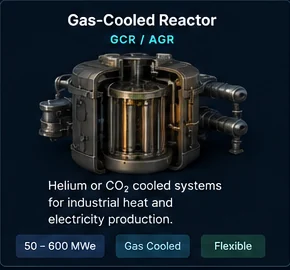
Gas-Cooled Reactor
Gas coolant supports electricity and high-temperature process heat.
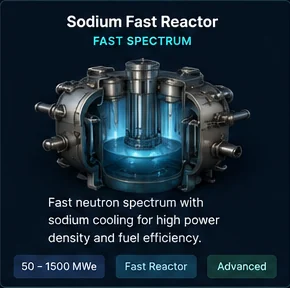
Sodium-Cooled Fast Reactor
Liquid sodium cools a fast-spectrum reactor core.
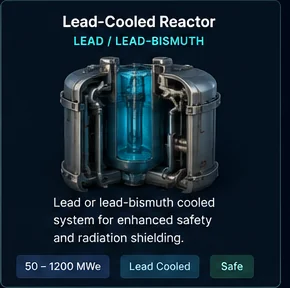
Lead-Cooled Fast Reactor
Lead or lead-bismuth cools a fast-spectrum core.
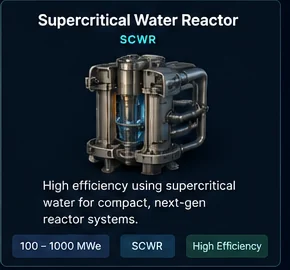
Supercritical Water Reactor
Supercritical water is studied for higher-efficiency cycles.
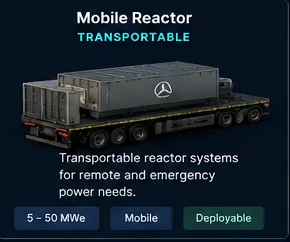
Transportable & Mobile Reactor
Relocatable reactors for remote, temporary, or mission power.
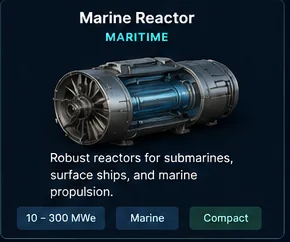
Marine Reactor
Nuclear systems for ship propulsion or floating power.
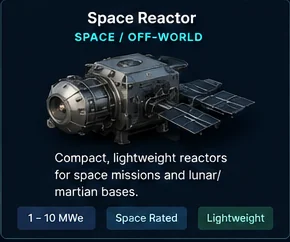
Space Reactor
Compact fission power for lunar and deep-space missions.
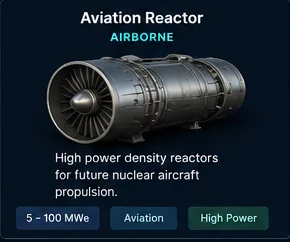
Aviation Reactor
Historical nuclear-aircraft research; no deployed commercial design.
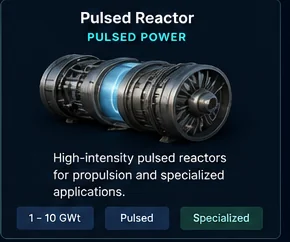
Pulsed Reactor
Specialized reactors designed for brief, controlled power pulses in testing and research.
Fusion Reactor Systems
Research pathways are separated from whole-plant integration.
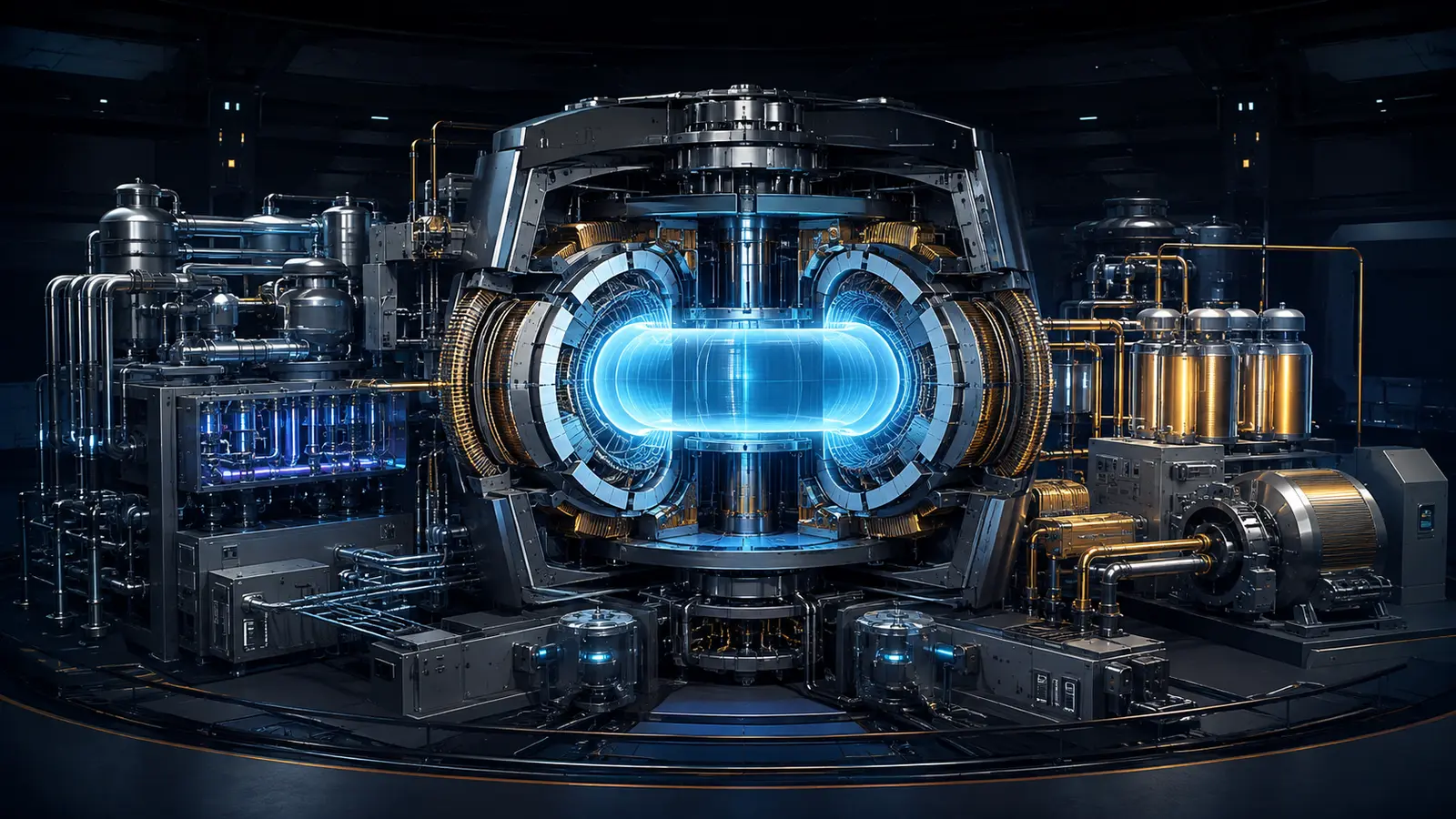
Confinement Research Gateway
Compare magnetic, inertial, pulsed, and advanced approaches.
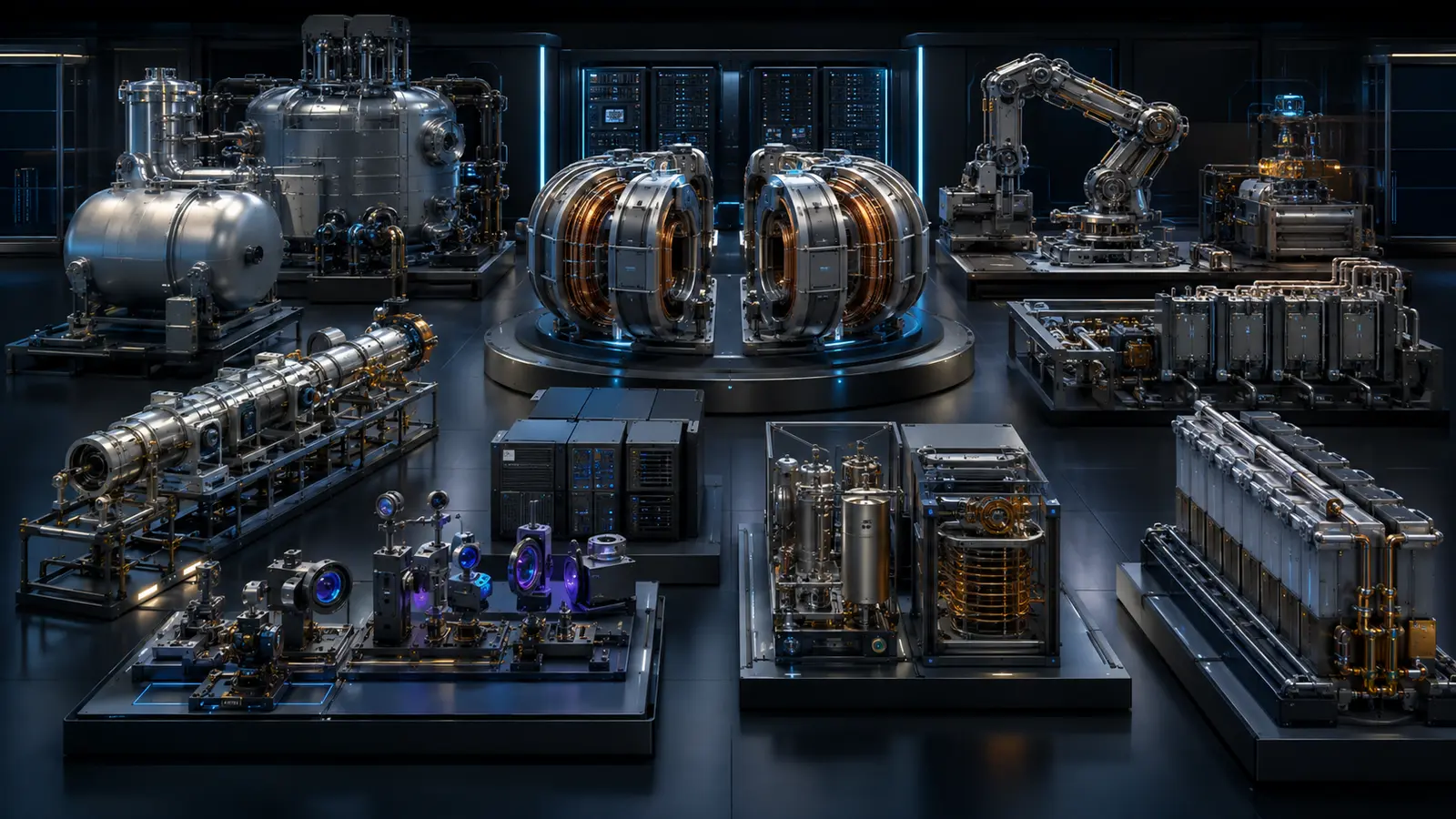
Fusion Power-Plant Integration
Connect the plasma device to fuel, heat, maintenance, safety, and the grid.
All fusion paths
Five research and plant-integration categories.
Magnetic Confinement Fusion
Tokamaks and stellarators hold plasma with magnetic fields.
Research / demonstrationOpen system →Inertial Confinement Fusion
Lasers or pulsed drivers compress small fusion targets.
Experimental researchOpen system →Magneto-Inertial / Pulsed Fusion
Magnetized plasma is rapidly compressed by a pulsed driver.
Public researchOpen system →Advanced Fusion Research
Mirrors, compact toroids, pinches, and other frontier concepts.
Frontier researchOpen system →Fusion Power-Plant Integration
Fuel, blankets, heat conversion, maintenance, safety, and grid systems.
Enabling R&DOpen system →Fusion architecture cards
Nine visual studies with short maturity labels.
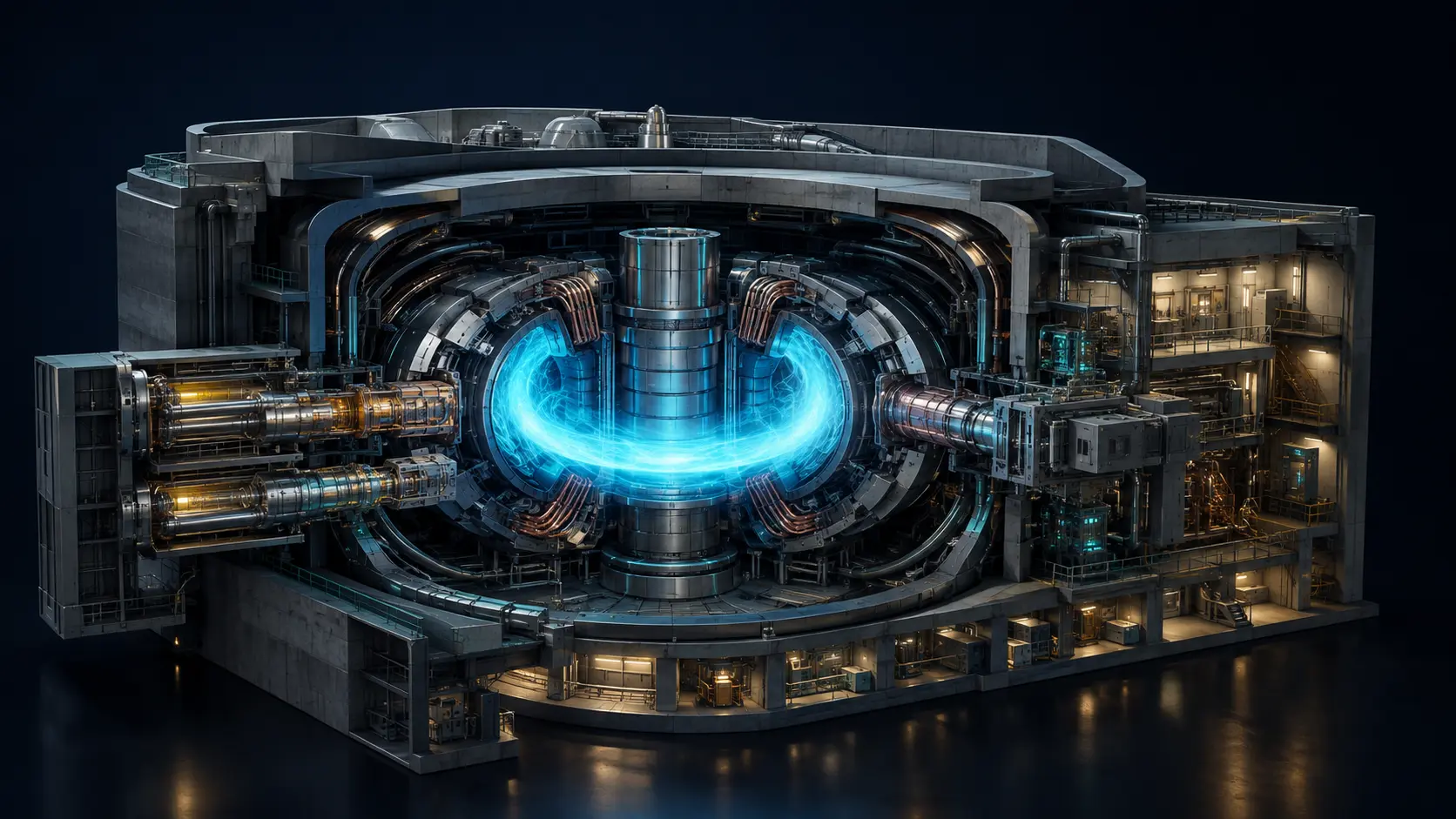
Tokamak Fusion
Toroidal fields and plasma current confine the plasma.
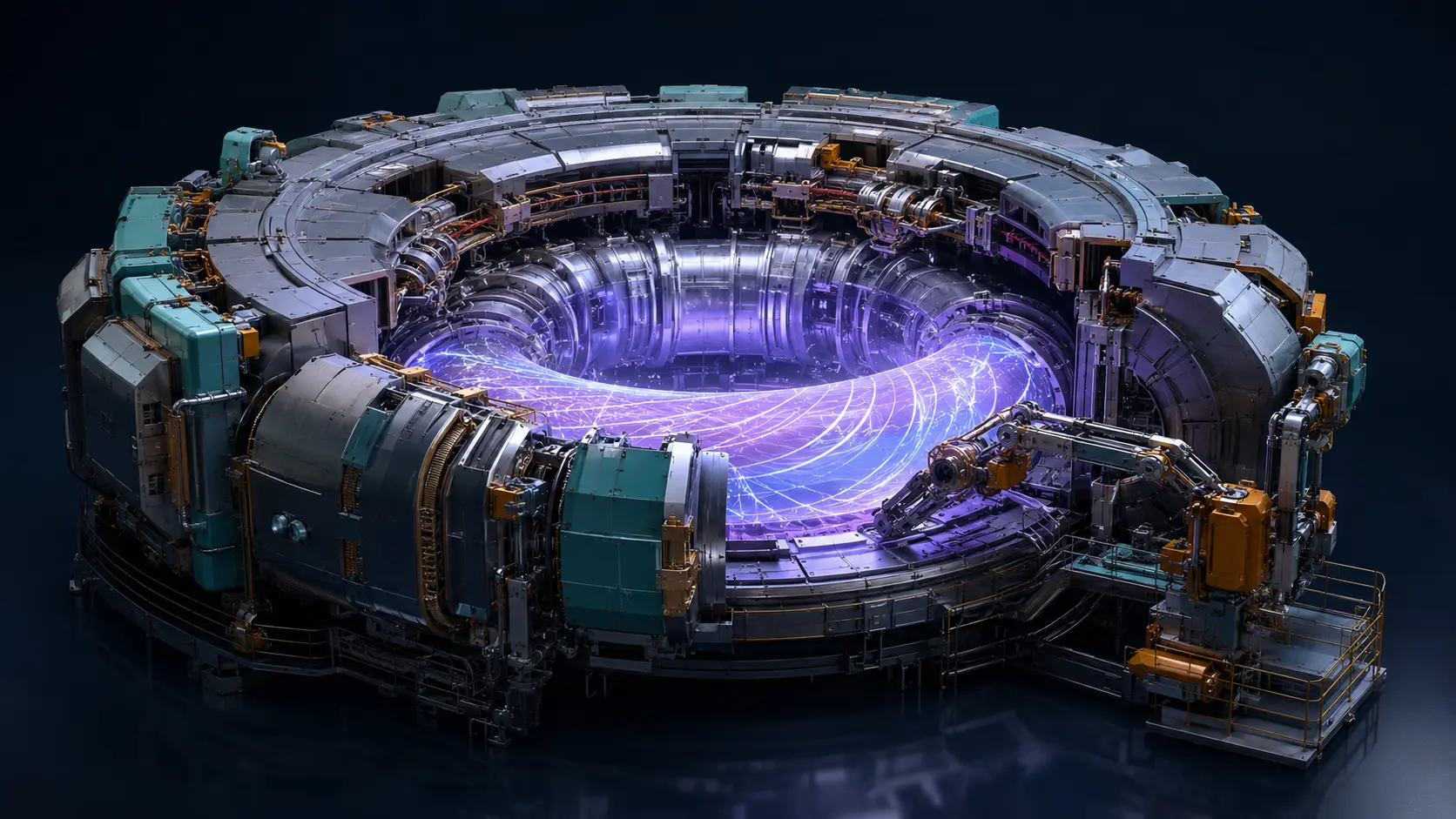
Stellarator Fusion
Shaped external coils confine plasma for steady-state research.
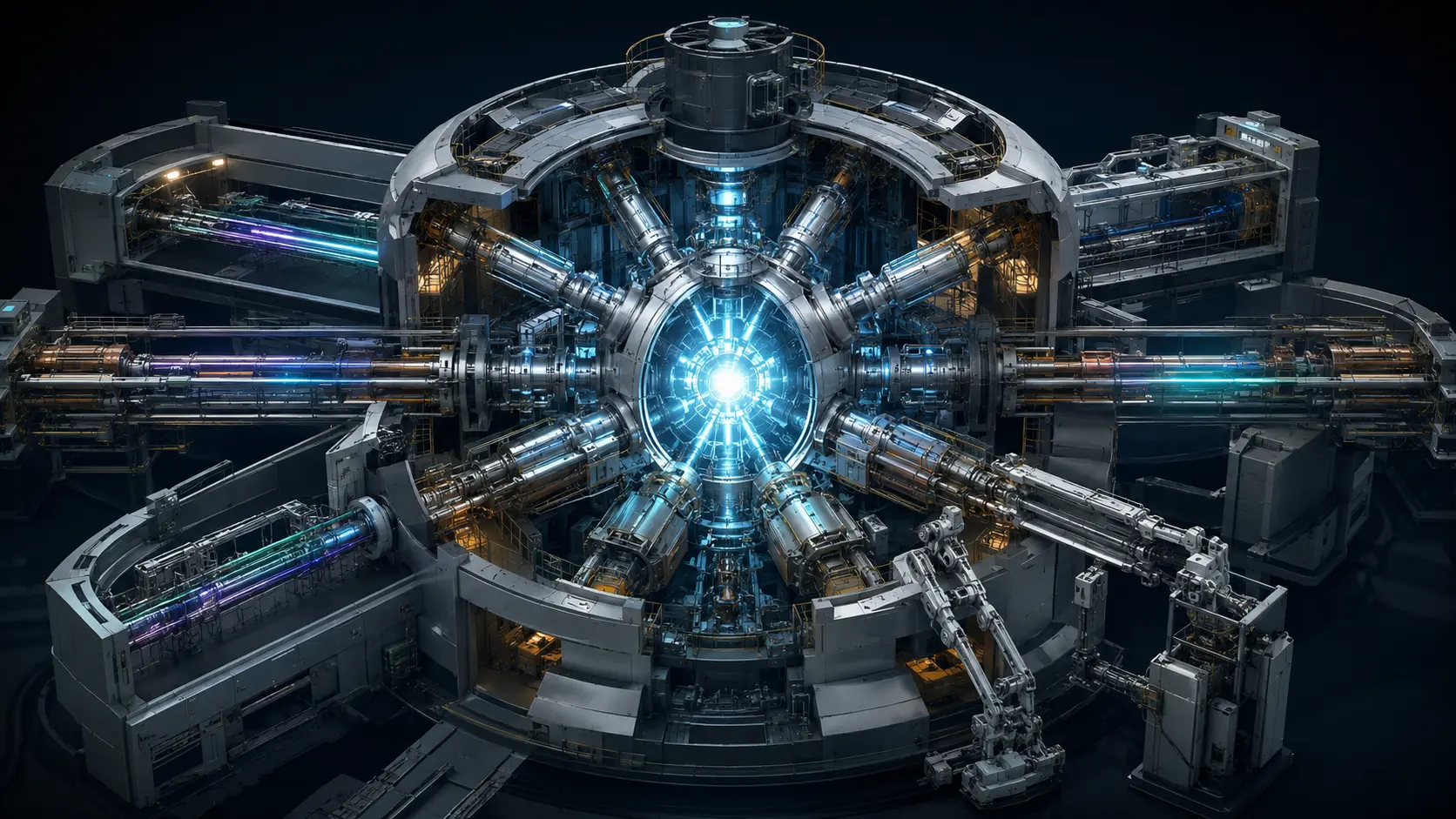
Inertial-Confinement Fusion
Intense drivers compress tiny targets for brief fusion events.
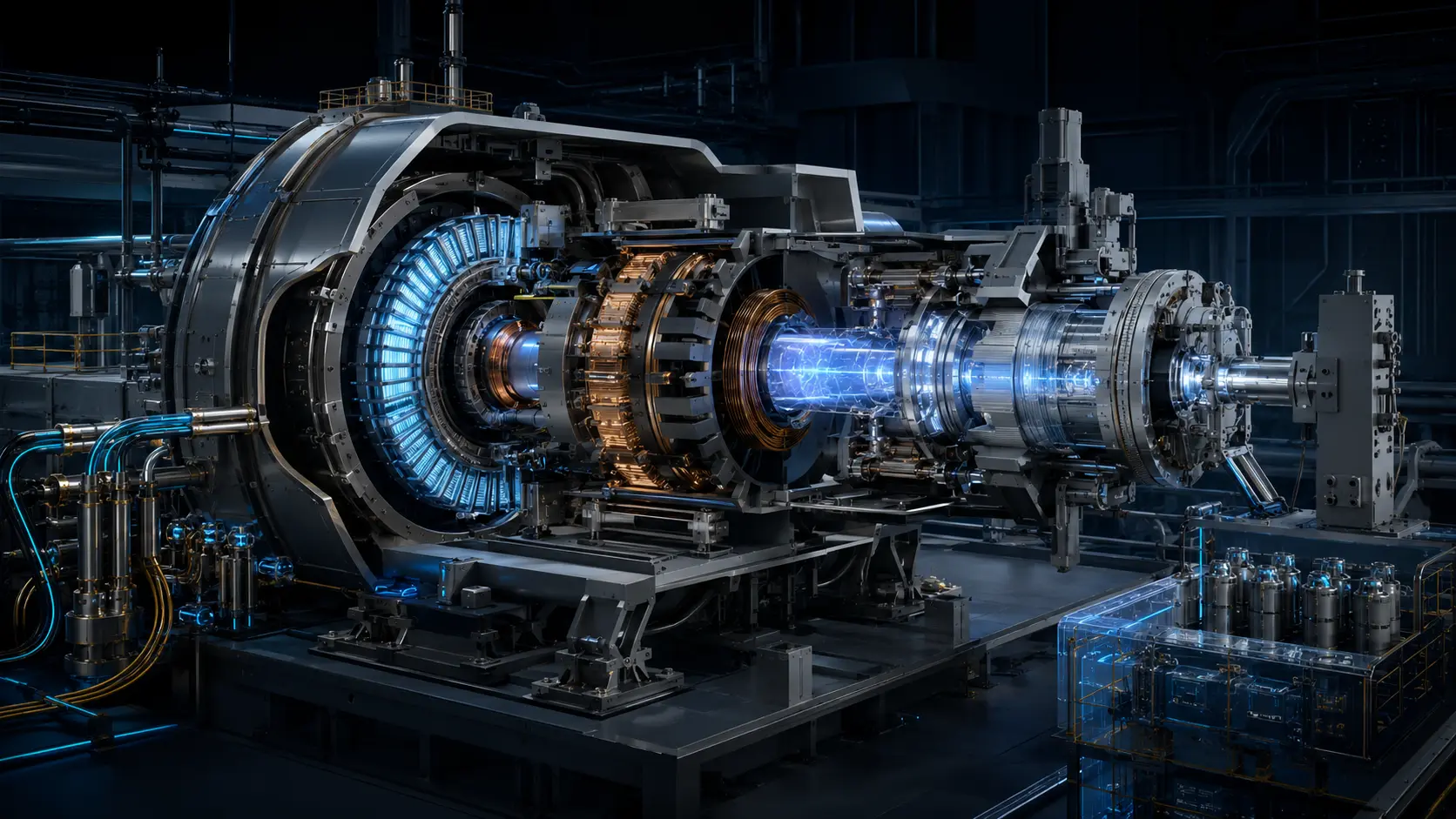
Magneto-Inertial Fusion
A magnetized plasma is rapidly compressed by a pulsed driver.
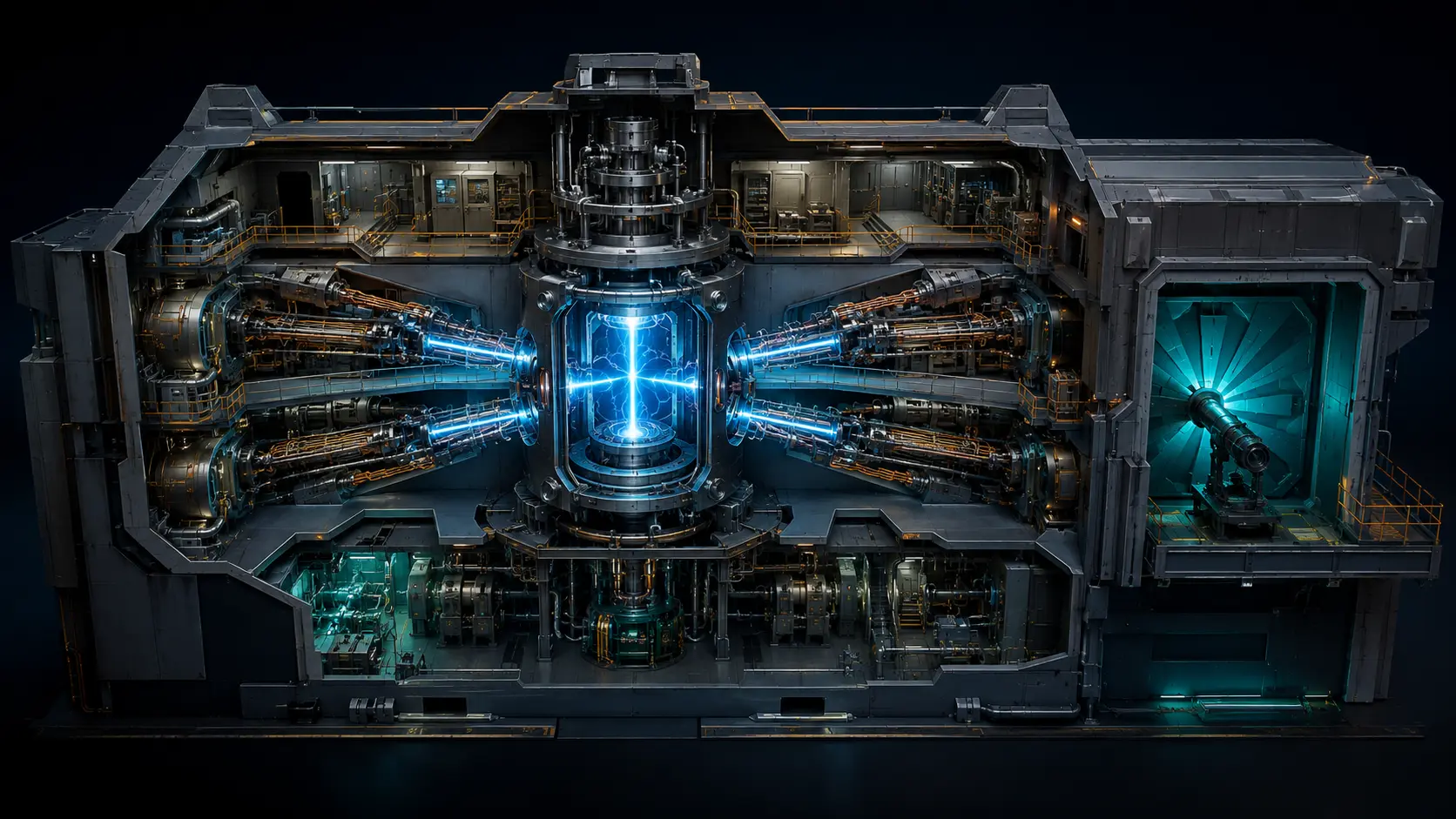
Z-Pinch and Pulsed Fusion
A high-current pulse compresses plasma or a liner.
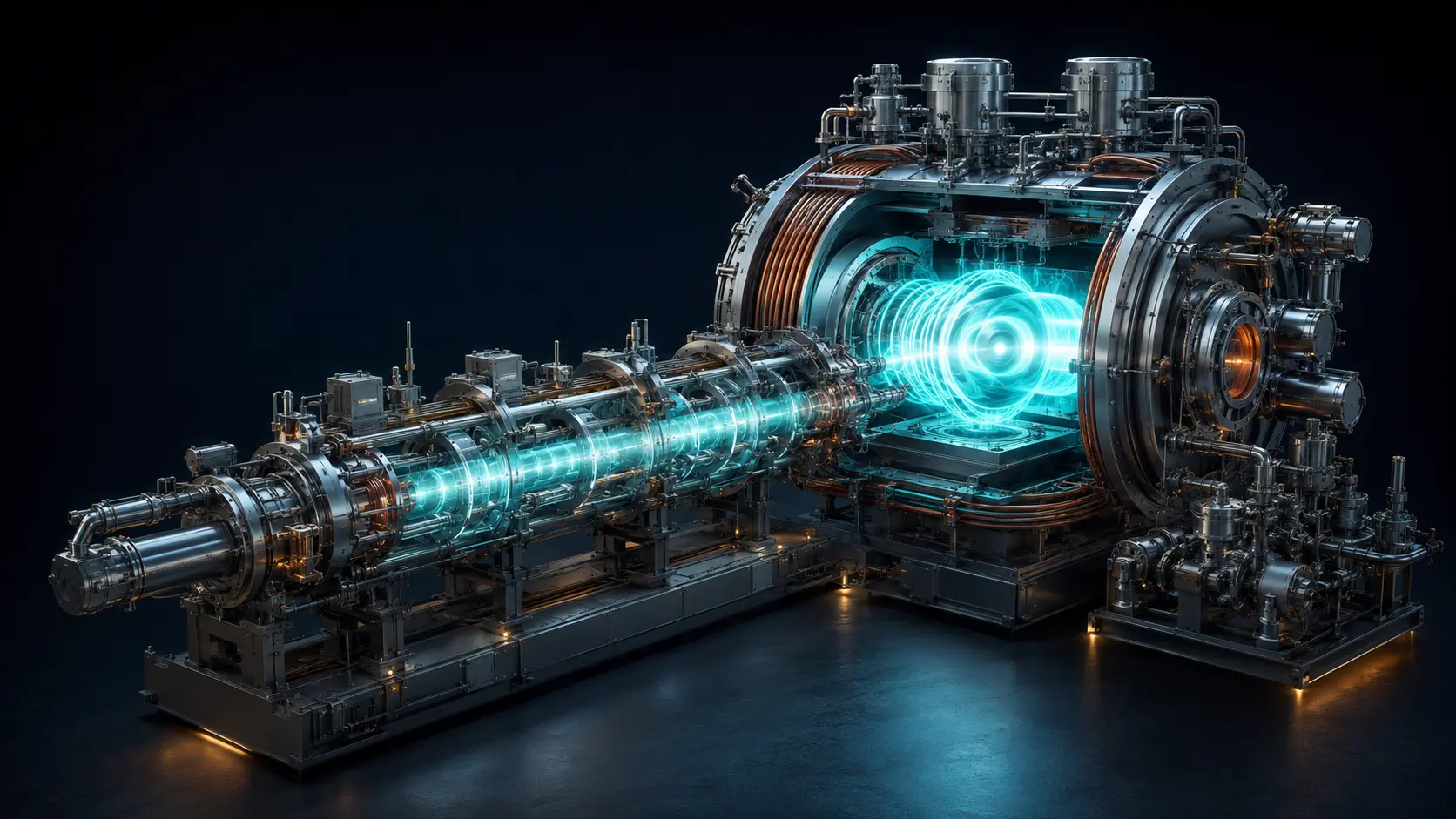
Field-Reversed Configuration and Spheromak
Compact toroid plasmas form in linear or cylindrical chambers.
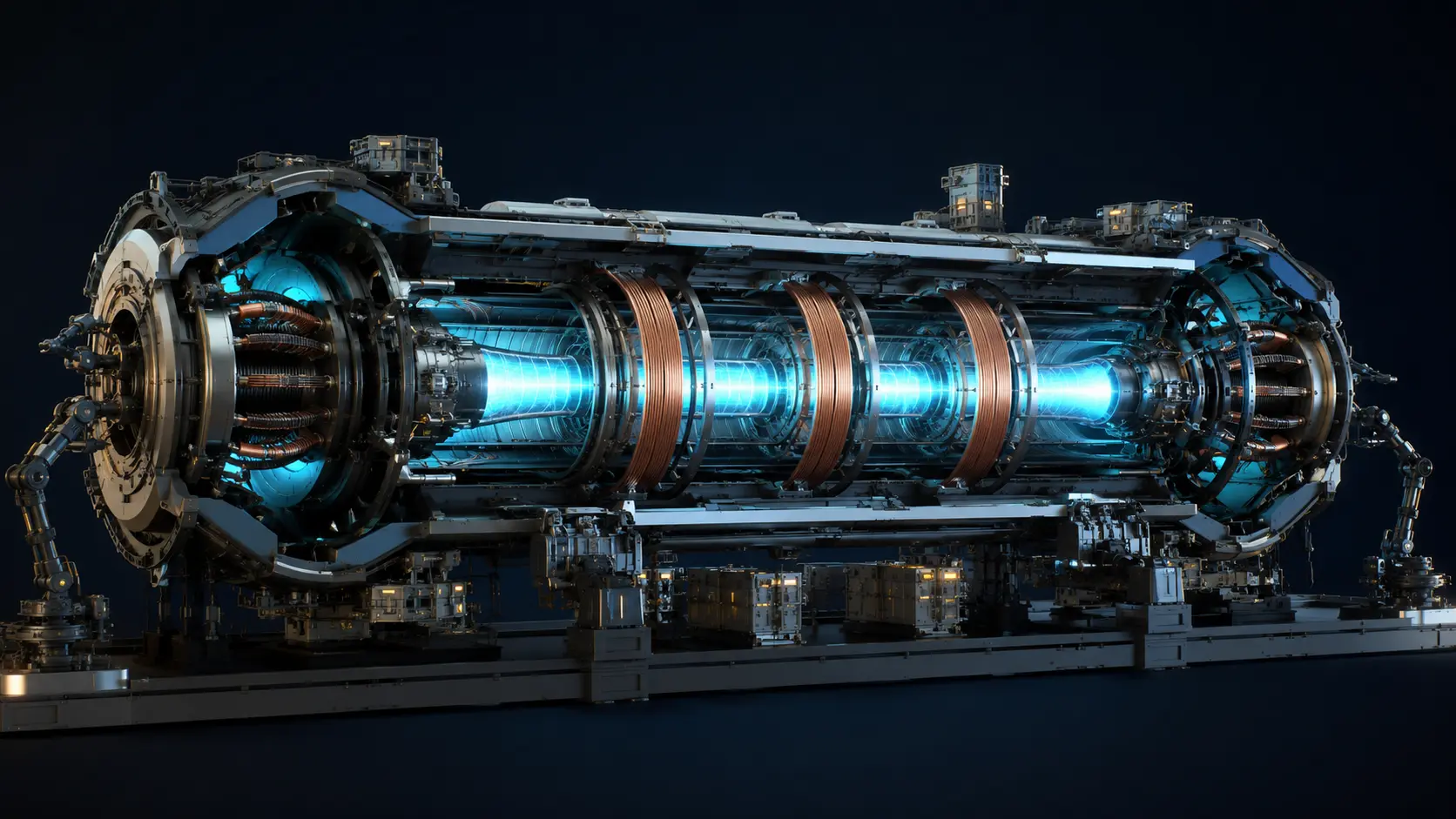
Magnetic-Mirror Fusion
Stronger end fields confine plasma in a linear device.
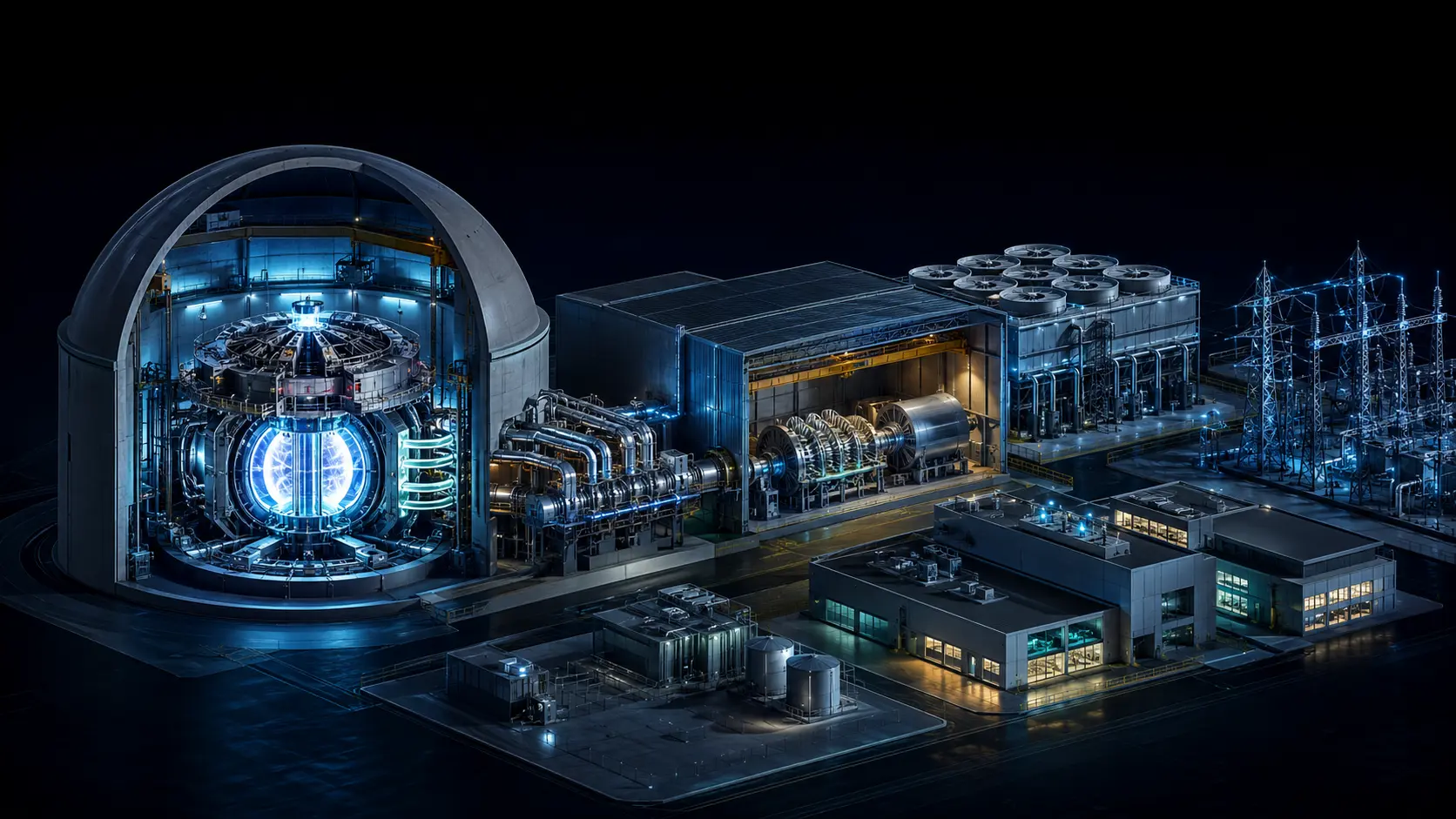
Fusion Power-Plant Integration
Turns a fusion device into a complete energy plant.
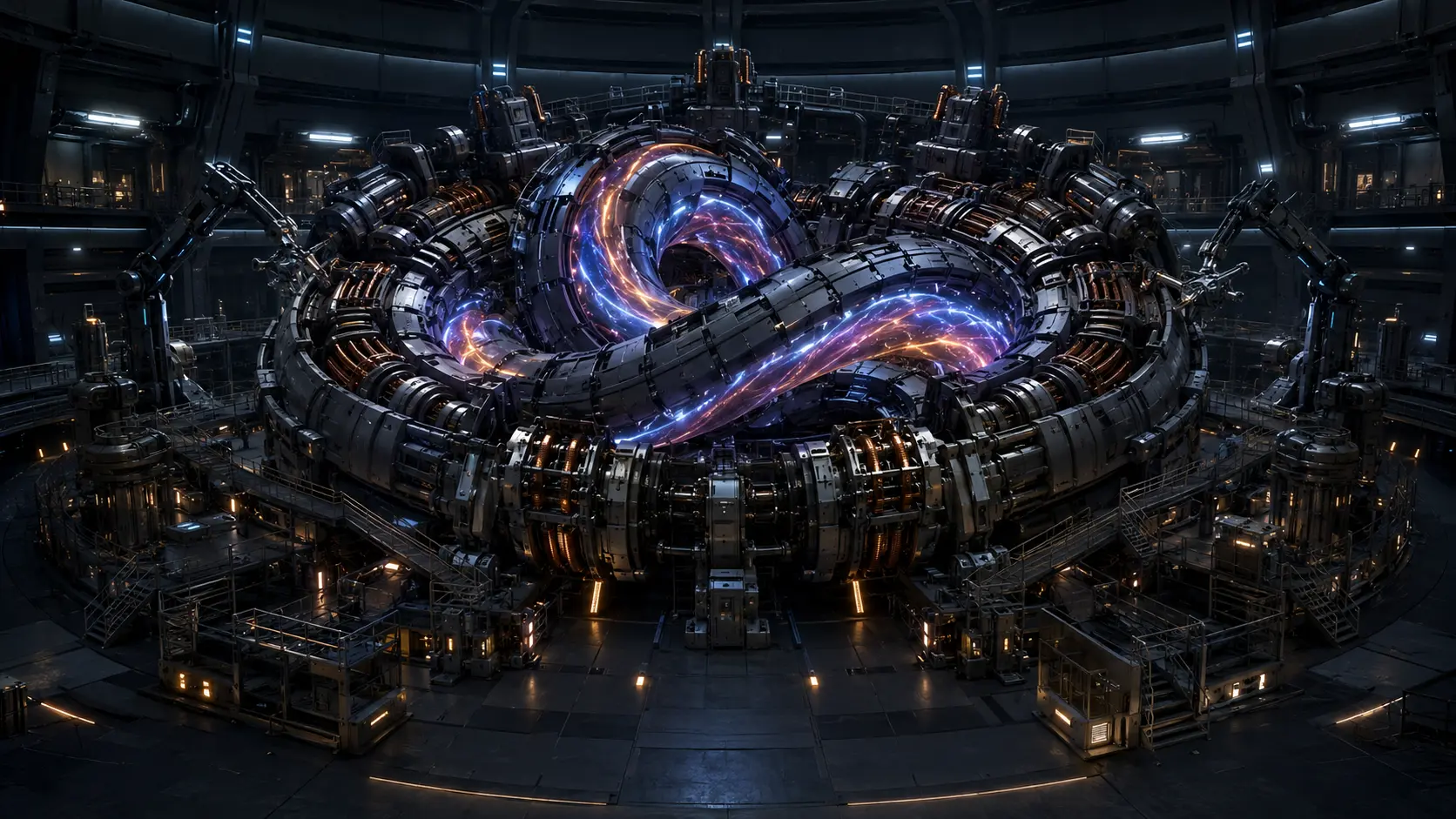
Compact Stellarator Design Studies
Six studies explore compact coils, high-field materials, and maintenance access.
Works with the grid
Links reactors to storage, microgrids, water, critical services, and industry.
Evidence first.
Compare reactor families by maturity, safety, and mission.