Aircraft technical study · Boom Supersonic
Boom Overture Proposed four-engine supersonic passenger aircraft
Proposed airliner; development United States 2020s
ILLUSTRATIVE 3D STUDY · NOT OEM CAD
Model-specific technical values
Key specifications Cruise speed Mach 1.7 company 2022 design cruise target; not flown by Overture MANUFACTURER DESIGN TARGET / NOT CERTIFIED Evidence ↗ Maximum speed Not independently verified NOT VERIFIED / HELD OPEN
Maximum altitude Not independently verified NOT VERIFIED / HELD OPEN
Propulsion 4 medium-bypass turbine engines proposed in 2022 Overture architecture; current design subject to change MANUFACTURER DESIGN TARGET / NOT CERTIFIED Evidence ↗ Fuel / energy 100% SAF-compatibility company design goal (2022); not tested on certified Overture MANUFACTURER DESIGN TARGET / NOT CERTIFIED Evidence ↗ Crew Flight crew not final REFERENCE VALUE / PENDING INDIVIDUAL SOURCE REVIEW
Max passengers 65–80 planned passengers in 2022 company concept; not certified occupancy MANUFACTURER DESIGN TARGET / NOT CERTIFIED Evidence ↗ Additional original dimensions / historic notes Passengers 65–80 target
Cruise Mach 1.7 target
Range 4,250 nmi target
Engines 4 planned
Primary-source values are checked by model; other values carry a review warning. Maximum speed may differ from maximum cruise speed; certified ceilings differ from achieved flight altitudes.
Data shown for the named aircraft or development program. Prototype figures and targets are explicitly labeled; performance varies with flight conditions and configuration.
Program status
Proposed airliner; development
For research aircraft, demonstrator speeds are achieved flight points; for manufacturer proposals, published design speeds are targets, not flight certificates. Historic figures must name the variant and conditions.
Technical anatomy
Three engineering callouts Explore the component explanations below the rendering.
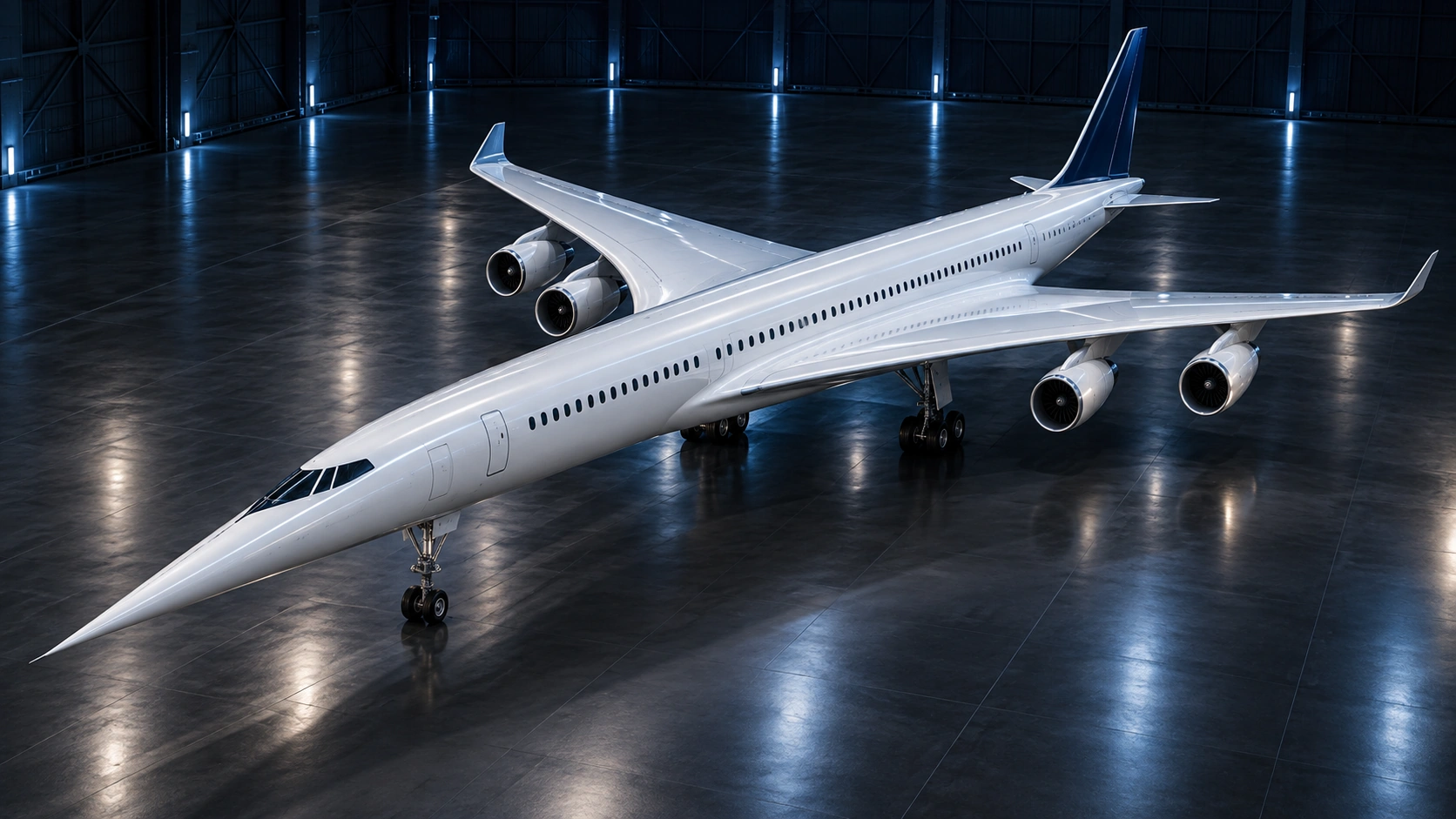
1 Swept supersonic wing Airframe optimized for high-speed cruise.
Illustrated external component · explained below 2 Four engine nacelles Propulsion planned to meet commercial noise constraints.
Illustrated external component · explained below 3 Contoured fuselage Shaping supports supersonic aerodynamic efficiency.
Illustrated external component · explained below Engineering significance
Why this aircraft matters The concept revisits commercial supersonic transport with new noise and operating targets.
Engineering constraints & status limits
Seats, range, speed and schedule shown are design targets, not certified performance.
Aircraft illustration control. This is an original low-poly, configuration-specific 3D study based on public design descriptions. Dimensions, aerodynamic contours, and exact component placement have not been validated against licensed manufacturer geometry. Numbered markers indicate depicted external features only; hidden systems are described below without false visual pointers. Use the manufacturer source for authoritative details.