Aircraft technical profile · JetZero
JetZero Z4 Blended-Wing Airliner Proposed 250-seat blended-wing-body commercial airliner with broad lifting centerbody, aft upper-mounted conventional jet engines and a 5,000-nmi design-range goal.
Airliner design/manufacturing development; not certified or in service United States
Seven engineering fields · SOURCE-CHECKED PROGRAM CHARACTERISTICS; CERTIFICATION SEPARATE
Key specifications Cruise speed Not independently published for certified Z4 configuration NOT ESTABLISHED IN CITED SOURCE
Maximum speed Not independently published as tested or certified maximum NOT ESTABLISHED IN CITED SOURCE
Maximum altitude Not published as certified operating ceiling NOT ESTABLISHED IN CITED SOURCE
Propulsion Conventional jet engines in proposed blended-wing-body architecture PRIMARY-SOURCE PROGRAM FACT (NOT CERTIFICATION) Evidence ↗ Fuel / energy Conventional jet fuel planned; full fuel specification pending COMPANY DESIGN TARGET / UNTESTED Evidence ↗ Crew Flight-crew complement not published for certified model NOT ESTABLISHED IN CITED SOURCE
Max passengers Approximately 250 seats (company design target) COMPANY DESIGN TARGET / UNTESTED Evidence ↗ Published targets, operating envelopes and flight-test achievements are different measures. If a value has not been established in the cited sources, this page leaves it open.
Current development status Airliner design/manufacturing development; not certified or in service
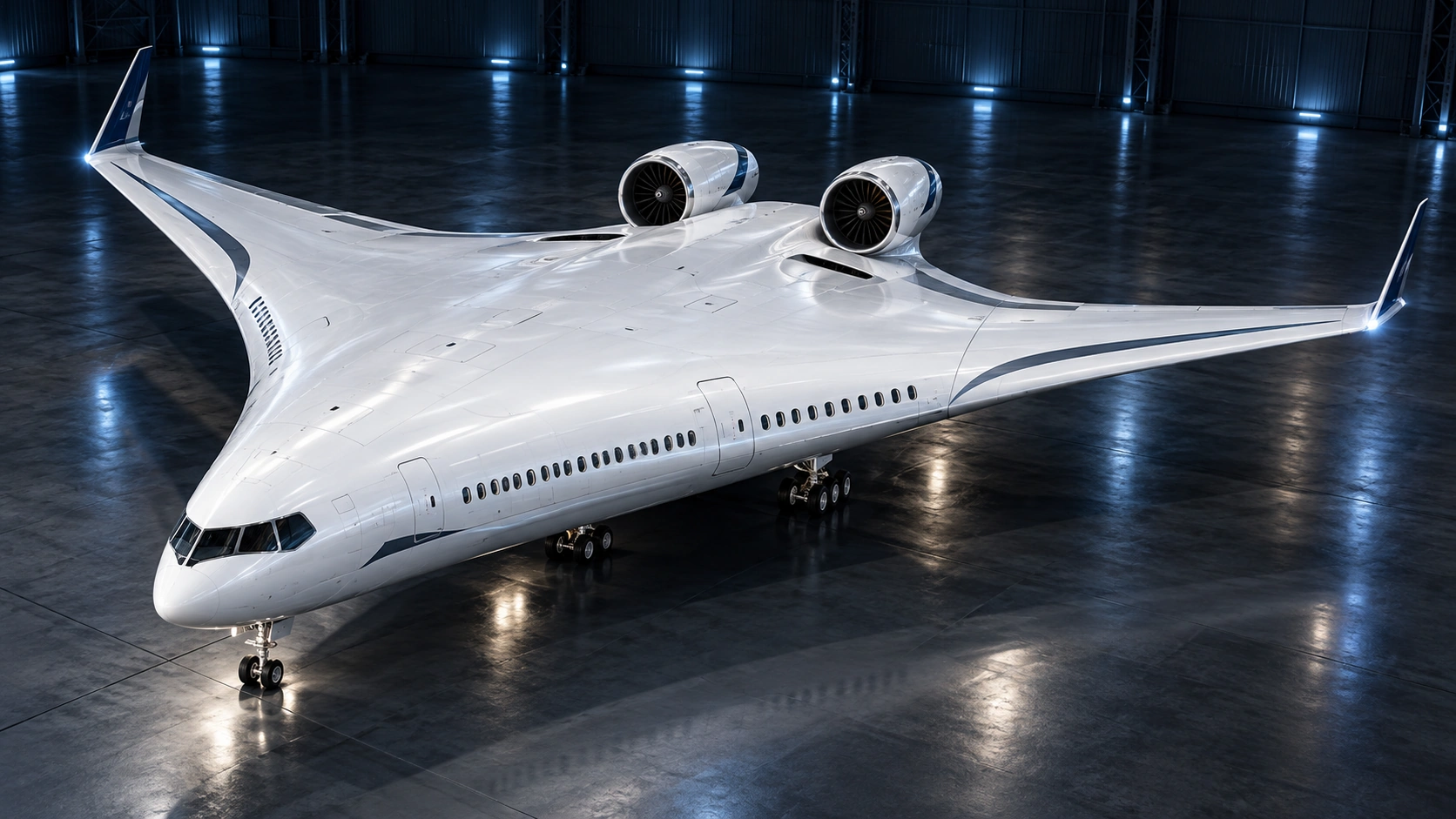
Independent CGI visualization. Technical specifications and source evidence are listed separately; image geometry remains illustrative. See the manufacturer’s actual aircraft and source details ↗
Systems architecture
Three engineering callouts Callouts below refer to the component-topology diagram, not to an unverified position on the artistic rendering.
1 Lifting centerbody The passenger cabin is integrated into a broad airframe that develops aerodynamic lift across more of the vehicle.
2 Aft engine integration Upper aft engine placement can reduce noise propagation but introduces intake/maintenance integration questions.
3 Efficiency hypothesis Up to 50% lower fuel burn is a company goal relative to selected conventional airliners; it is not validated airline-service performance.
Engineering distinction
Why this aircraft matters A wide integrated centerbody contributes lift and reduces wetted area. Two conventional jet engines are positioned near the upper aft surface in published JetZero design imagery, with a target of substantial fuel-burn reduction.
Constraints and failure modes
A pressure vessel integrated into the lifting body must manage unconventional bending loads, cabin layout and emergency exits. Passenger evacuation, ground handling, ride quality, noise and manufacturing are major certification challenges.
Model identification
How to recognize this configuration Program facts sourced · visual geometry held
01 · IDENTIFIER Distinct broad blended wing: cabin volume integrated into lifting body.
02 · IDENTIFIER Conventional jet propulsion located aft and high on the airframe in company design artwork.
03 · IDENTIFIER Jet1 demonstrator and Z4 passenger aircraft are separate programs.
The illustration is an independent editorial interpretation, not a photograph or an OEM-authorized three-view. The technical diagram preserves cited component counts while dimensions remain non-dimensional.
Detailed configuration view An alternate-angle CGI visualization of the aircraft. Use the linked sources and specification tables for technical facts; image dimensions and component positions remain illustrative.
INDEPENDENT CGI VISUALIZATION · ILLUSTRATIVE GEOMETRY Source and image policy. Specifications are model-specific. All development targets are explicitly separated from certified or demonstrated measurements. Technical artwork is educational and not approved manufacturer geometry.