
DreamStream
Technical Systems Program
DreamStream is a speculative neurotechnology architecture built around a simple premise: preserve dream-associated experience without surrendering the dreamer. The public Systems gateway focuses on noninvasive sensing concepts, local processing, reconstruction confidence, DreamShield safety, privacy, consent, and controlled session operations.
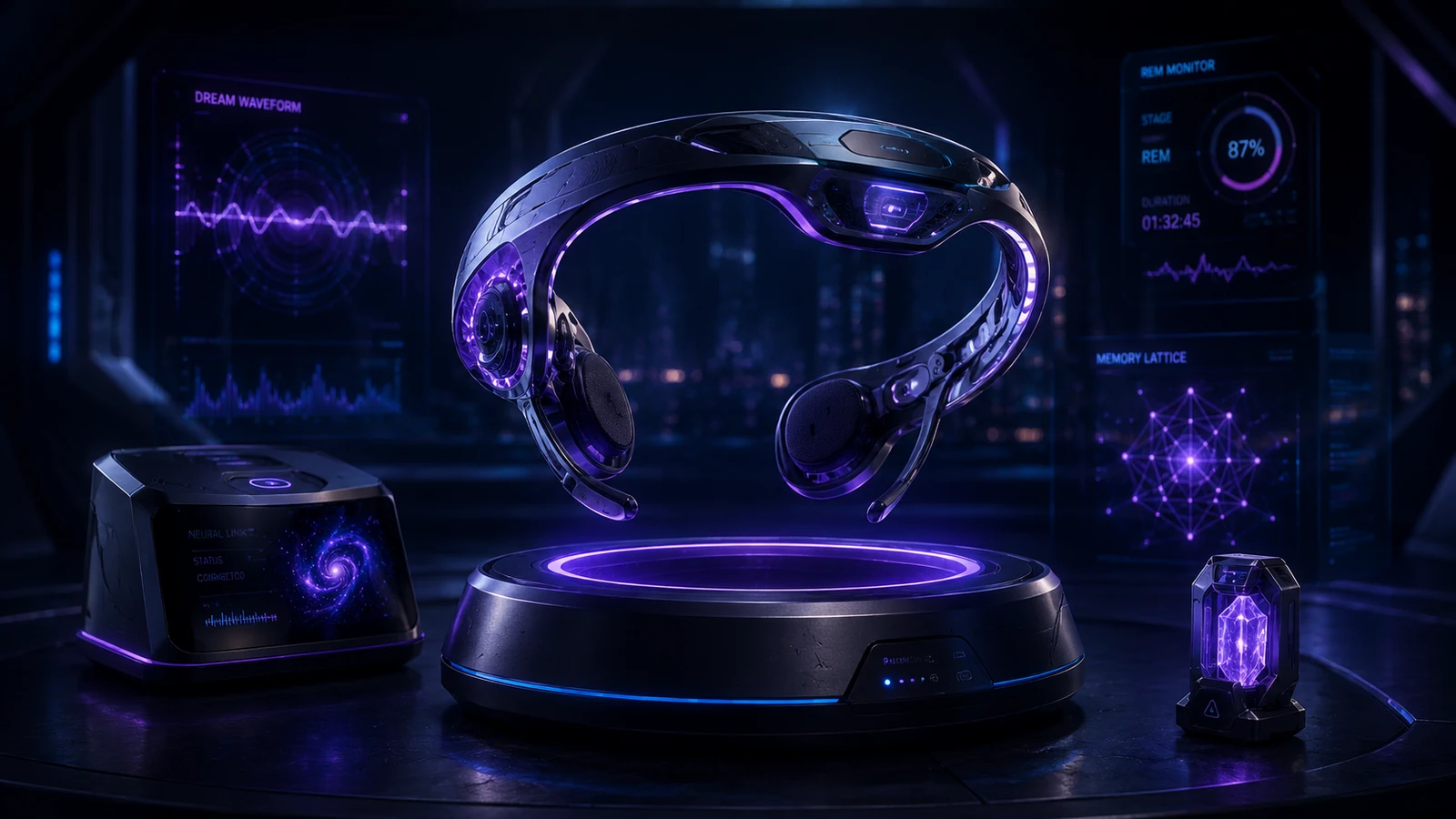
A protected dream-preservation and reconstruction concept.
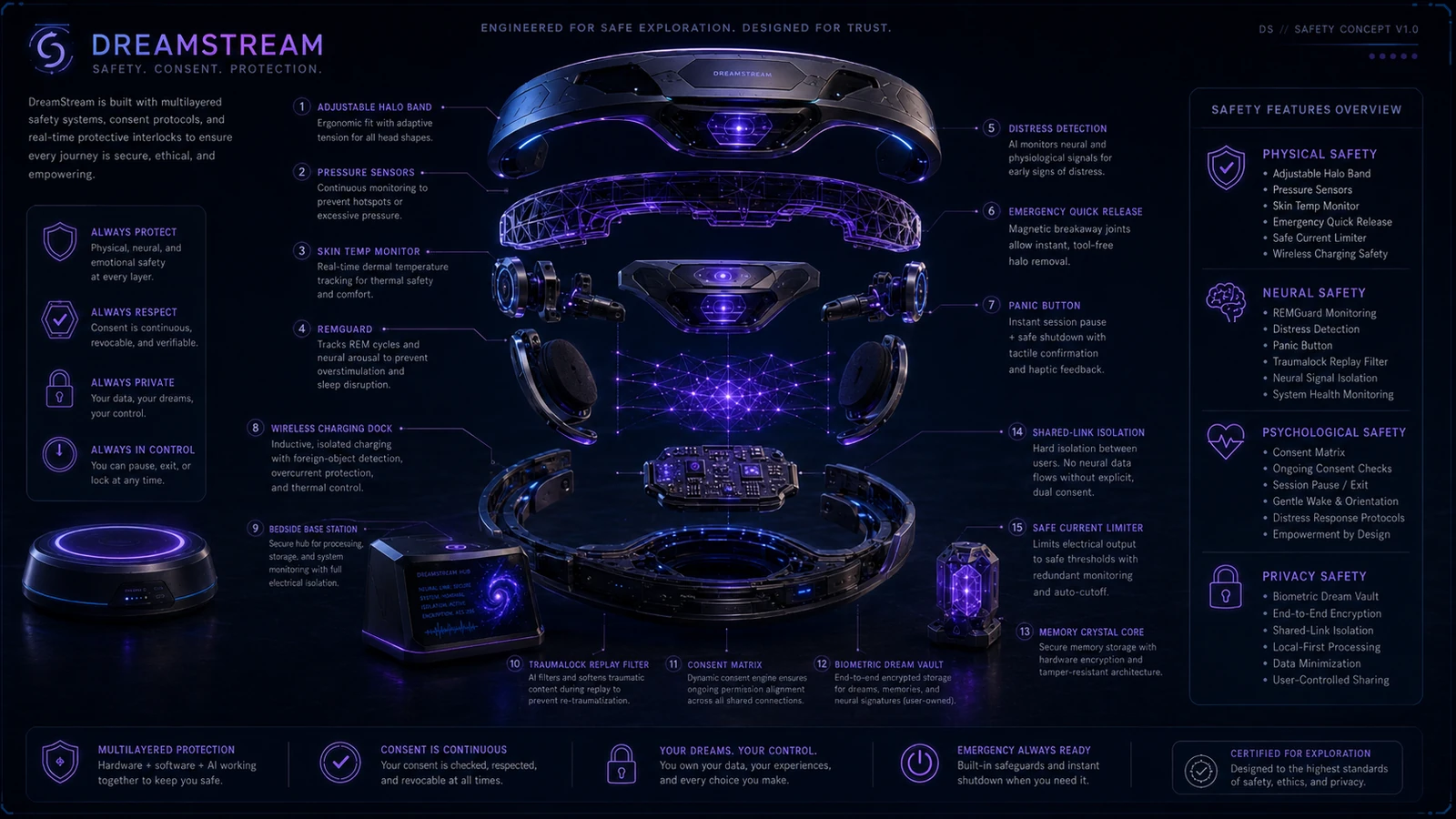
Wearable halo, bedside station, local processing, controlled archive, and DreamShield form one system. Reconstruction is treated as an interpretation with confidence labels—not a perfect movie extracted from the brain.
No mind-reading promise. No perfect-memory claim.
It is not a lie detector, dream interrogation system, proof of an afterlife, unrestricted shared world, or finished medical device. Capability never becomes automatic permission.
Eight engineering layers, one controlled session.
Every card now opens its own DreamStream page. The architecture stays inside the program instead of unexpectedly jumping to unrelated site areas.
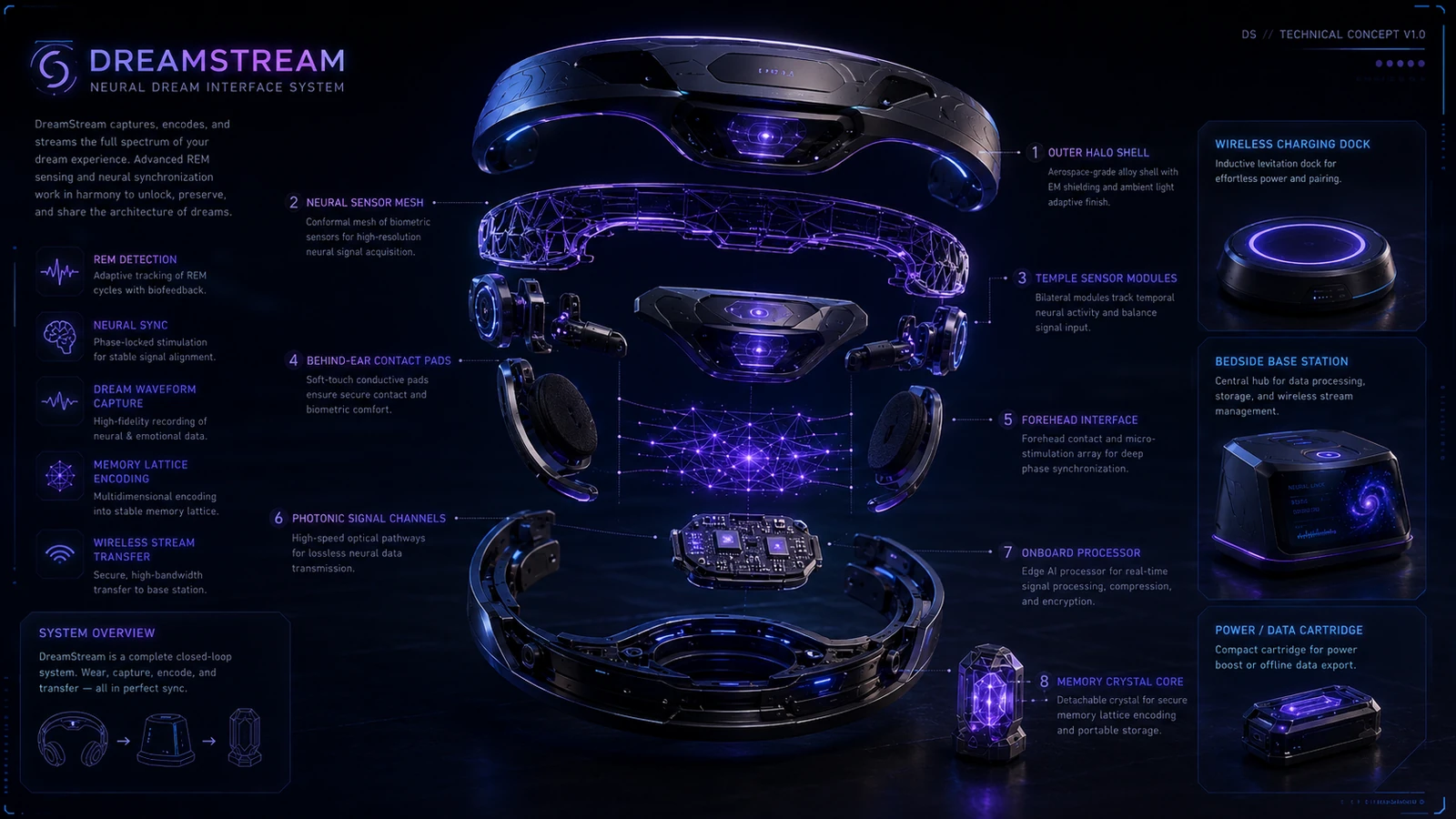
Device Platform
Wearable hardware, bedside station, local processing, modular service access, and safe disconnect architecture.
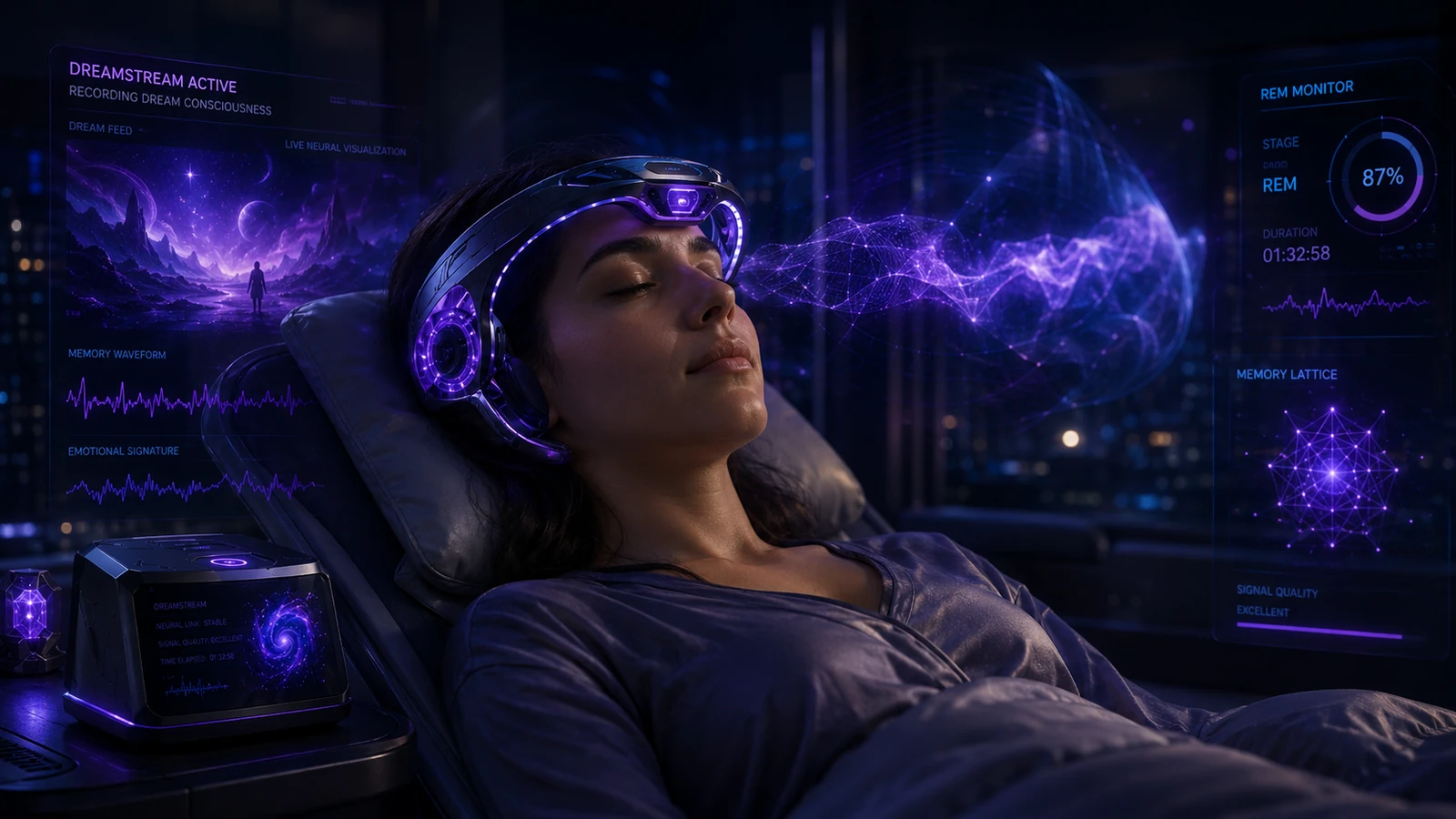
Neural-Signal Interface
Human-centered setup, live-state feedback, controlled exit, review, and anti-dark-pattern interface rules.
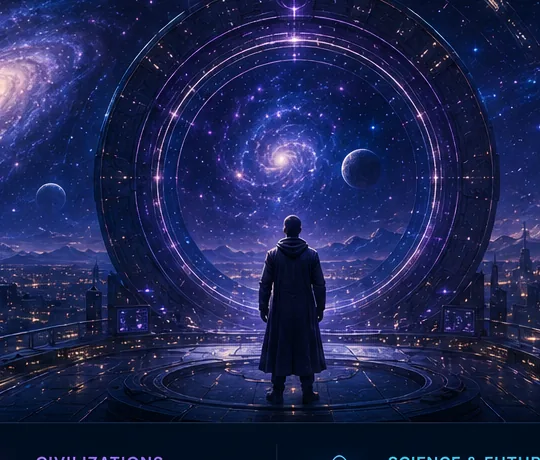
Dream Reconstruction Stack
A confidence-labeled reconstruction pipeline that separates captured signals, inferred structure, and uncertainty.
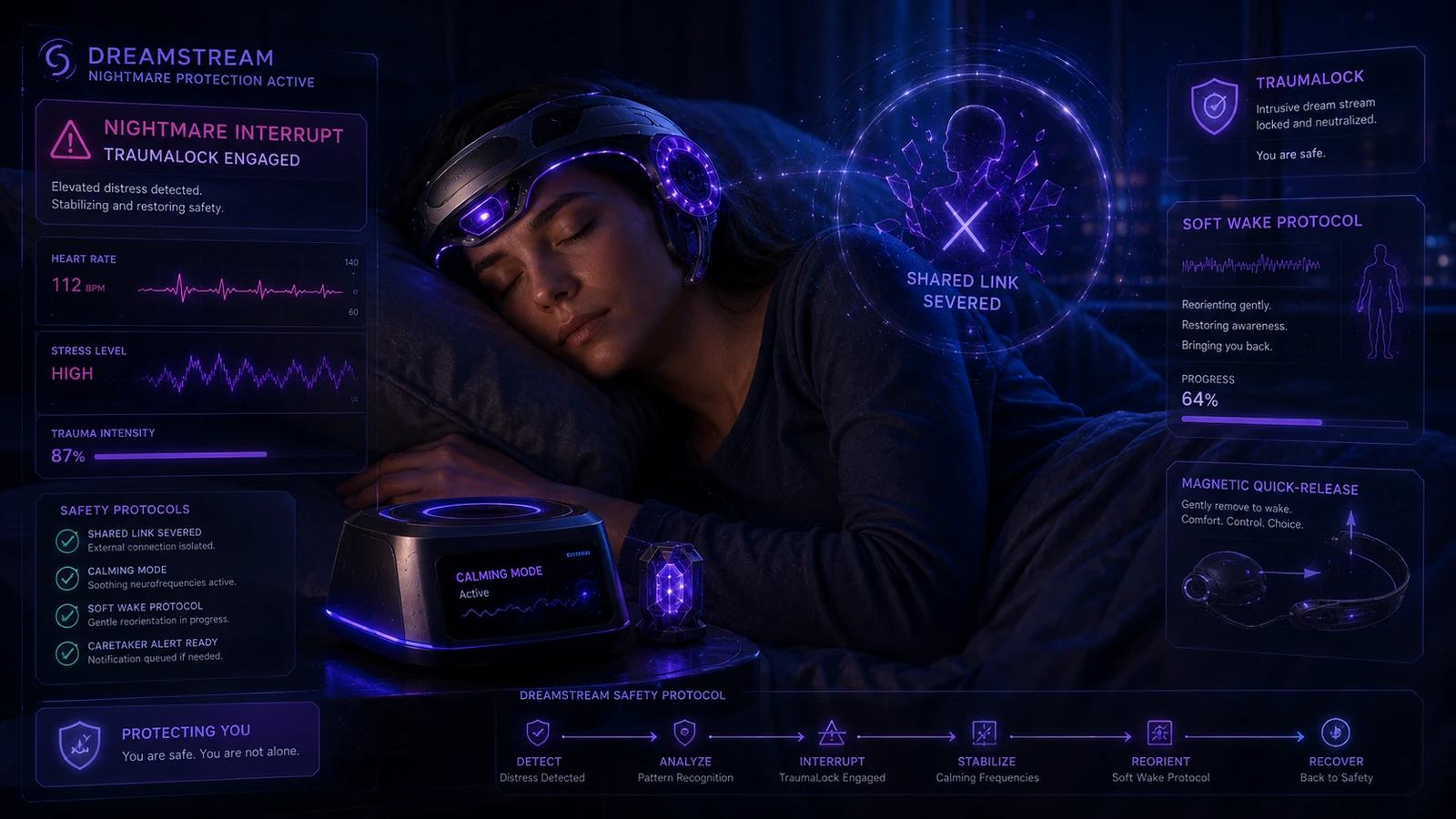
DreamShield
Consent, distress handling, protected replay, safe wake, shared-link isolation, cooldowns, and emergency modes.
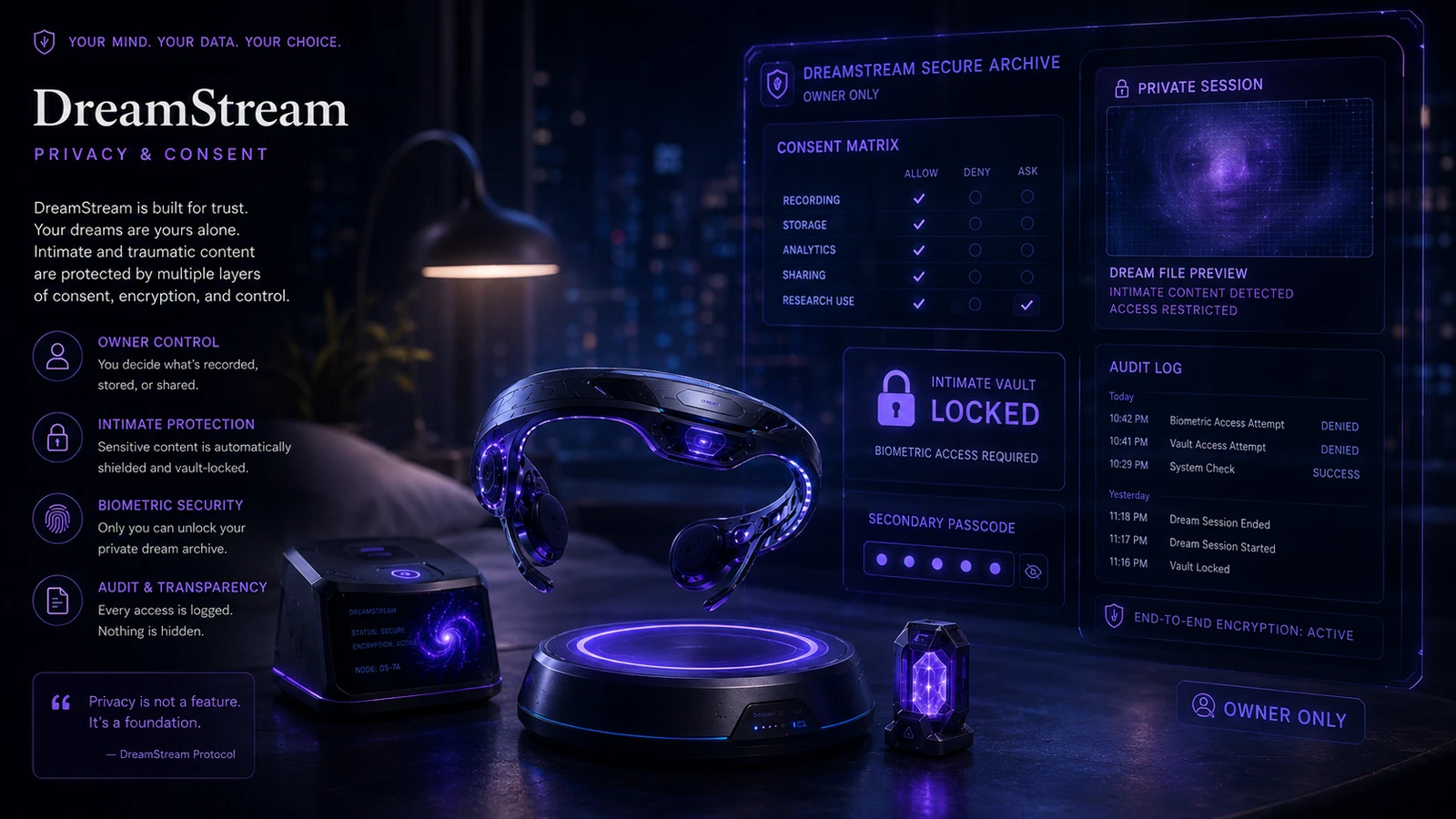
Privacy & Consent
Mental privacy, ownership, explicit sharing, revocation, deletion, auditability, and limits on secondary access.
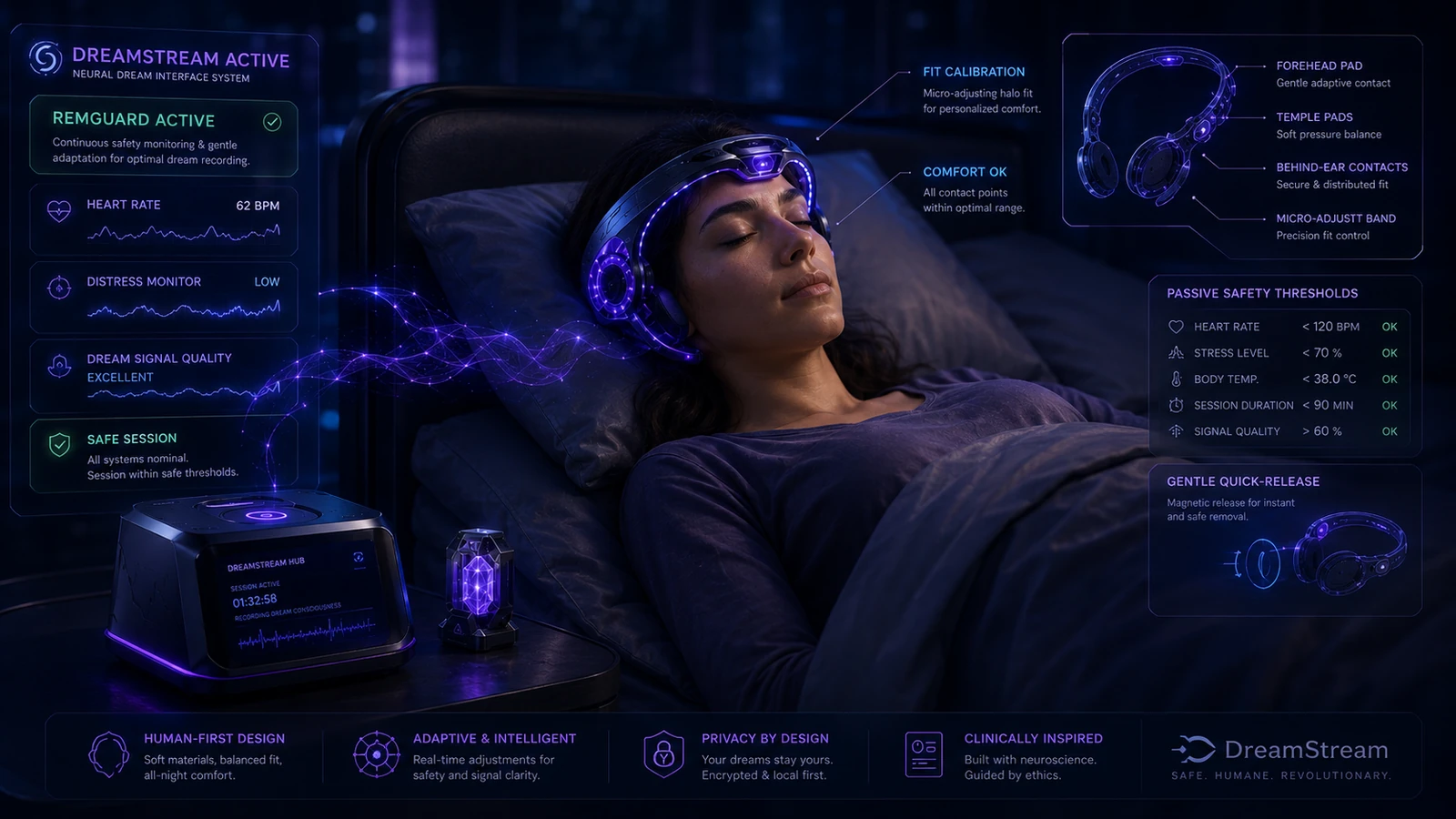
Safe Session Monitoring
Preflight checks, signal quality, session timing, physiology, anomaly response, safe wake, and recovery.
Research & Validation
A clear boundary between established sensing/signal-processing fields and speculative dream reconstruction claims.
CGI Engineering Reference
A consistent visual bible for books, scripts, pitch material, CGI/VFX, previsualization, and future screen production.
From setup to recovery, control remains visible.
The public architecture emphasizes bounded stages rather than hidden processing or ambiguous capture.
Research architecture, not a claim of a finished medical device.
Noninvasive neurophysiology, sleep-state monitoring, signal processing, privacy engineering, safety interlocks, and machine learning are established fields. High-fidelity dream reconstruction, replay, shared dreamspace, and advanced consciousness-interface functions remain speculative concepts requiring independent scientific validation.