
CGI Engineering Reference
A consistent visual bible turns DreamStream from a paragraph into a reusable world asset for books, scripts, storyboards, pitch decks, previsualization, and CGI/VFX.

What this layer contributes.
DreamStream public pages describe roles, boundaries, and user protections without publishing proprietary implementation details.
Device family
Maintain consistent halo, station, archive module, control surfaces, and physical relationships across scenes.
Session language
Define how private bedroom, clinical, research, and shared-session environments differ visually.
Safety states
DreamShield warnings, restricted replay, safe wake, and emergency isolation need recognizable visual grammar.
Reconstruction visuals
Separate raw signal, reconstructed imagery, confidence overlays, and deeper Dream Lattice motifs.
Book + script support
Interior graphics and scene references help readers, collaborators, and adaptation teams inhabit the same canon.
CGI/VFX handoff
High-resolution renders can become starting references for modeling, look development, set design, and previsualization without publishing proprietary engineering details.
Five visible stages.
The operating path is intentionally legible so the user can understand where control, uncertainty, and intervention enter the system.
Enough to understand the system—not enough to expose the implementation.
Consistent imagery for engineering and narrative continuity.
Renderings support concept communication, books, scripts, and future CGI development while remaining separate from validation claims.
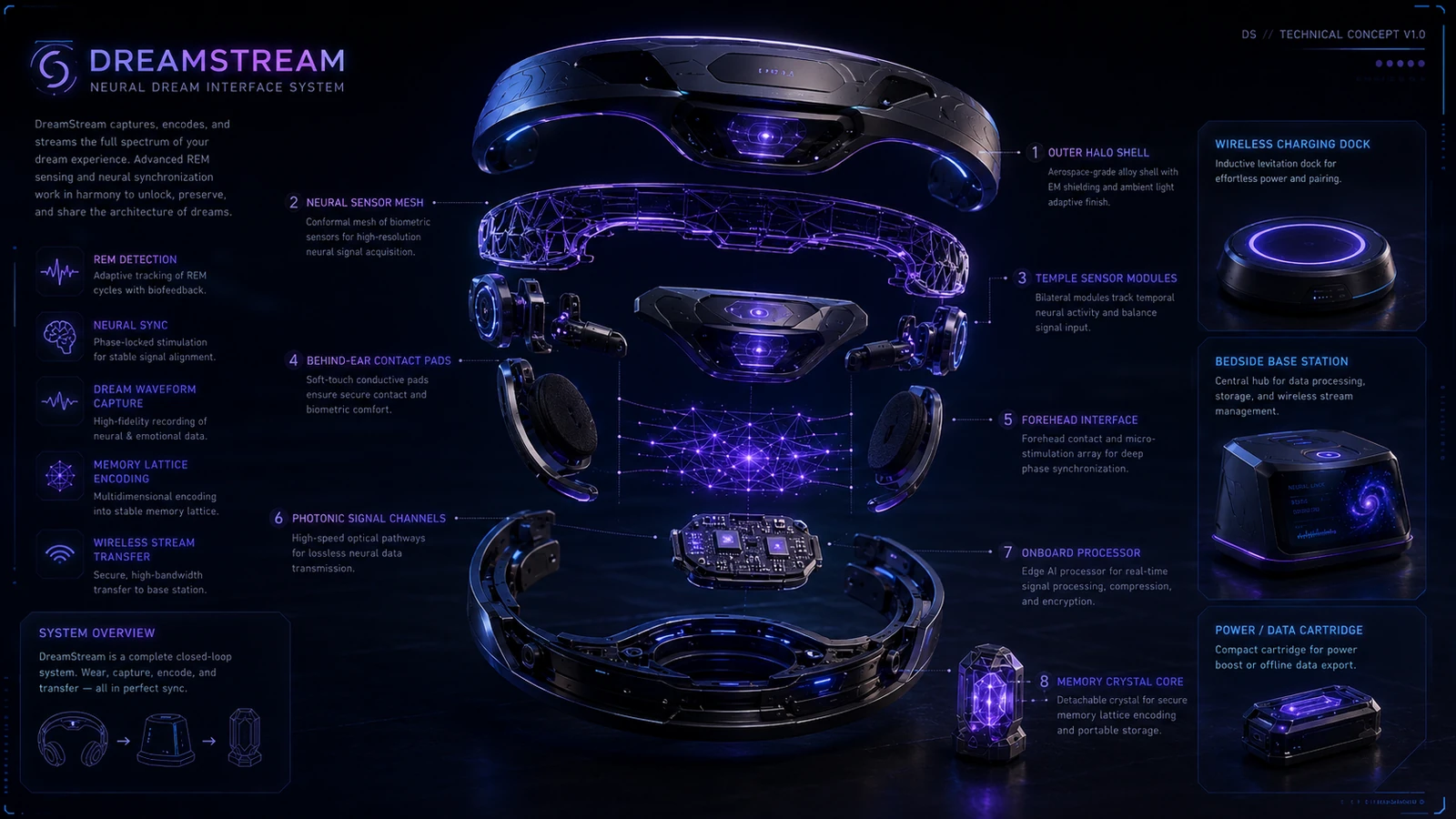

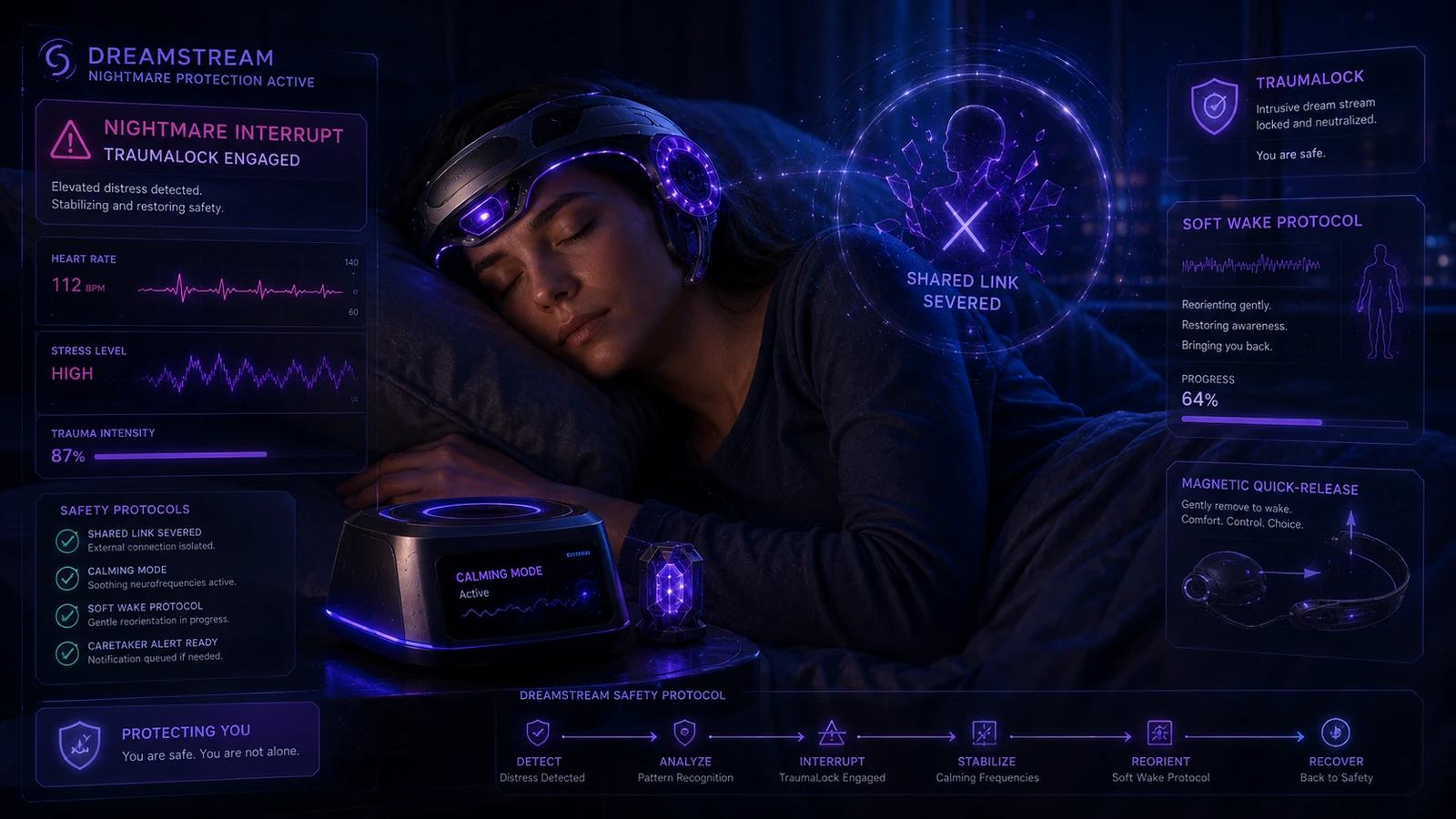
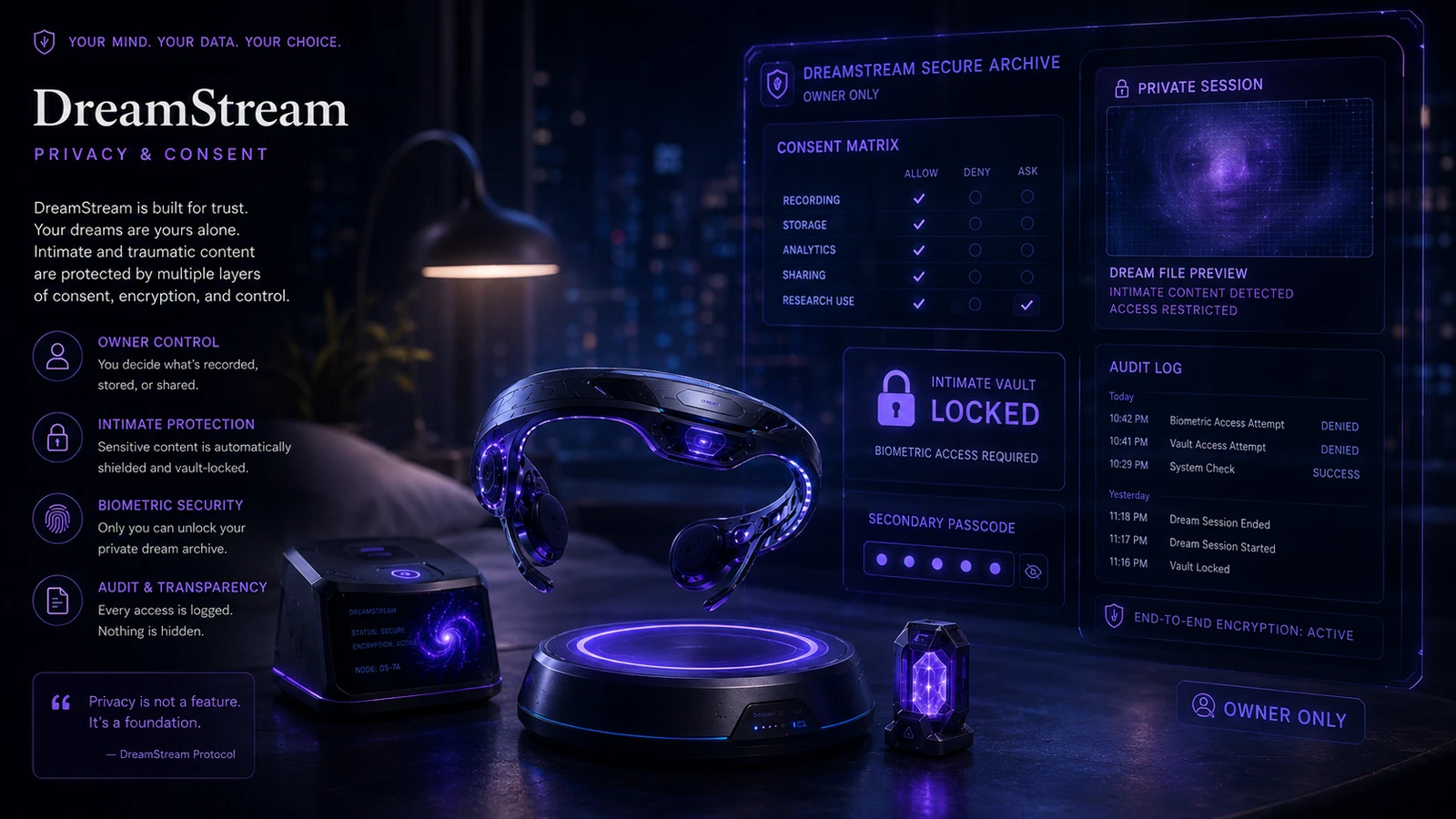
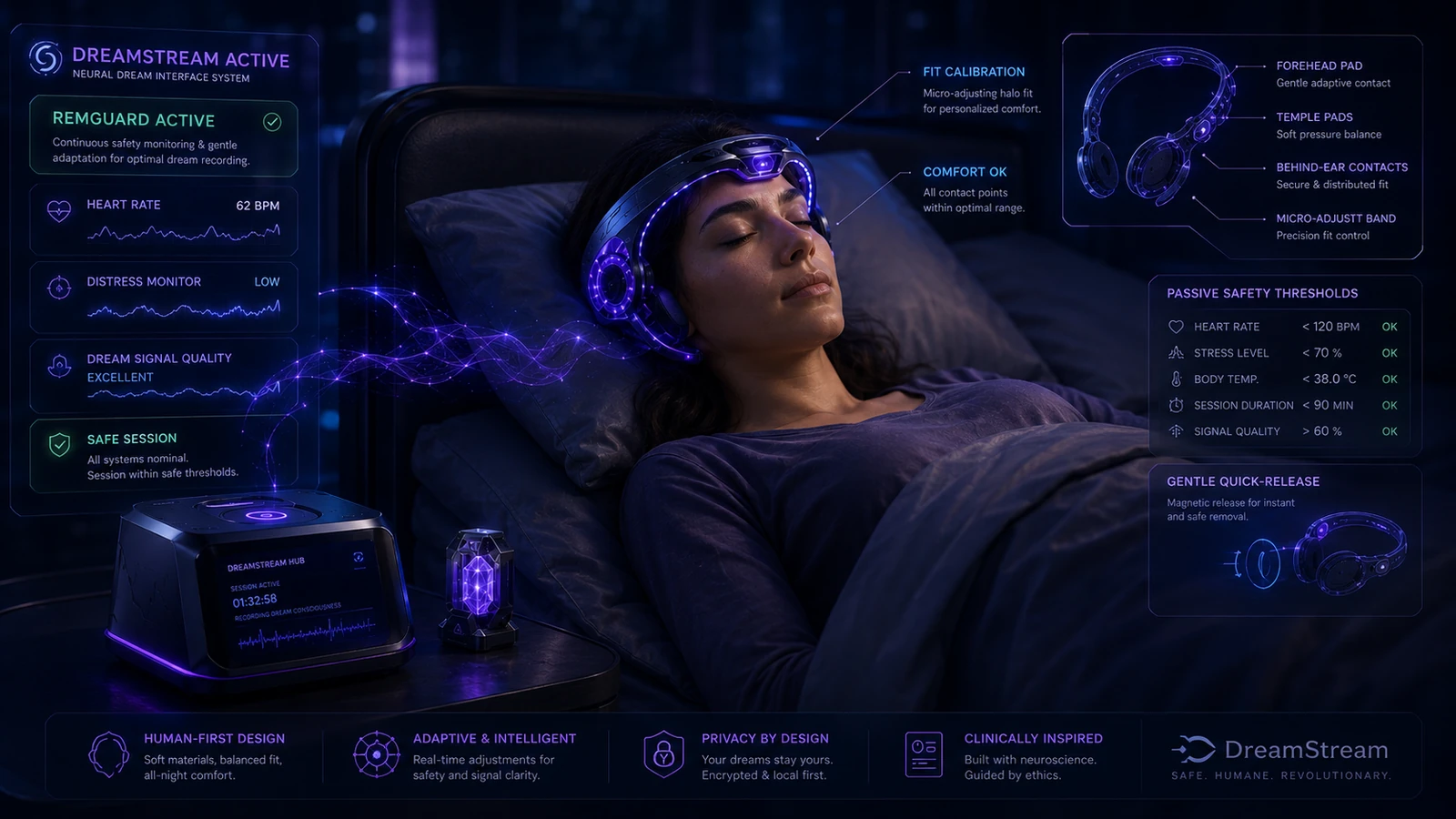
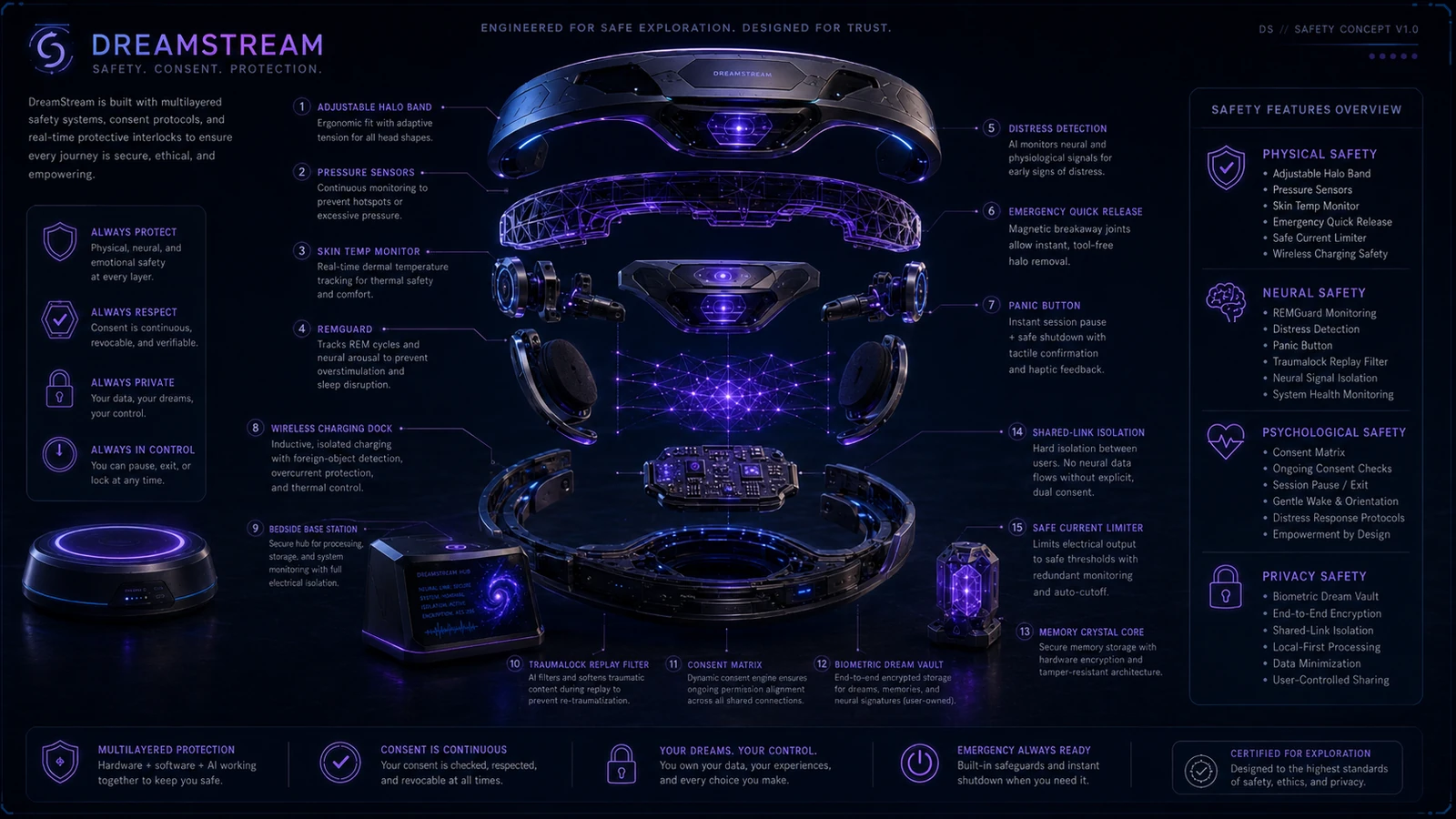

Eight current CGI / engineering references.
These images form a starter continuity set for future book interiors, scripts, pitch material, storyboards, modeling, and screen previsualization.