Neural-Signal Interface
The interface is designed around clear state, explicit consent, safe exit, and intelligible uncertainty.

What this layer contributes.
DreamStream public pages describe roles, boundaries, and user protections without publishing proprietary implementation details.
Pre-session setup
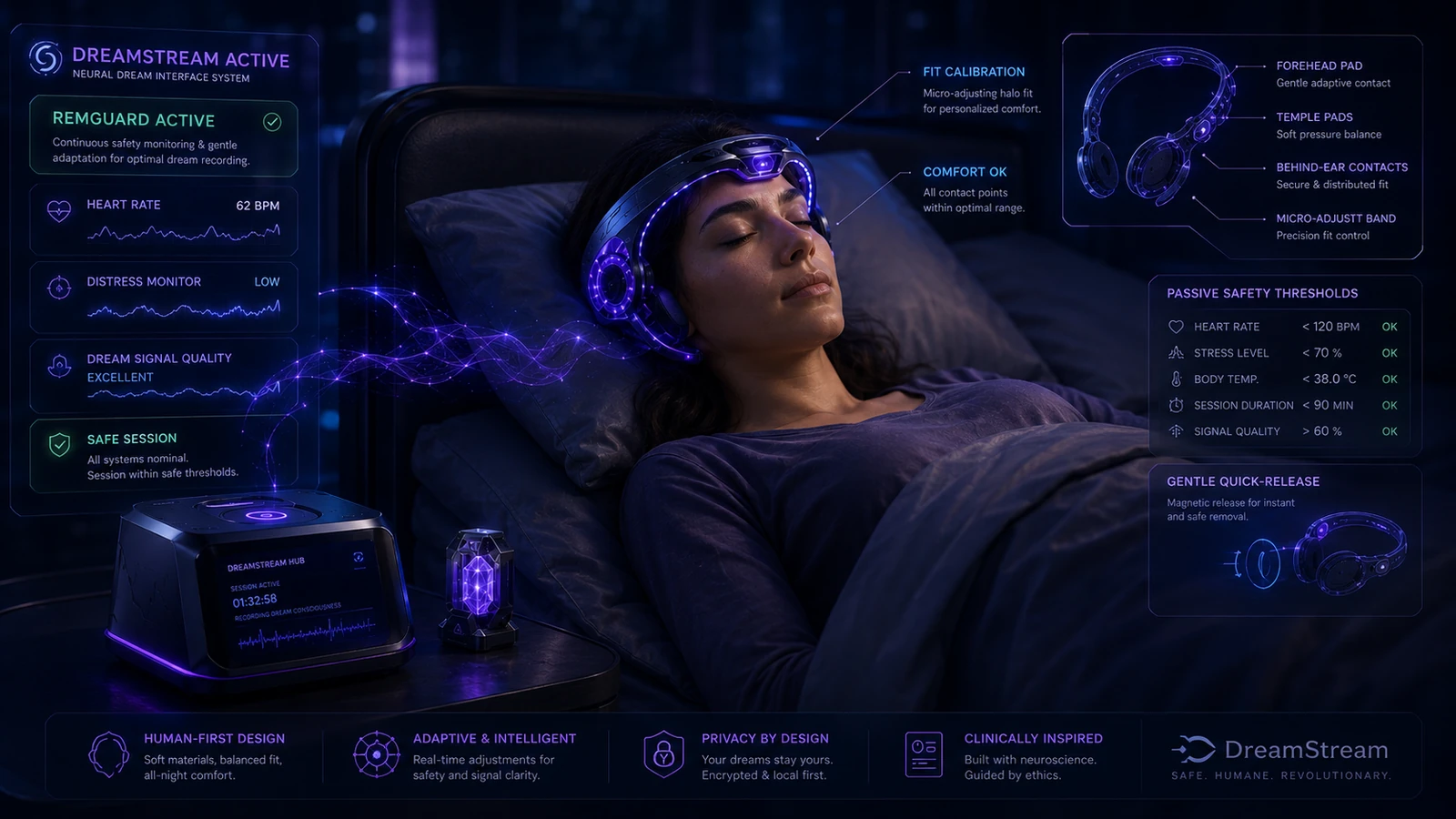
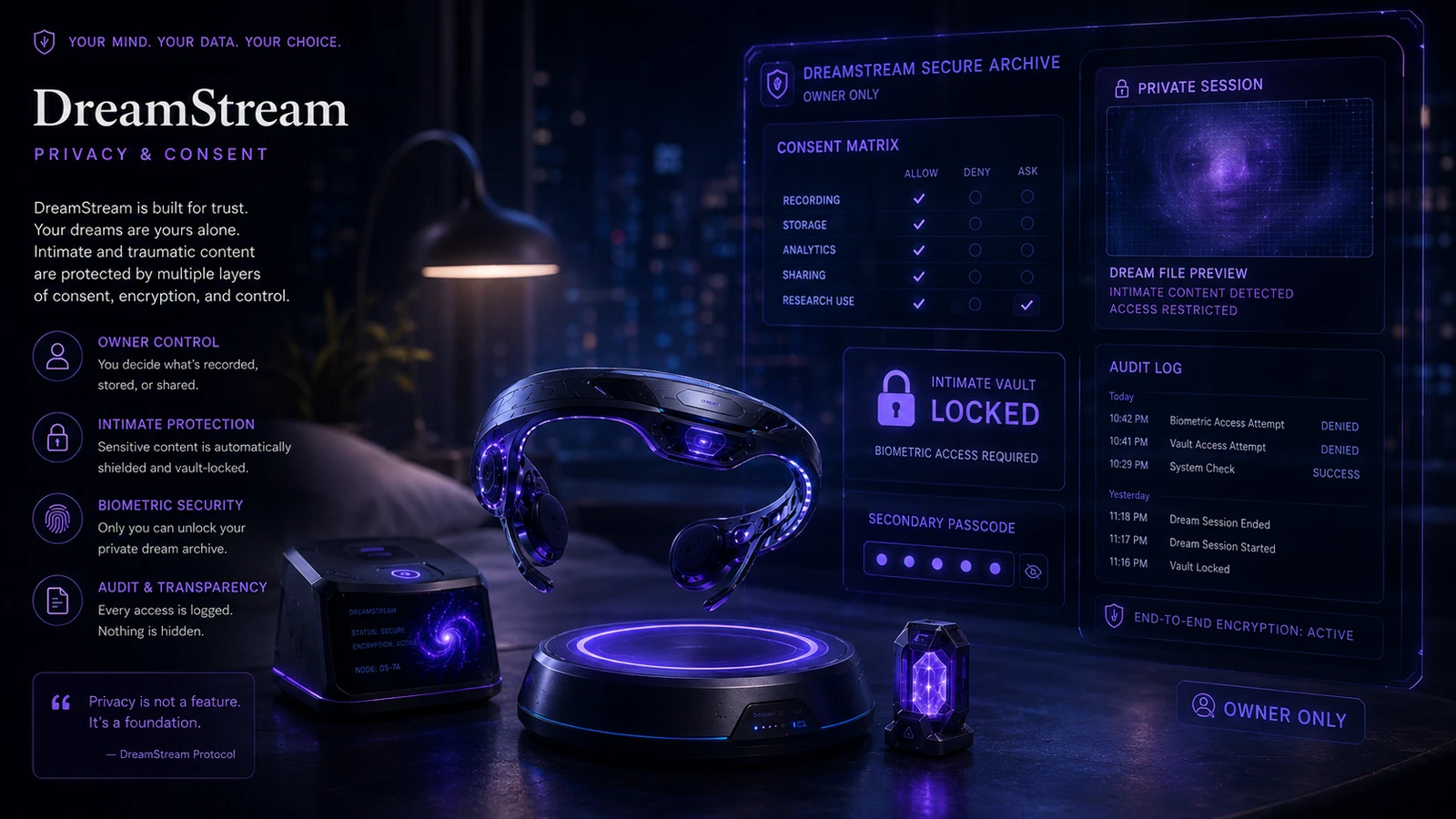
Fit, permissions, session intent, sharing scope, and safety status are visible before capture begins.
Live state
Session state, signal quality, timing, and safety status remain understandable without overwhelming the user.
Safe exit
Stop, soft wake, emergency disconnect, and post-session recovery are designed as first-class interface paths.
Replay review
Captured, reconstructed, inferred, and uncertain elements are visually distinguished.
No dark patterns
Consent is not buried, default sharing is not assumed, and friction is allowed when safety needs it.
Role boundaries
User, collaborator, caregiver, clinician, and researcher views are intentionally different.
Five visible stages.
The operating path is intentionally legible so the user can understand where control, uncertainty, and intervention enter the system.
Enough to understand the system—not enough to expose the implementation.
Consistent imagery for engineering and narrative continuity.
Renderings support concept communication, books, scripts, and future CGI development while remaining separate from validation claims.