Dream Reconstruction Stack
DreamStream treats reconstruction as a layered inference problem, not literal playback from the brain.
What this layer contributes.
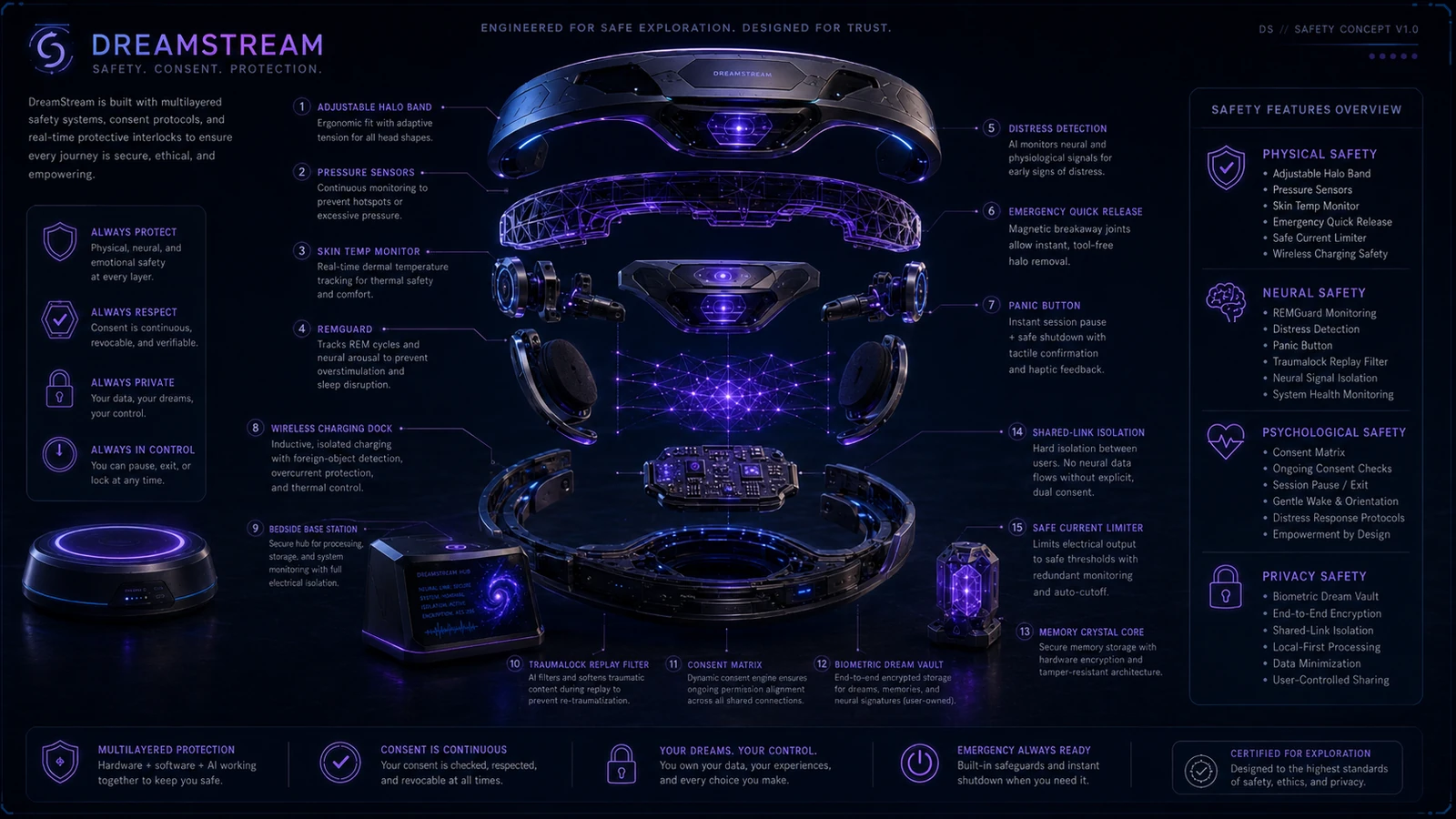
DreamStream public pages describe roles, boundaries, and user protections without publishing proprietary implementation details.
Signal intake
Captured features are cleaned and segmented before any narrative interpretation is attempted.
Temporal alignment
Dream-associated events are organized into a working sequence rather than assumed to be a perfect timeline.
Context assembly
Memory cues, emotional context, imagery, and continuity can contribute to reconstruction.
Gap-fill disclosure
Machine-generated continuity must remain distinguishable from directly supported content.
Confidence classes
The user sees where the system is more or less certain instead of receiving one seamless illusion of truth.
Challenge + correction
The dreamer can dispute, annotate, restrict, or reject a reconstruction rather than being overruled by the system.
Five visible stages.
The operating path is intentionally legible so the user can understand where control, uncertainty, and intervention enter the system.
Enough to understand the system—not enough to expose the implementation.
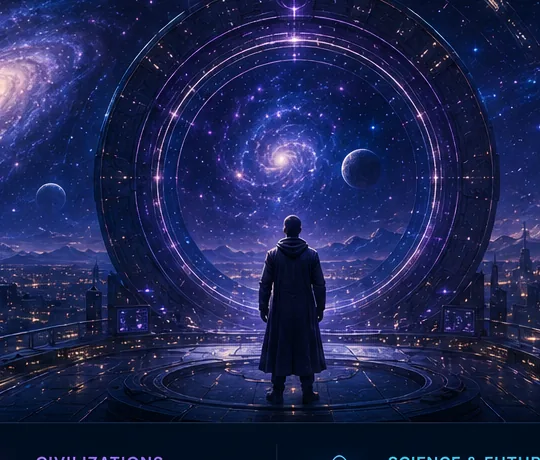
Consistent imagery for engineering and narrative continuity.
Renderings support concept communication, books, scripts, and future CGI development while remaining separate from validation claims.