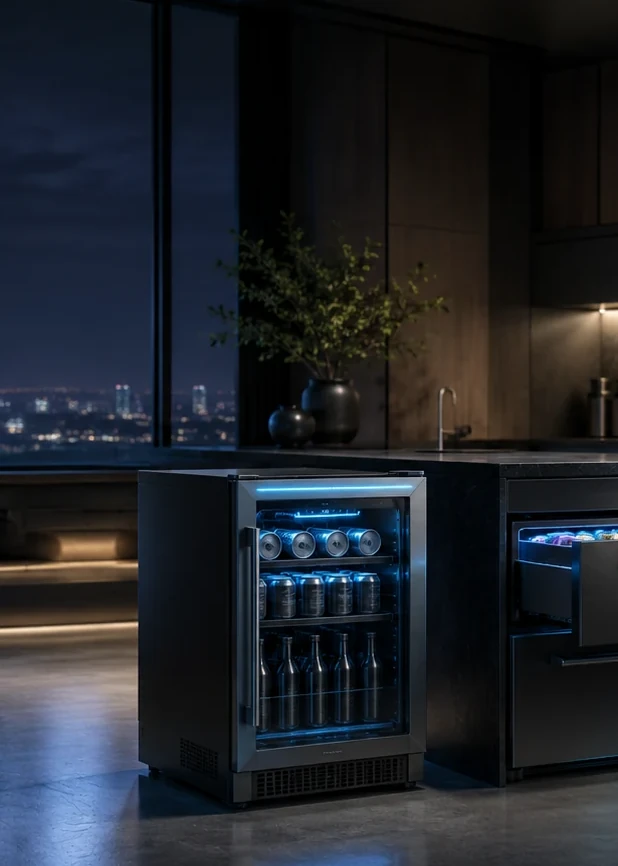
Compact
Beverage / Mini Cooling
Small-format direction for offices, hospitality rooms, dorms, personal beverage storage, and early product demonstrations.
Explore This Product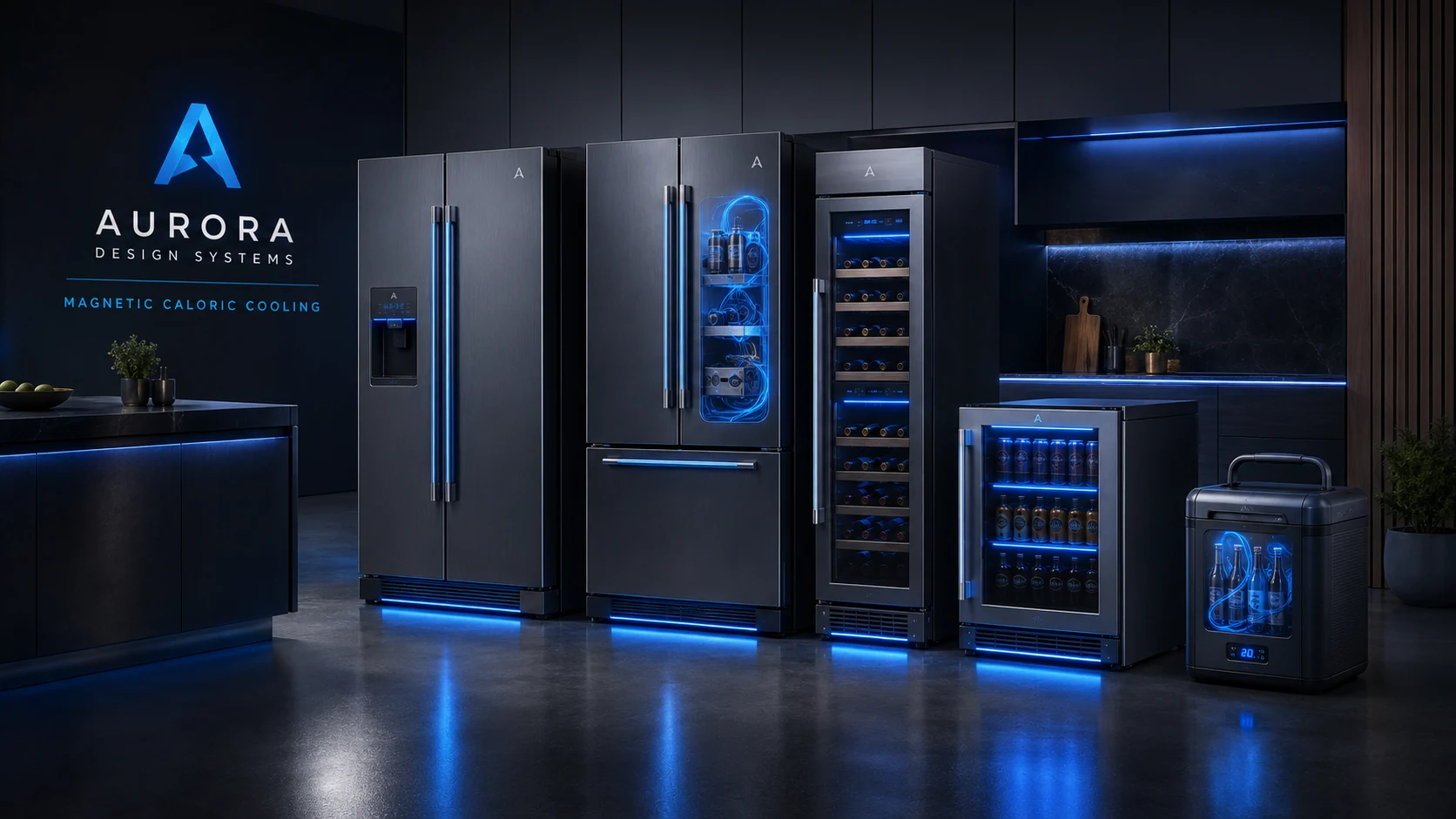
Magnetic Caloric Cooling™ is framed as a future product platform extending from compact beverage cooling to full-size refrigeration and specialty cabinets. The commercial story is breadth, appliance integration, and a technology path that remains subject to measured engineering validation.
The same cooling research program can be expressed as distinct products for personal, household, and specialty environments.
Small-format direction for offices, hospitality rooms, dorms, personal beverage storage, and early product demonstrations.
Explore This Product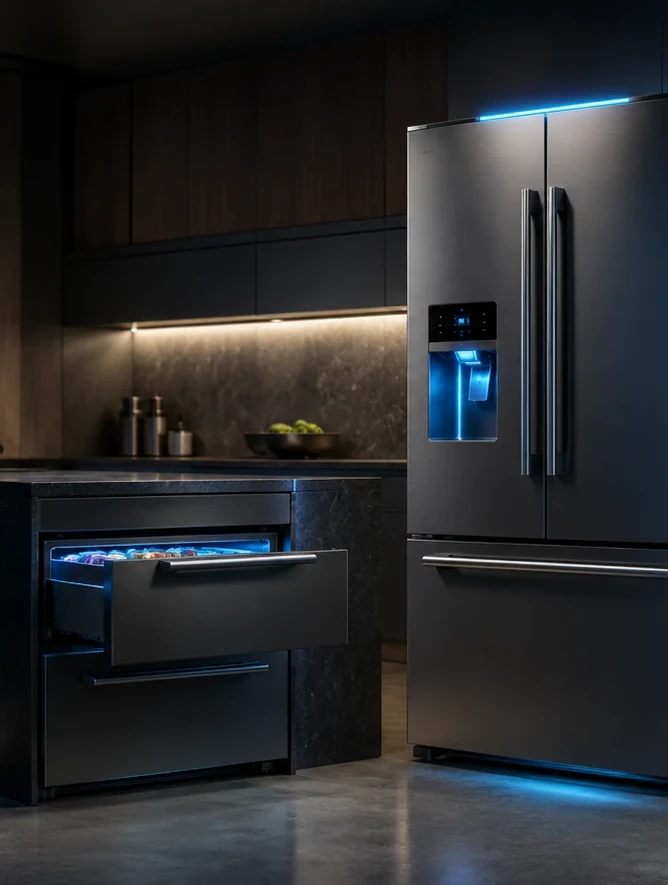
Full-size appliance direction focused on household integration, premium industrial design, and future validated thermal performance.
Explore This Product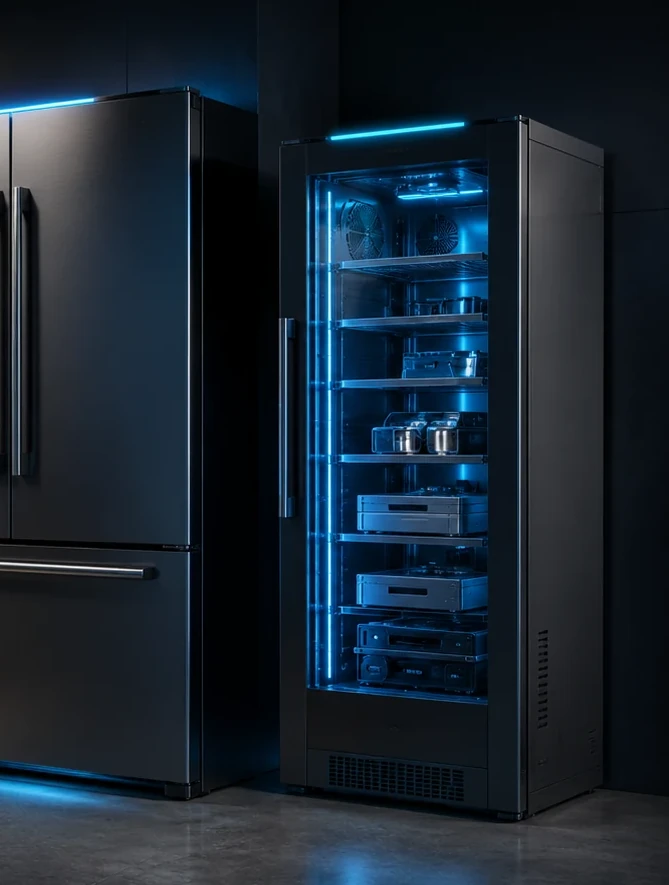
Specialty cabinet direction for wine, medical, laboratory, or other controlled-storage markets where stable temperature management matters.
Explore This ProductThe compact, kitchen, and specialty cabinets establish the visible product family. Longer-term markets can reuse the same cooling research while adapting packaging, duty cycle, and controls to different environments.
Potential temperature-controlled cabinets for specialty-use markets where stability, serviceability, and compact packaging matter.
Future modules for instrument cabinets, electronics cooling, and other non-food thermal-management niches.
Quiet compact products could fit hotel rooms, lounges, premium beverage service, and other hospitality environments if performance is validated.
Small transportable units provide a pathway for future field, laboratory, or mobile cooling studies.
The appliance still looks like a refrigerator, beverage cooler, or specialty cabinet because that is what the customer uses. The engineering difference is underneath: a magnetocaloric heat-pumping cycle replaces the conventional vapor-compression research path.
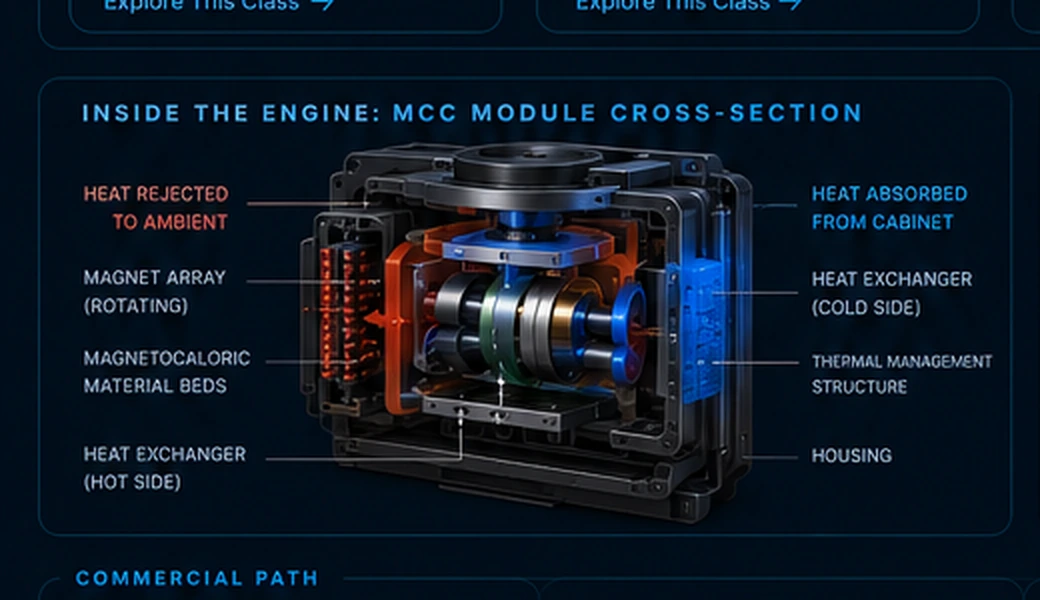
Magnetocaloric thermal exchange is the core research direction; production geometry, materials, controls, and cycle architecture remain engineering-development items.
The product opportunity centers on quieter packaging, new appliance layouts, and differentiated thermal architecture if validated performance supports those advantages.
The same brand story can span appliances, niche cooling products, and infrastructure-adjacent thermal modules.
An advanced thermal-management product family exploring magnetocaloric cooling as a future alternative architecture for appliances and specialty cooling systems.
Conventional cooling products create design constraints around compressors, vibration, packaging, refrigerant systems, and maintenance.
Develop a family concept ranging from compact beverage cooling through refrigerators, wine cabinets, specialty storage, and portable units.
Residential appliances, hospitality, beverage systems, specialty storage, laboratories, and selected electronics/thermal-management applications.
Technology licensing, appliance OEM partnerships, subsystem modules, premium product families, and specialty cooling applications.
The platform can become a recognizable Aurora cooling family rather than a single demonstration device.
Establish measured thermal performance, efficiency, cycle durability, materials behavior, control architecture, cost, and manufacturability.
Avoid precise claims on COP, efficiency, noise, refrigerant elimination, reliability, or cost until there is supporting engineering evidence. Position this as an advanced product architecture and future research-to-product pathway.