STW • 20–40 kHz current UST baseline; alternate bands under studyNo human or animal occupancy during operationService / calibration / future quantum-sensor modes: empty-only
STW • Textile Cleaning
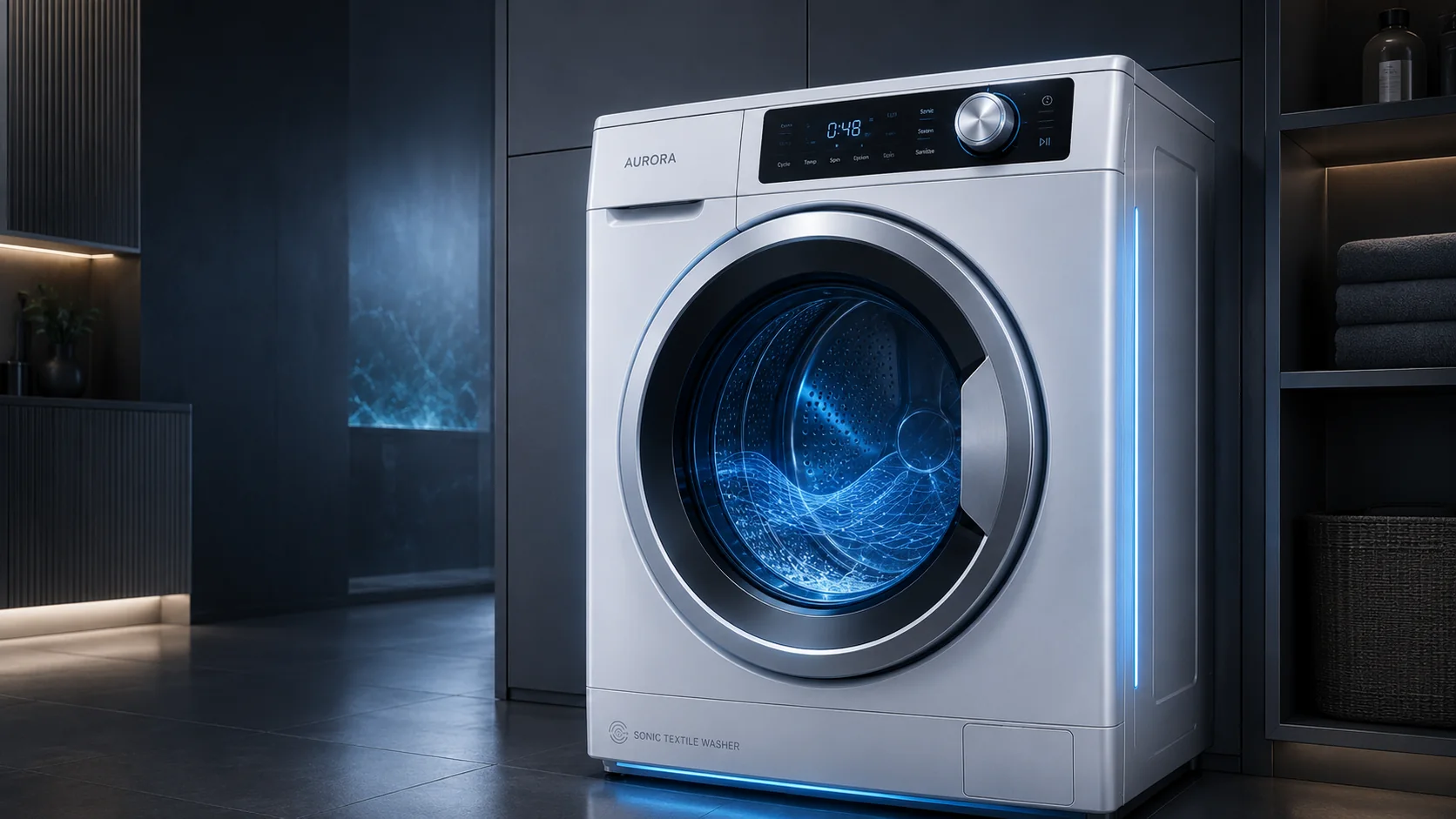
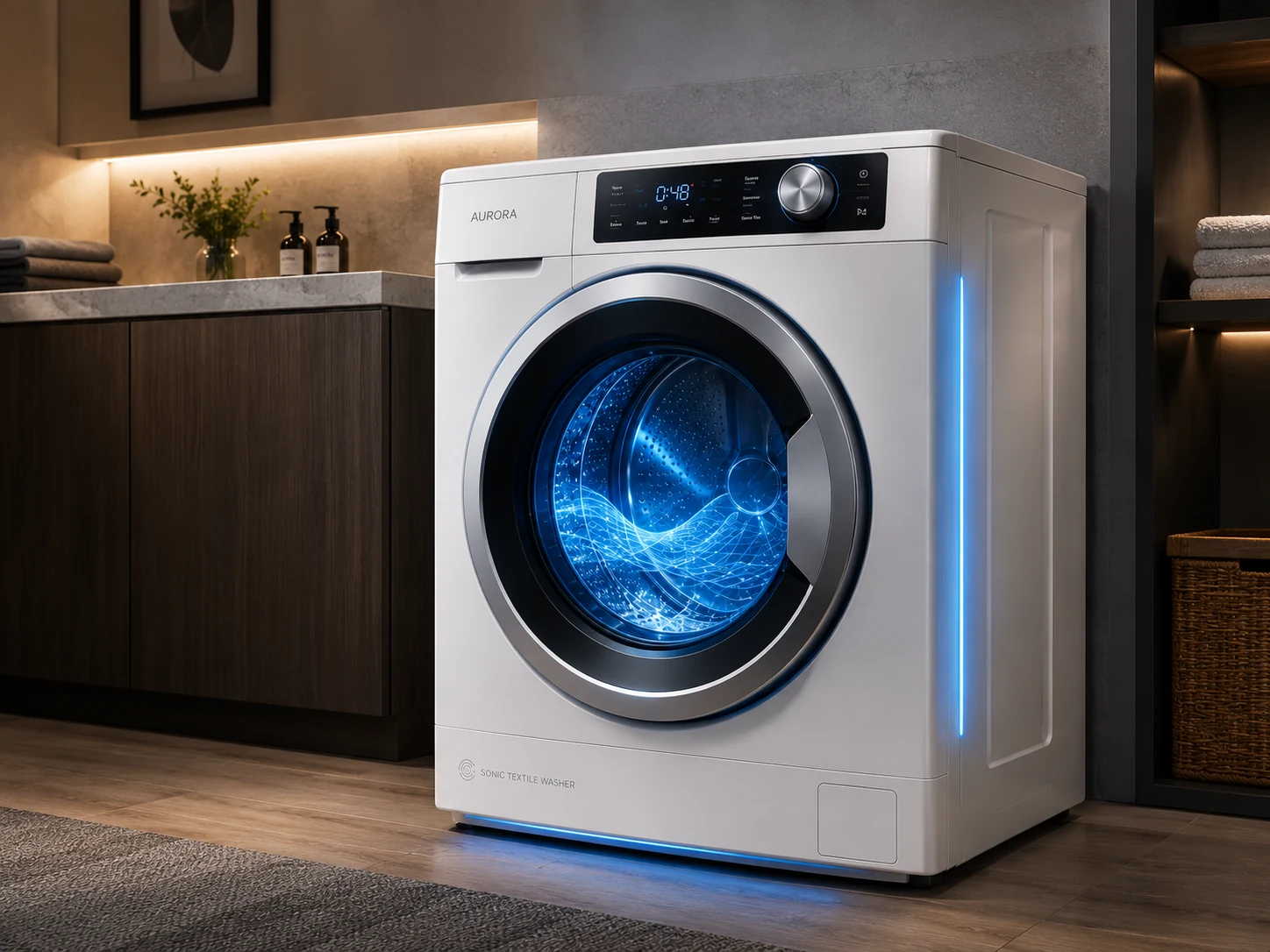
Sonic Textile Washer
An adaptive low-water textile-cleaning system using zoned acoustic energy, load mapping, limited fluid coupling, filtration and fabric-protection logic.
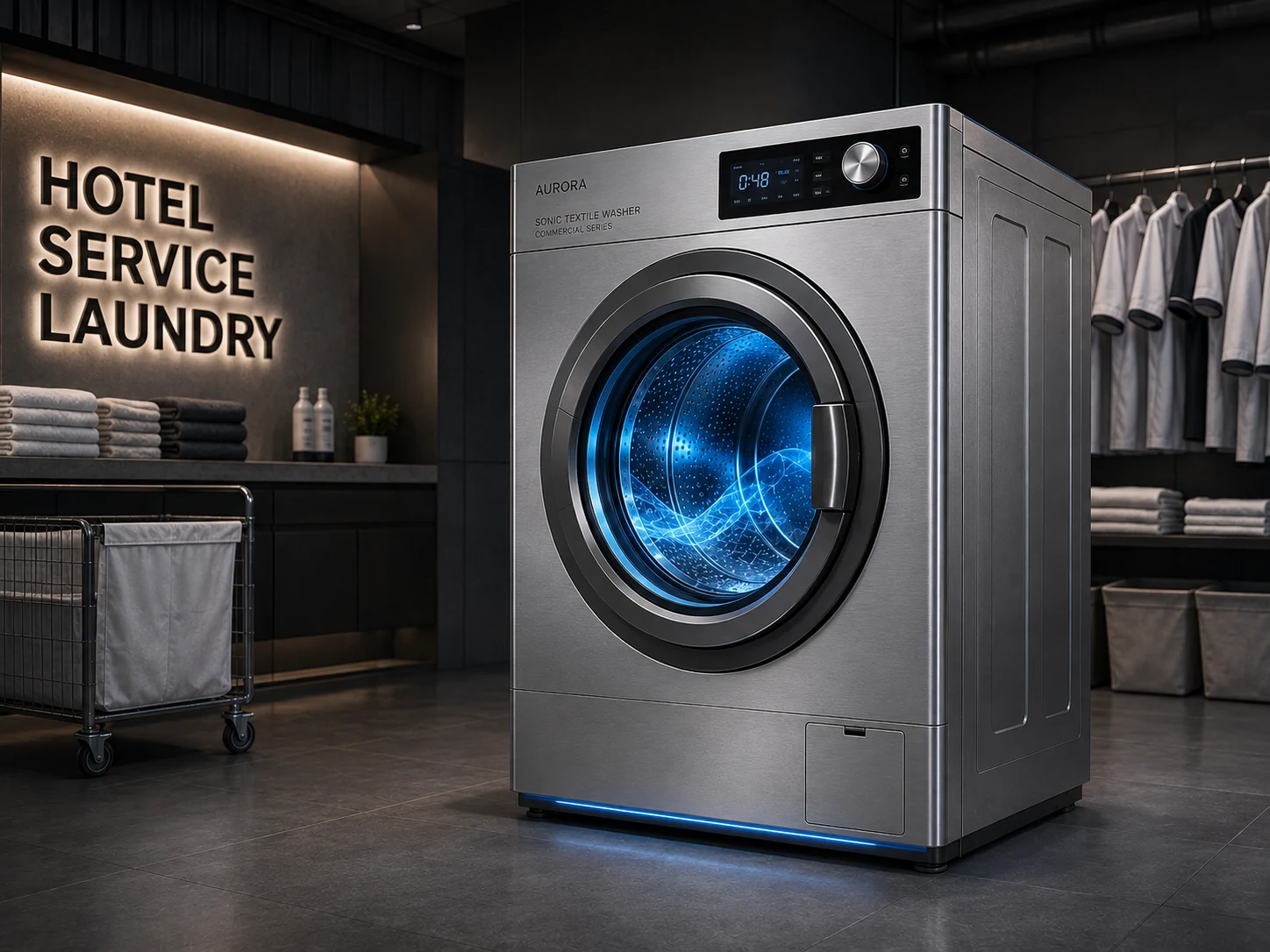
As with major appliance families, the STW platform can support distinct consumer, compact, hospitality and commercial configurations while sharing the same UST control, safety and service architecture.
Frequency values shown here are current UST concept-study ranges from the program architecture, not released product specifications or human exposure limits.
Operating Experience
Selectable modes
Delicate
Reduced amplitude and conservative exposure.
Normal
Balanced everyday textile-cleaning sequence.
Heavy
More aggressive mode only for compatible loads.
Mixed Load
Sensor-driven zoning and sequencing.
Refresh
Light soil / odor / finishing cycle.
Adaptive
Load response used to adjust operating sequence.
Control Interface
Ten control / status functions to define
The final interface may use physical buttons, sealed switches, touch controls, indicators or a combination. The website shows functions, not a frozen hardware layout.
Power / standbyFinal label, icon, hardware and control behavior remain subject to HMI engineering.
Fabric / mode selectionFinal label, icon, hardware and control behavior remain subject to HMI engineering.
Load size or automatic detectionFinal label, icon, hardware and control behavior remain subject to HMI engineering.
Cycle duration estimateFinal label, icon, hardware and control behavior remain subject to HMI engineering.
Acoustic zone statusFinal label, icon, hardware and control behavior remain subject to HMI engineering.
Water / chemistry statusFinal label, icon, hardware and control behavior remain subject to HMI engineering.
Filter / debris statusFinal label, icon, hardware and control behavior remain subject to HMI engineering.
Door / occupancy interlockFinal label, icon, hardware and control behavior remain subject to HMI engineering.
Pause / emergency stopFinal label, icon, hardware and control behavior remain subject to HMI engineering.
Complete / service / fault indicationFinal label, icon, hardware and control behavior remain subject to HMI engineering.
Public-Safe Architecture
How the system works without exposing proprietary geometry