NCE modular ellipsoid computing from edge nodes to mission-scale clusters.
NCE is a modular three-dimensional ellipsoid computing family spanning edge nodes, workstations, rack-scale systems and mission architectures. The public program emphasizes standardized interfaces, photonic/data connectivity, serviceability, observability and human-governed operation.
One family. Many physical scales. Clear xN semantics.
NCE means Neuromorphic Computing Ellipsoid. The species name is a memorable physical-scale alias. The xN suffix is the number of active ellipsoid modules in the host assembly: NCE-Chicken-x1 is one Chicken-class ellipsoid, while NCE-Goose-x8 is an eight-module Goose-class assembly. xN is not a generation number and is not a performance multiplier.
Ten public scale aliases communicate packaging and role bands without claiming biological construction or production availability.
Single modules grow into compact cells, trays and rack systems while keeping service, fault and safety boundaries explicit.
Concept renderings, architecture goals and measured hardware results are kept visibly separate. Unverified performance remains TBR/TBD.
See the full Egg-Class scale family at a glance.
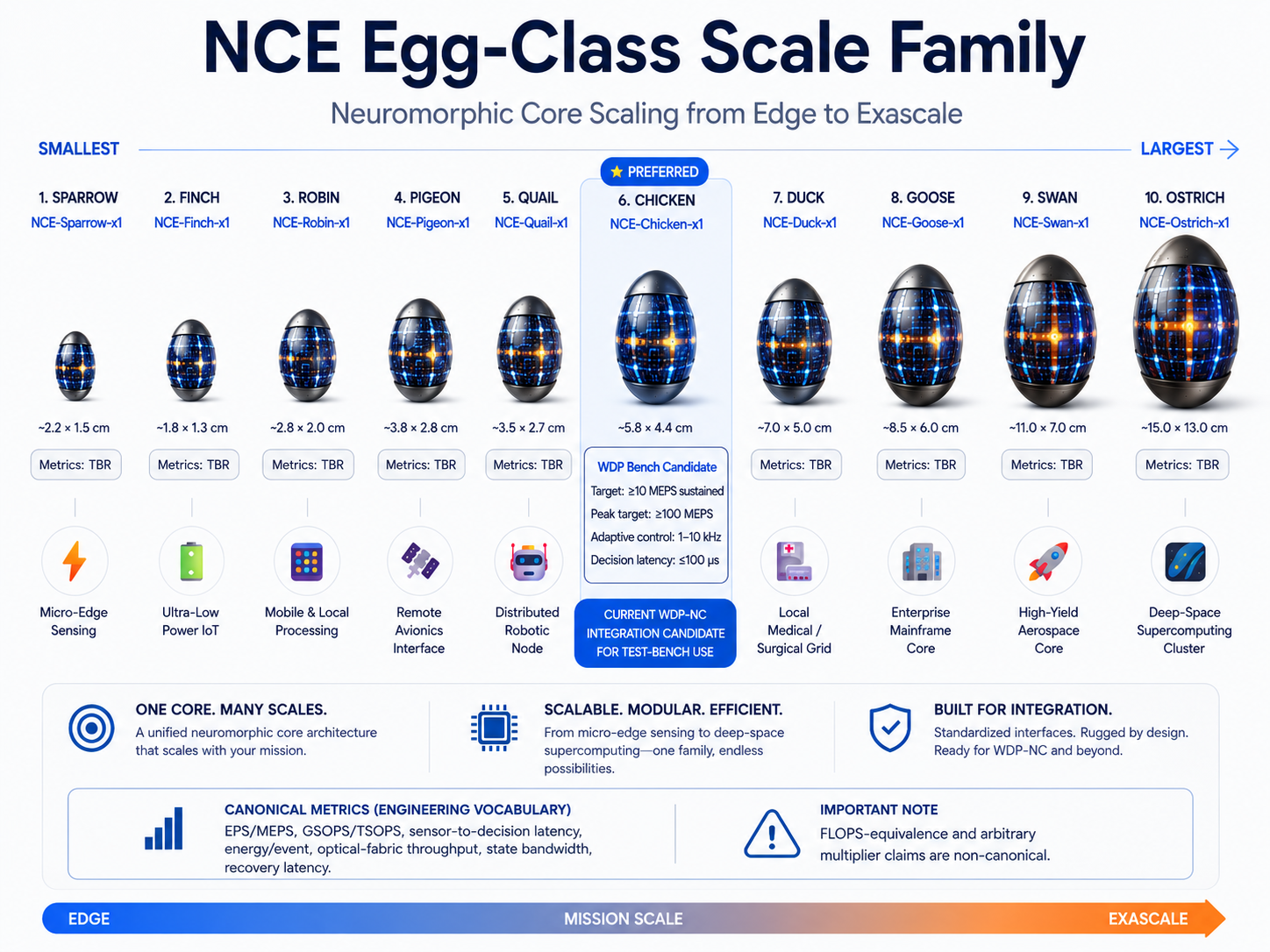
The Chicken-class architecture is the present candidate for experimental vacuum-bench control, sensor fusion and metrology support. This is an integration target—not a claim of validated warp-field capability.
Performance is a vector, not a single clock or FLOPS number.
NCE public engineering language uses neuromorphic workload and response measures. Absolute values remain class- and workload-dependent until representative hardware is measured.
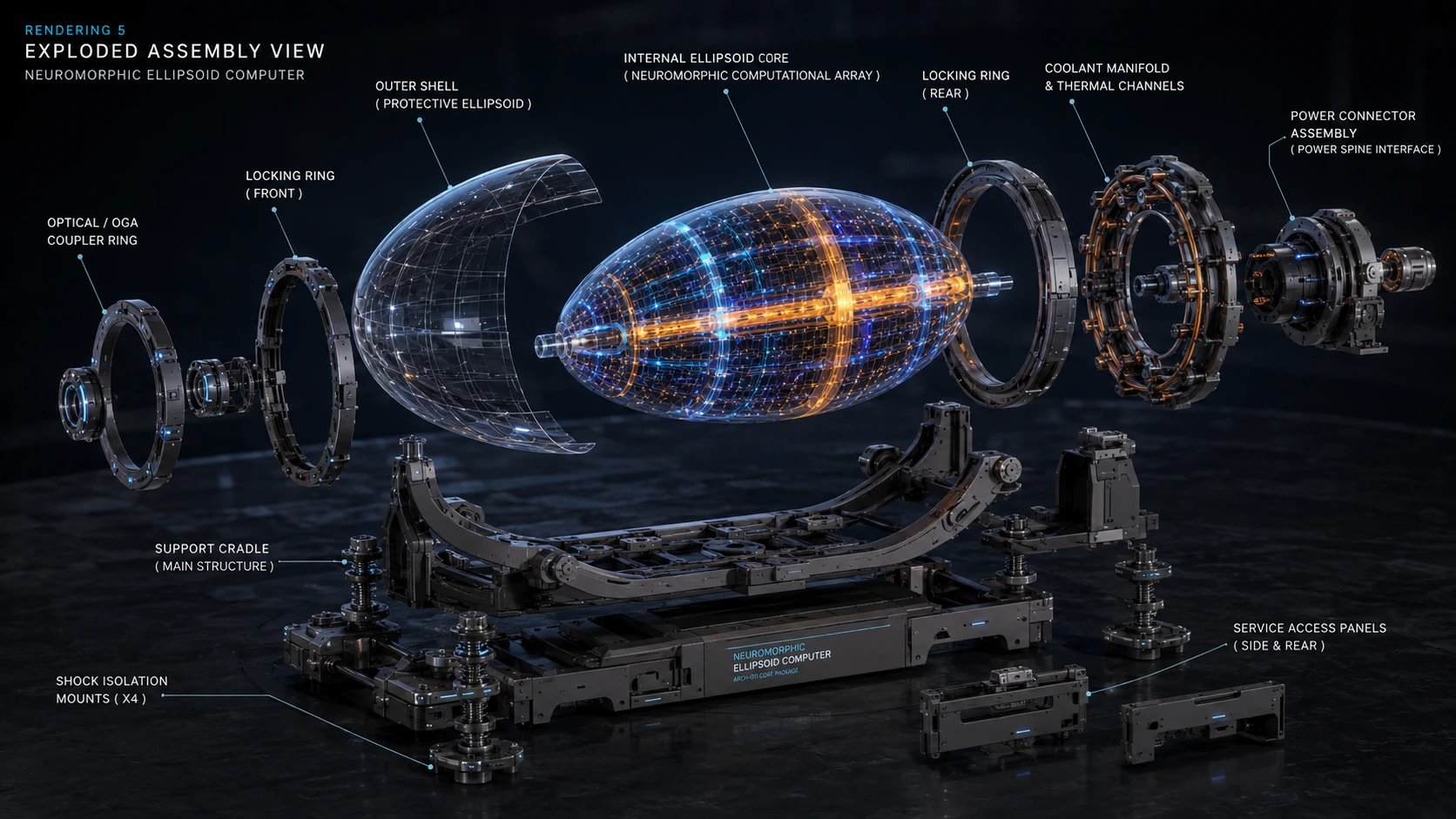
Follow the hardware from one ellipsoid to a serviceable system.
Ten NCE aliases, controlled anchors, proposed intermediates, dimensions, evidence posture and xN naming.
Why edge, robotics, workstation, medical, enterprise, aerospace and deep-space roles need different physical envelopes.
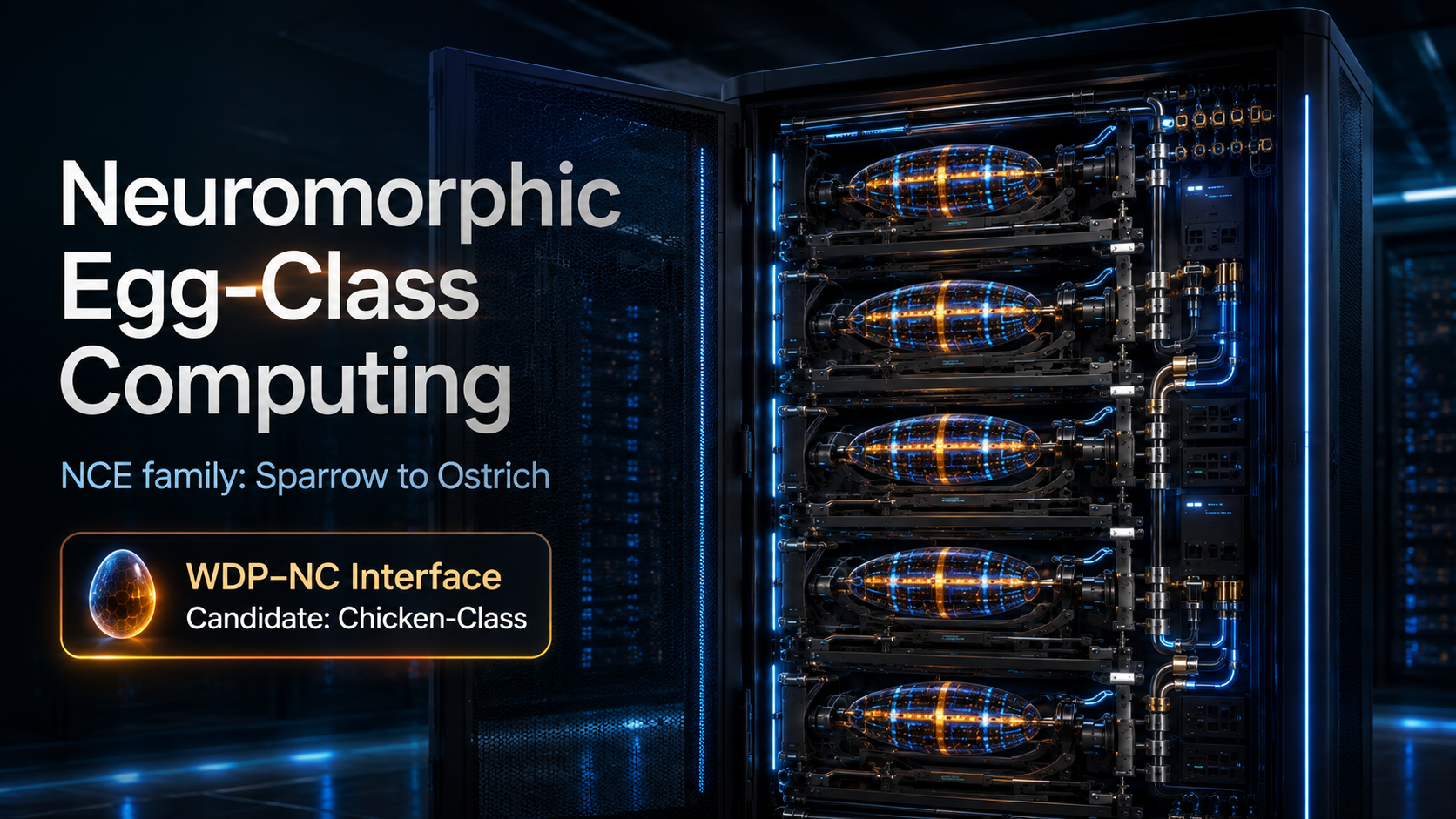
x2/x4/x8/x16+ cells, service bays, power, cooling, photonic/data fabric, fault containment and facility integration.
Docking, blind-mate interfaces, photonic service zones, power/cooling access and maintenance sequencing.
Public-safe architecture context and crosswalks without exposing proprietary implementation detail.
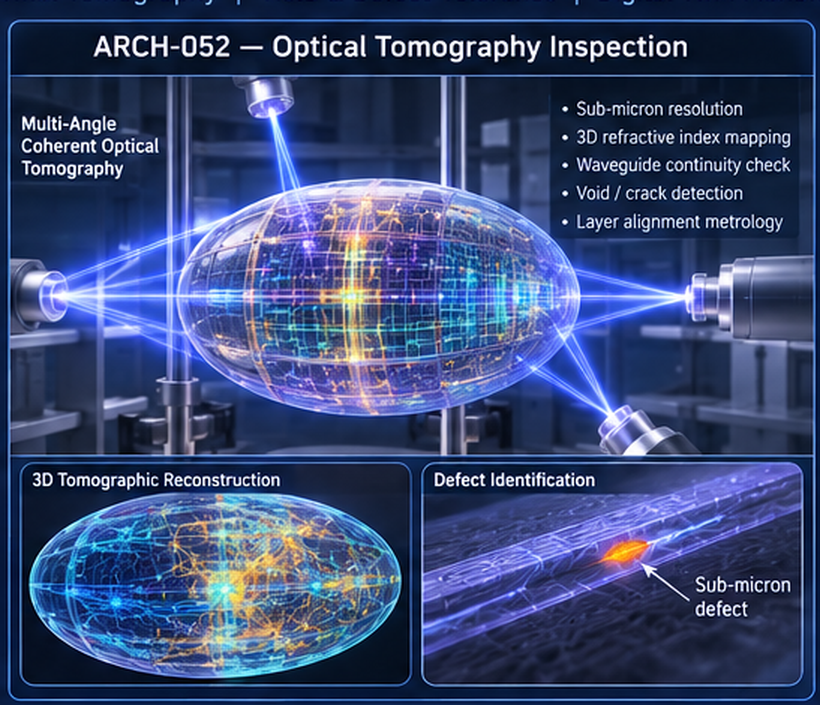
Digital twins, controlled testing and engineering validation before deployment.
Inspection, service and lifecycle evidence remain part of the architecture.