
← Back to Sustainability & Infrastructure
Fire Prevention / Rapid Suppression / Ecological Recovery
Aurora FIREBREAK
A human-commanded system of systems for homes, batteries, buildings, industry, wildland, peat, and community infrastructure—built around one defining goal: stop an unwanted ignition before it becomes a regional disaster.
Program doctrine: Detect, verify, and strike while the fire is measured in square metres—not square kilometres. Human incident command, aviation authority, environmental safeguards, and responder safety remain controlling.
New / Component Arsenal
Twenty-one ways to close the gap between detection and impact
The arsenal connects sensing film, responsive barriers, embedded building protection, battery containment, rapid wildfire attack, aircraft, robots, weather decision support, and permanent water-power-communications infrastructure.
No single device is presented as a miracle solution. Every component has a bounded role, a maturity level, interfaces, failure questions, and a validation path.
System-of-Systems Architecture
From ignition signal to ecological recovery
FIREBREAK closes the interval between warning and physical intervention, then keeps watching until concealed heat, structural damage, soil instability, water contamination, and reignition risk are controlled.
Detect
Fuse orbital, airborne, ridge, utility, building, smoke, thermal, acoustic, electrical, and weather signatures.
Verify
Reject false alarms; identify fuels, hazards, terrain, wind, structures, utilities, and occupants.
Intercept
Dispatch the nearest correctly equipped human, robotic, aerial, or installed system.
Contain
Cool the reaction zone, isolate fuel, block embers, manage gases, and prevent propagation.
Recover
Track hidden heat, protect soil and water, restore habitat, and preserve an auditable record.
Six Mission Families
Specific tools for specific fire problems
2 component families
Command & Early Warning
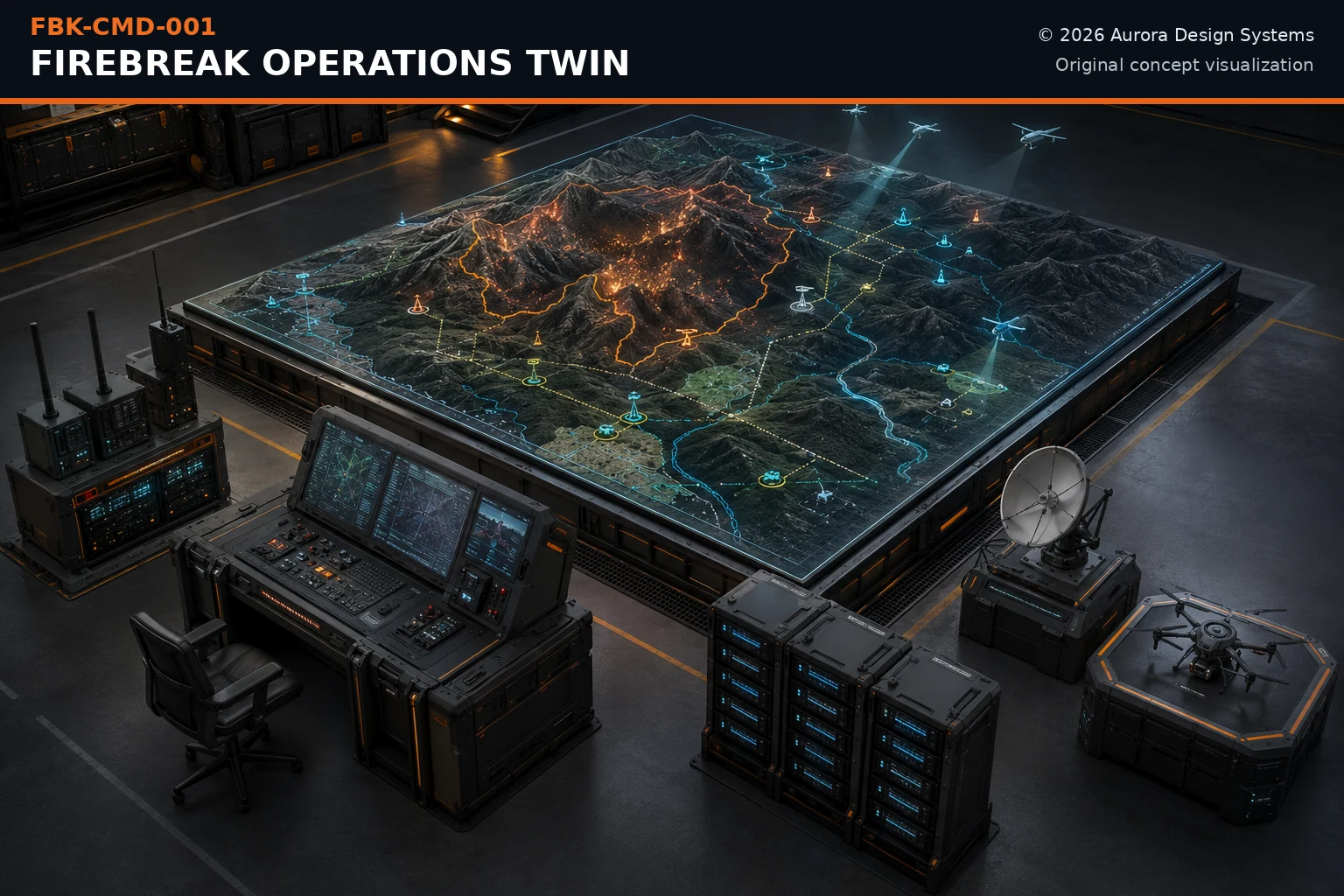
Fuse detection, verification, decision support, and human incident command into one auditable operating picture.
Explore mission family →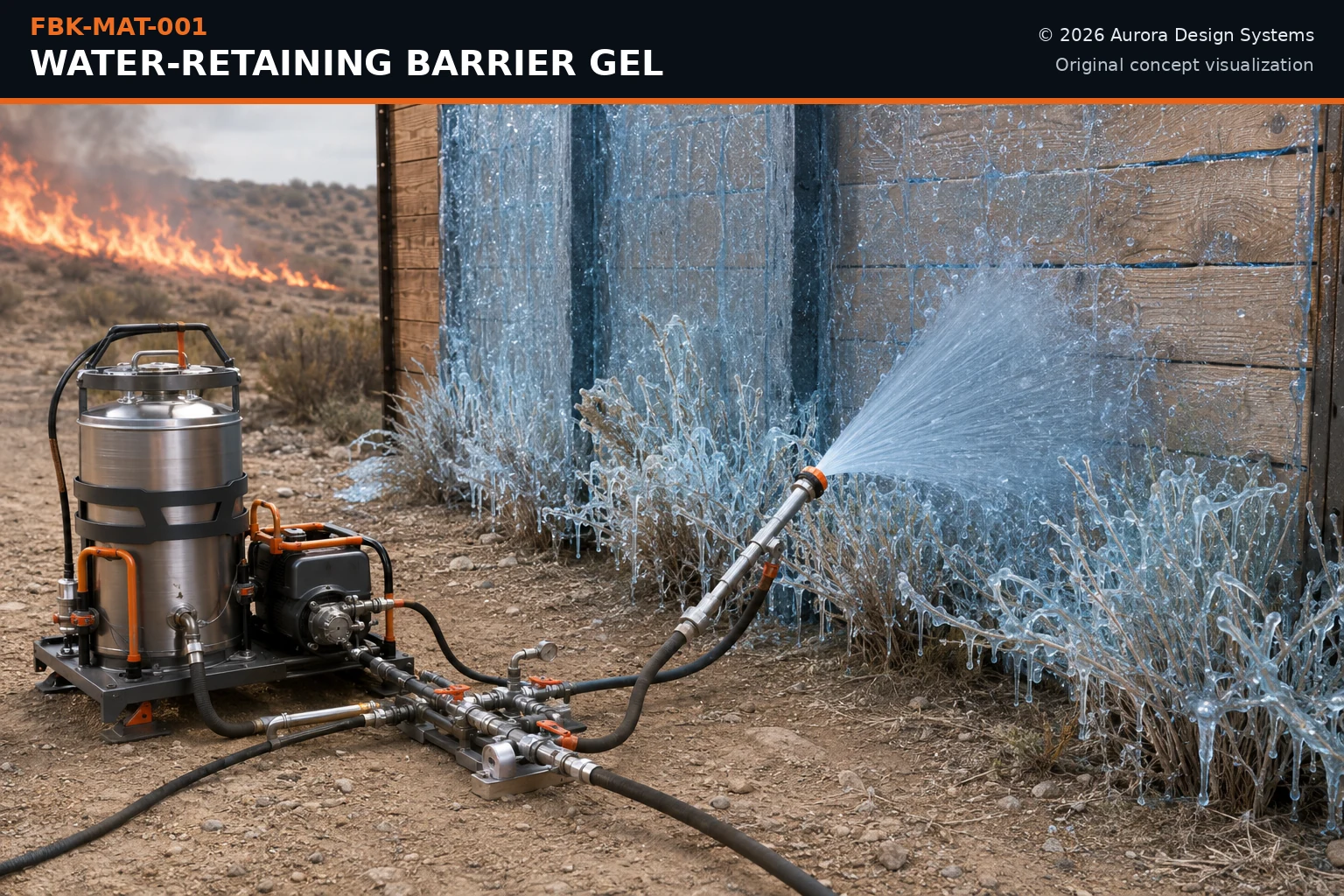
6 component families
Materials & Matched Suppression
Put cooling capacity and qualified suppression exactly where heat is developing, while protecting people and ecosystems.
Explore mission family →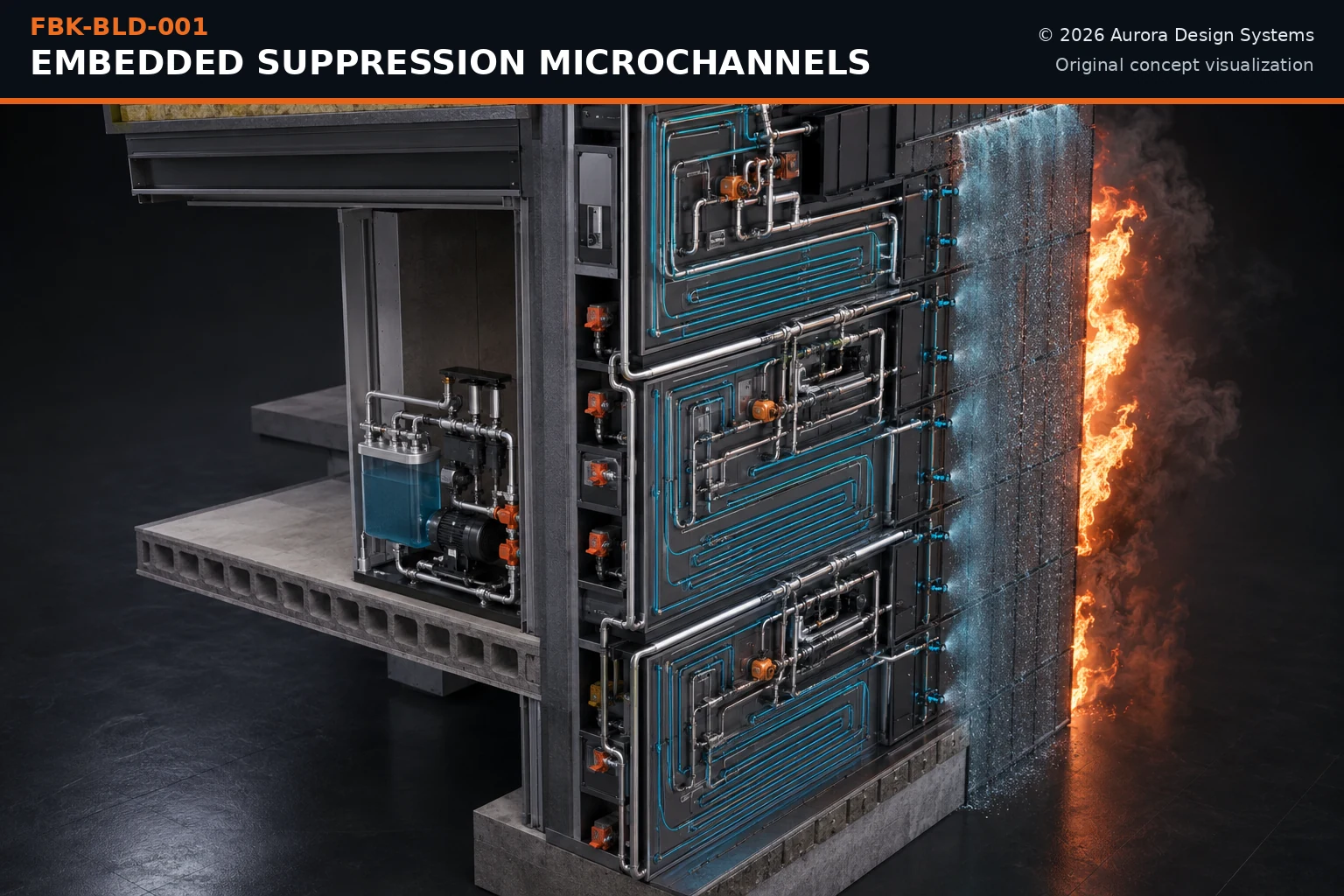
3 component families
Building & Battery Defense
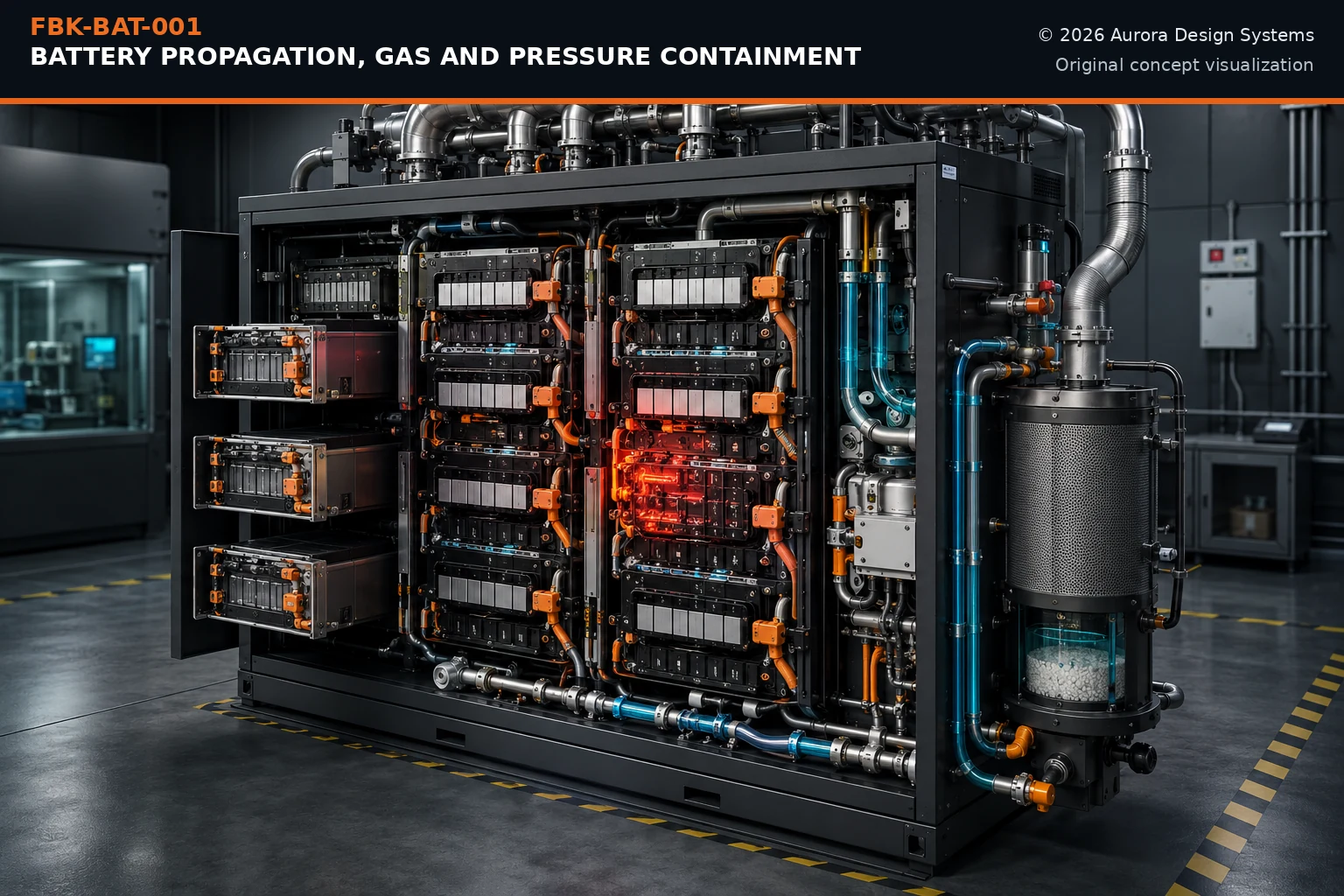
Move fire protection into roofs, vents, walls, cabinets, battery modules, and serviceable building systems.
Explore mission family →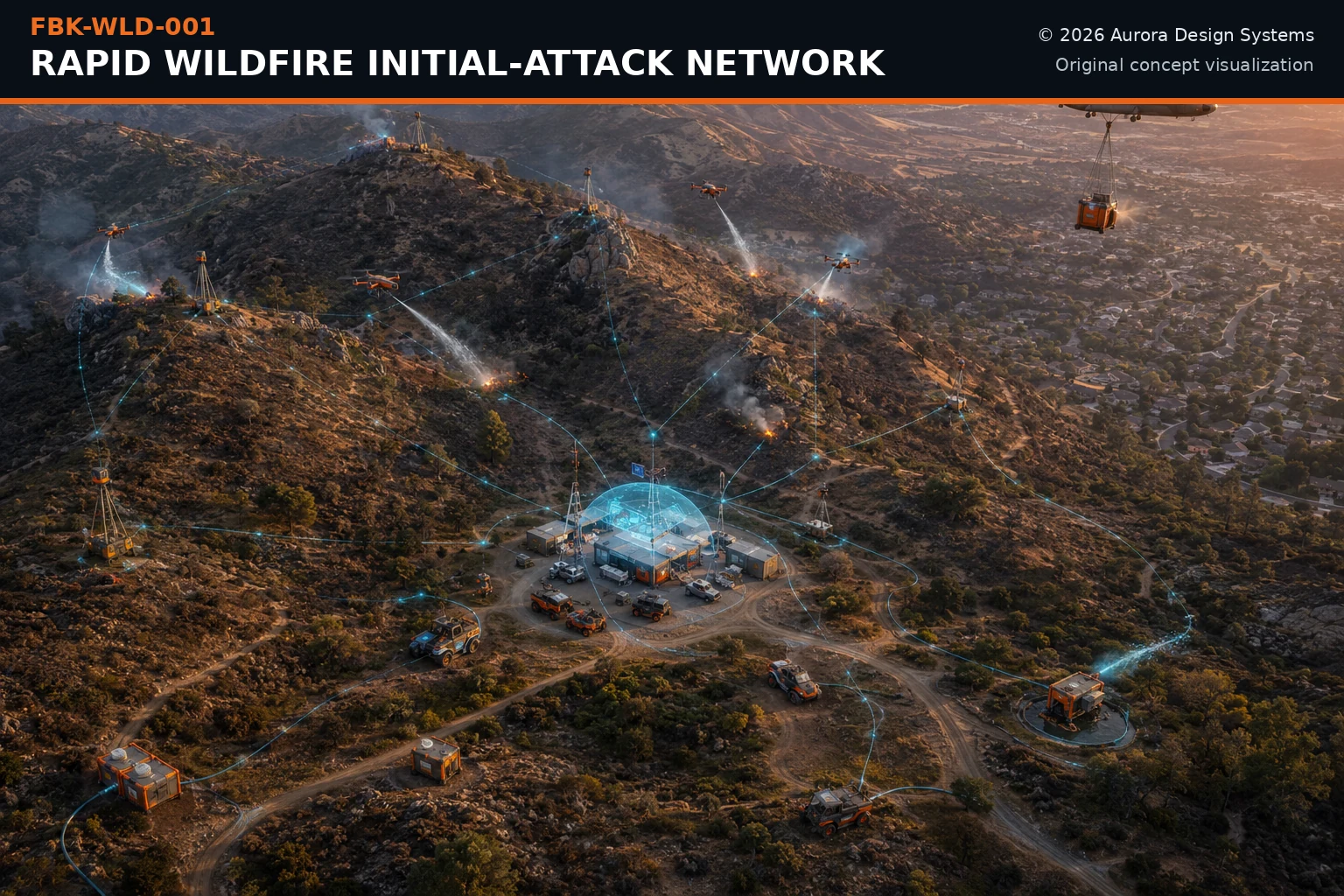
2 component families
Wildfire Initial Attack
Detect and contain small verified ignitions before wind, terrain, fuel, and distance turn them into regional disasters.
Explore mission family →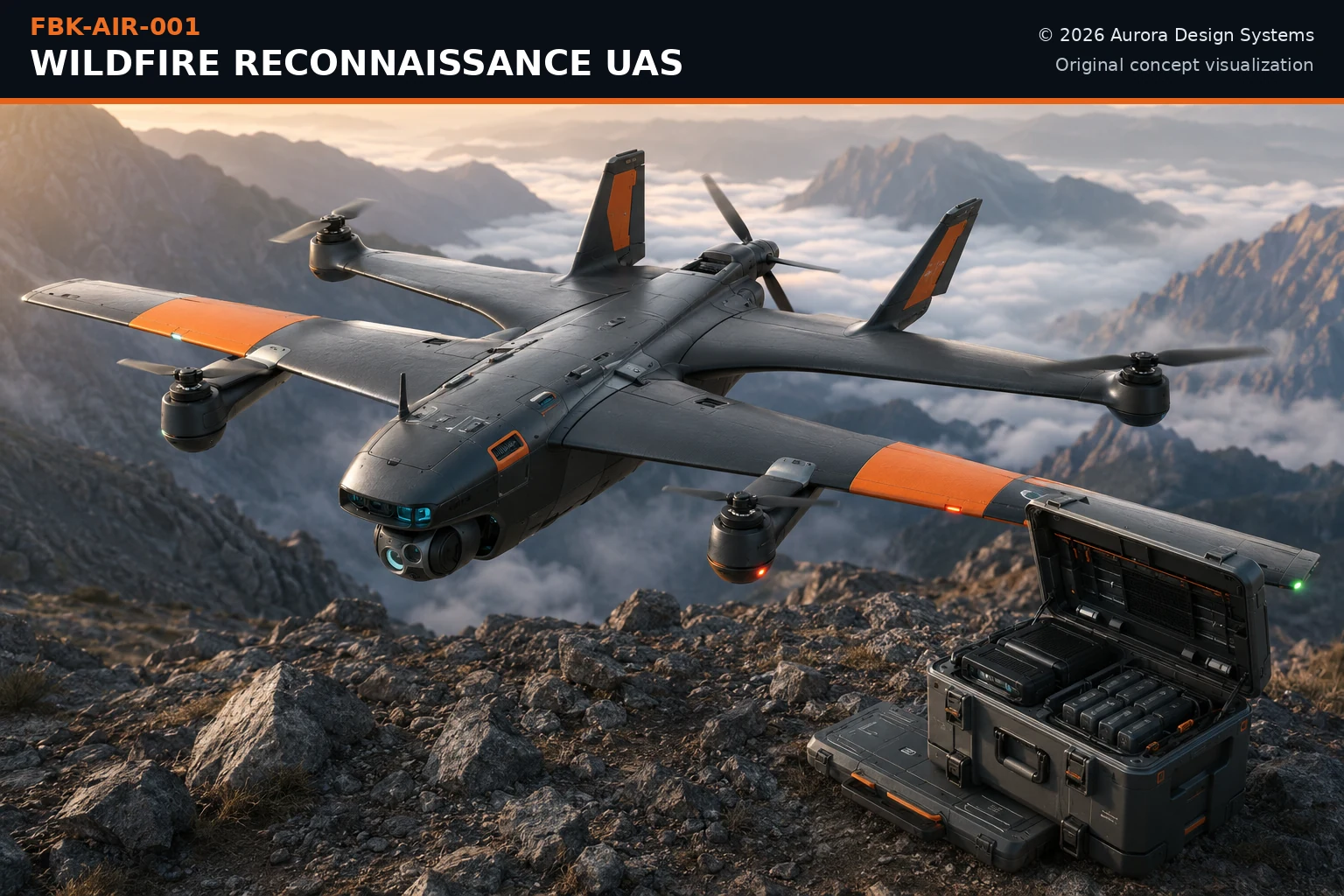
6 component families
Aircraft & Ground Robotics
Assign purpose-built aircraft and robots to reconnaissance, logistics, water delivery, firebreak construction, and overhaul.
Explore mission family →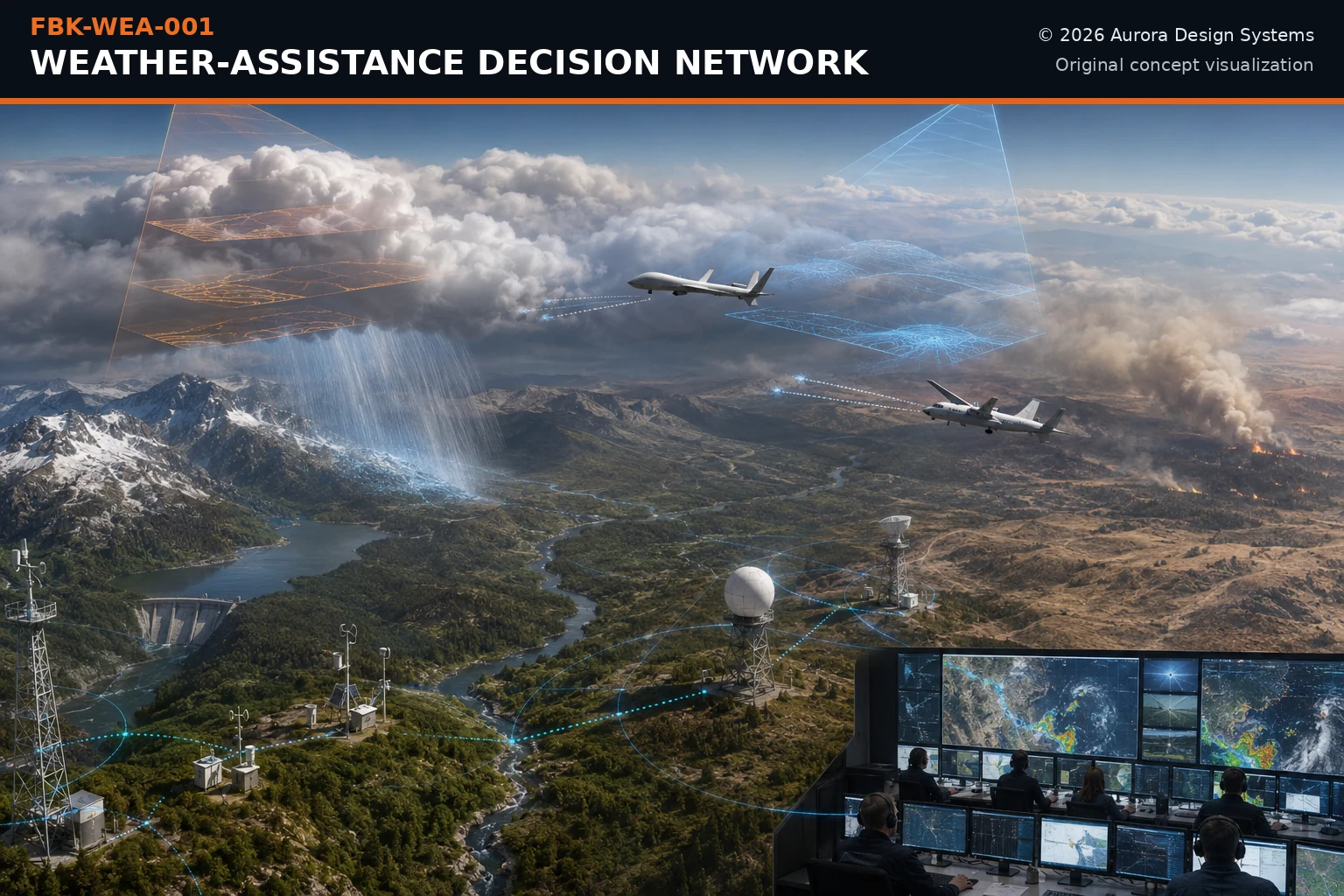
2 component families
Weather & Permanent Infrastructure
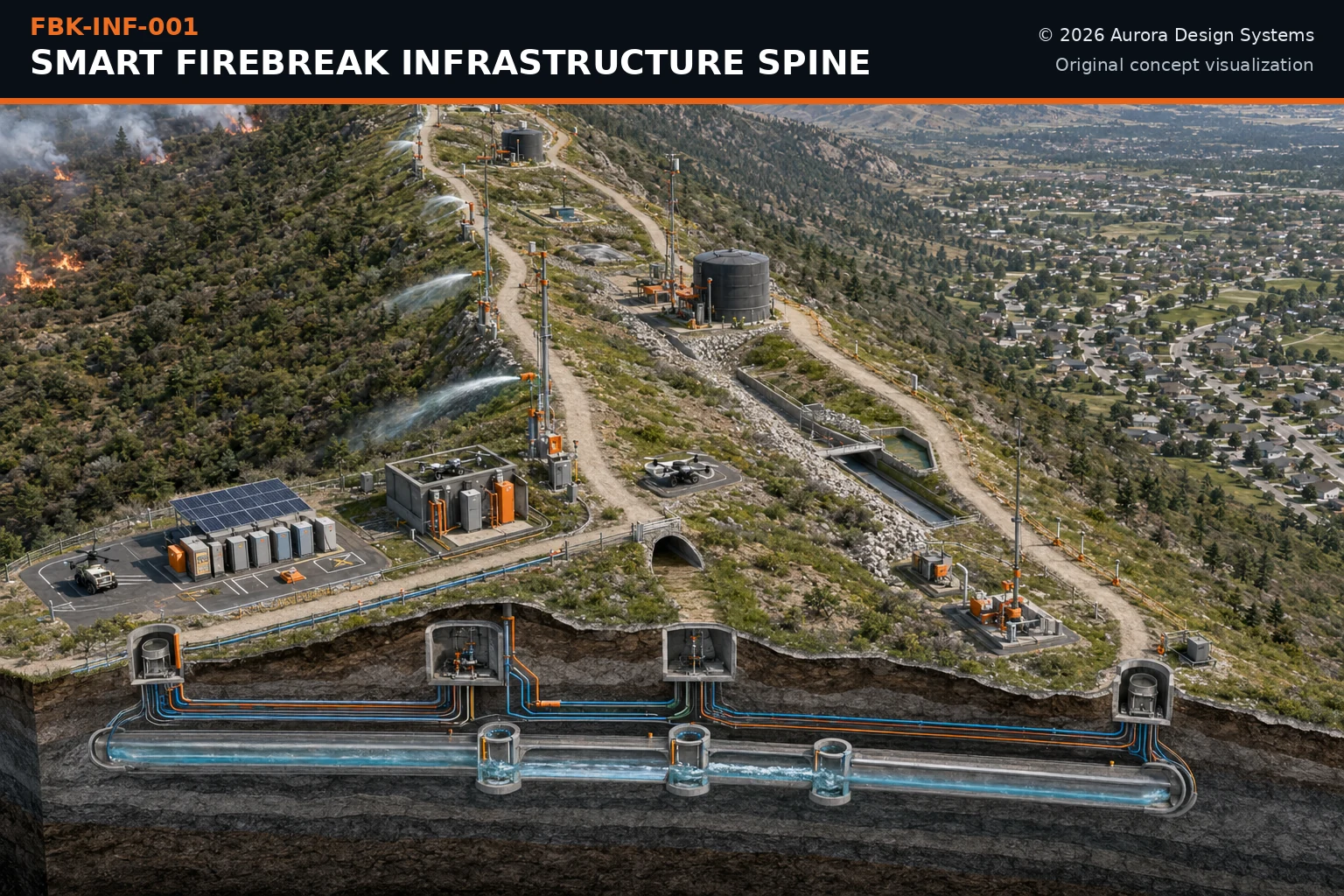
Connect bounded weather assistance, water, power, communications, sensors, access, and ecological corridors.
Explore mission family →Regional Configurations
The architecture changes with climate, fuel, terrain, distance, and settlement
Wind-Driven WUI
- Dense sensing around vulnerable communities
- Rapid initial attack and utility-fault isolation
- Ridge water, wet lines, access, and robotic bases
- Ember-resistant vents, roofs, façades, and escape routes
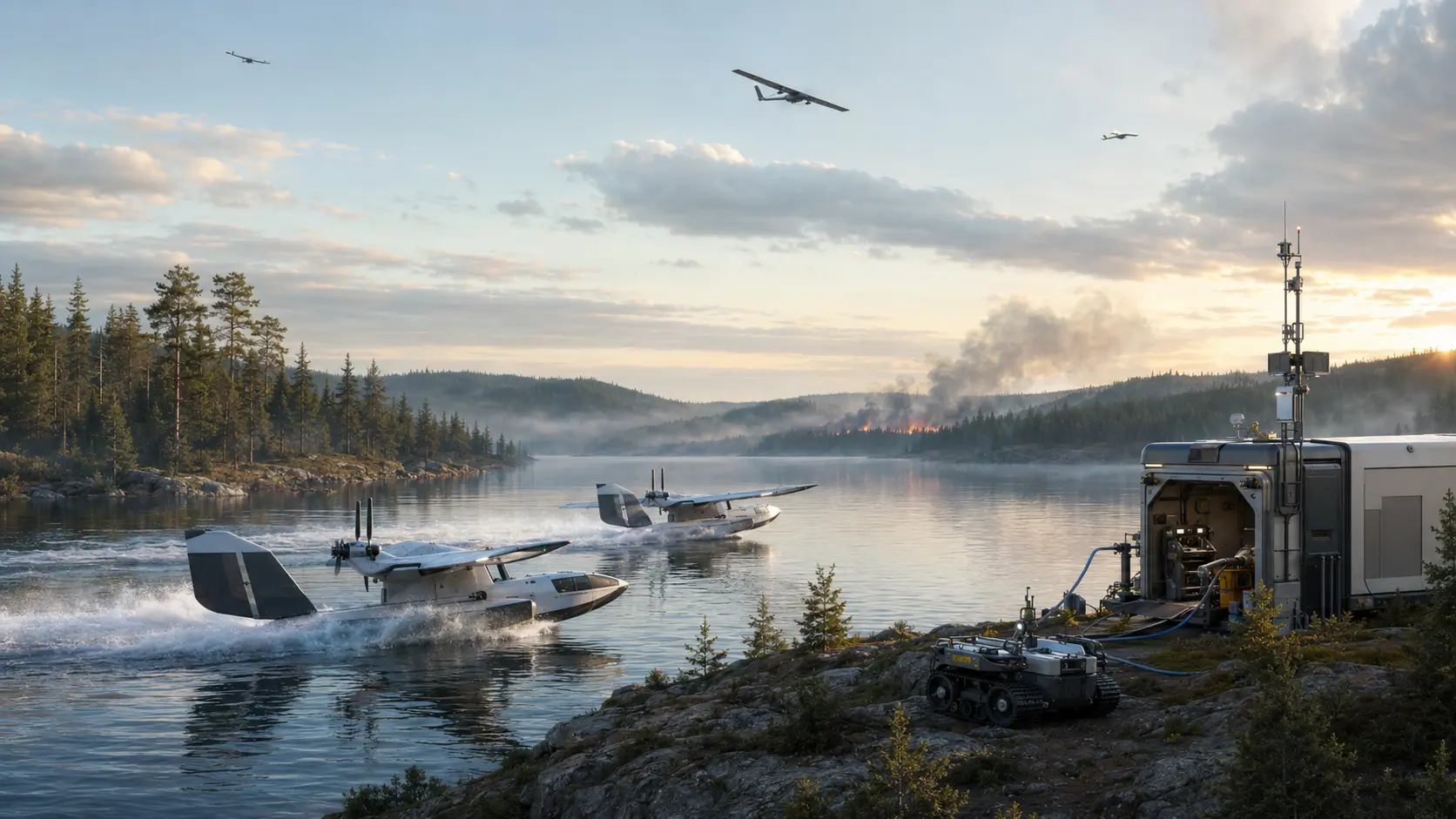
Boreal & Remote Regions
- Satellite-led detection over enormous roadless areas
- Seasonal autonomous bases and lake-refilled aircraft
- Cold-capable energy, communications, and maintenance
- Persistent peat, root, duff, and subsurface heat control
Reality / Frontier / Speculative
Keep proven tools separate from development targets and long-range research
Integrate what already works
Thermal satellites, camera networks, infrared drones, water mist, aircraft, sprinklers, prescribed fire, digital modeling, home hardening, battery monitoring, and conventional robots.
Engineer and validate the next layer
Bound barrier gels, embedded microchannels, autonomous heavy logistics, fast initial-attack networks, improved ember interception, subsurface mapping, and coordinated decision support.
Investigate without claiming readiness
Advanced programmable materials, self-deploying infrastructure, novel ecological sensors, and tightly governed weather-assistance research.
Rejected shortcuts: Uncontrolled oxygen-removal chemicals, explosive liquid-nitrogen release, free nanoparticle broadcast, orbital storm manufacture, and universal acoustic extinguishers are not FIREBREAK operational methods.
From Concept to Pilot
Built to be examined, challenged, and carried forward
FIREBREAK is intended to help public agencies, universities, manufacturers, utilities, insurers, communities, and research programs see a coherent development path—not merely another isolated firefighting gadget.
Public release boundary: The website communicates functions, interfaces, and validation questions. Detailed formulas, dimensions, thresholds, source code, CAD, and operating procedures remain offline pending safety and IP review.