
Includes magnetic mirrors, field-reversed configurations, spheromaks, reversed-field or Z-pinch systems, electrostatic devices, and other innovative concepts.
← Back to Fusion Reactor Systems
Fusion System • Frontier Research Reserve
Advanced Fusion Research
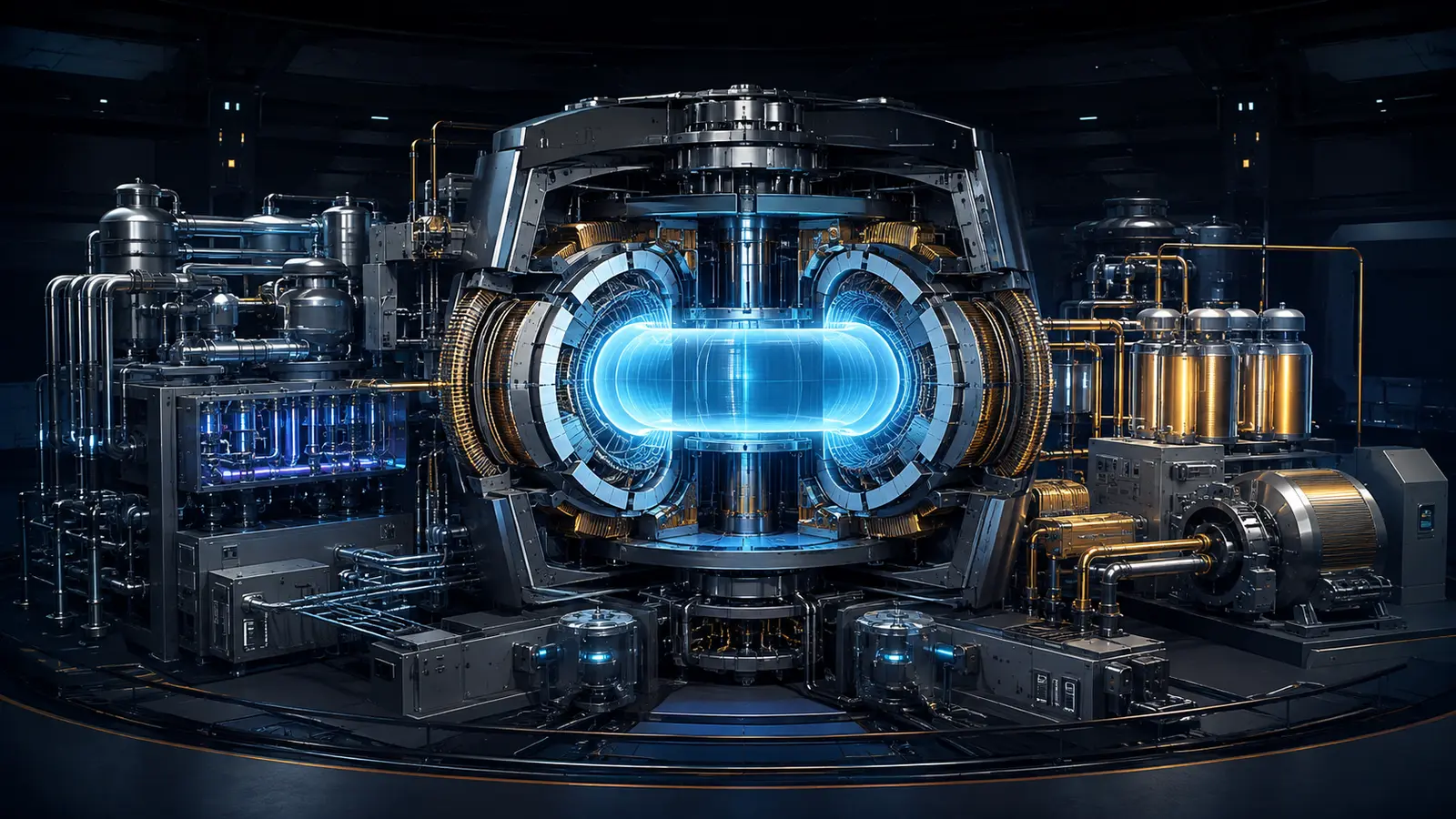
Advanced fusion research preserves less mature confinement, geometry, fuel, and conversion ideas without presenting them as near-term power plants. Each concept must be judged by its own measured evidence and its complete facility requirements.
Mirrors + Compact ToriFRC / Spheromak / PinchFrontier ResearchNo Extrapolated Readiness
Phase 4 • Concise Comparison
Engineering comparison
Fuel assumptions vary. Advanced or neutron-lean fuel cycles face substantially harder temperature, confinement, reactivity, and materials requirements than deuterium-tritium.
Concept exploration through laboratory research; individual devices and results are not interchangeable.
Plasma-physics discovery, compact-confinement research, neutron-source studies, propulsion research links, and long-horizon energy-system exploration.
Confinement and stability, plasma heating, end losses, electrodes, impurity control, credible fuel cycle, energy capture, materials, diagnostics, scaling evidence, repeatability, maintainability, and net facility performance.
System Breakdown
How this branch is organized
Mirrors & Compact Tori
Mirror machines, field-reversed configurations, and spheromaks investigate alternate magnetic geometries and compact plasma states.
Pinches & Electrostatic Systems
Pulsed pinches and electrostatic concepts support valuable experiments but require evidence-specific maturity and application claims.
Advanced Fuels & Conversion
Neutron-lean fuels and direct conversion remain frontier objectives, not established shortcuts around plasma and plant engineering.
Official Public Sources
Reference basis
Public boundary: Concept classification and public research context only. No device parameters, operating sequences, target or fuel preparation, magnet specifications, control logic, materials recipes, calculations, CAD, or build instructions.
10-Phase Reactor Program • Phase 2
Fusion taxonomy specification
Standardized public-safe fields support comparison across every fission and fusion family. Values are intentionally qualitative; licensing data, dimensions, operating windows, calculations, control logic, and build instructions remain offline.
Mirrors, compact toroids, pinches, electrostatic, and other frontier systems
Configuration-specific confinement and credible whole-plant closure
Advanced fuels do not remove activation, maintenance, or waste without demonstrated reactions and materials
Frontier and historical research families
Specification boundary: Family-level technology classification and lifecycle context—not a vendor datasheet, safety analysis, procurement specification, or construction package.
Ten-Phase Reactor Program · Phase 5
Safety and public-trust boundary
Architecture groupings and future concepts do not establish a licensing pathway or safety finding. Apply the exact reactor, material inventory, mission, site, regulator, safeguards, and emergency-planning basis before making deployment claims.
Public claim boundary: No “inherently safe,” “waste-free,” “unregulated,” “no emergency plan,” licensed, commercially ready, or guaranteed-performance claim is authorized.