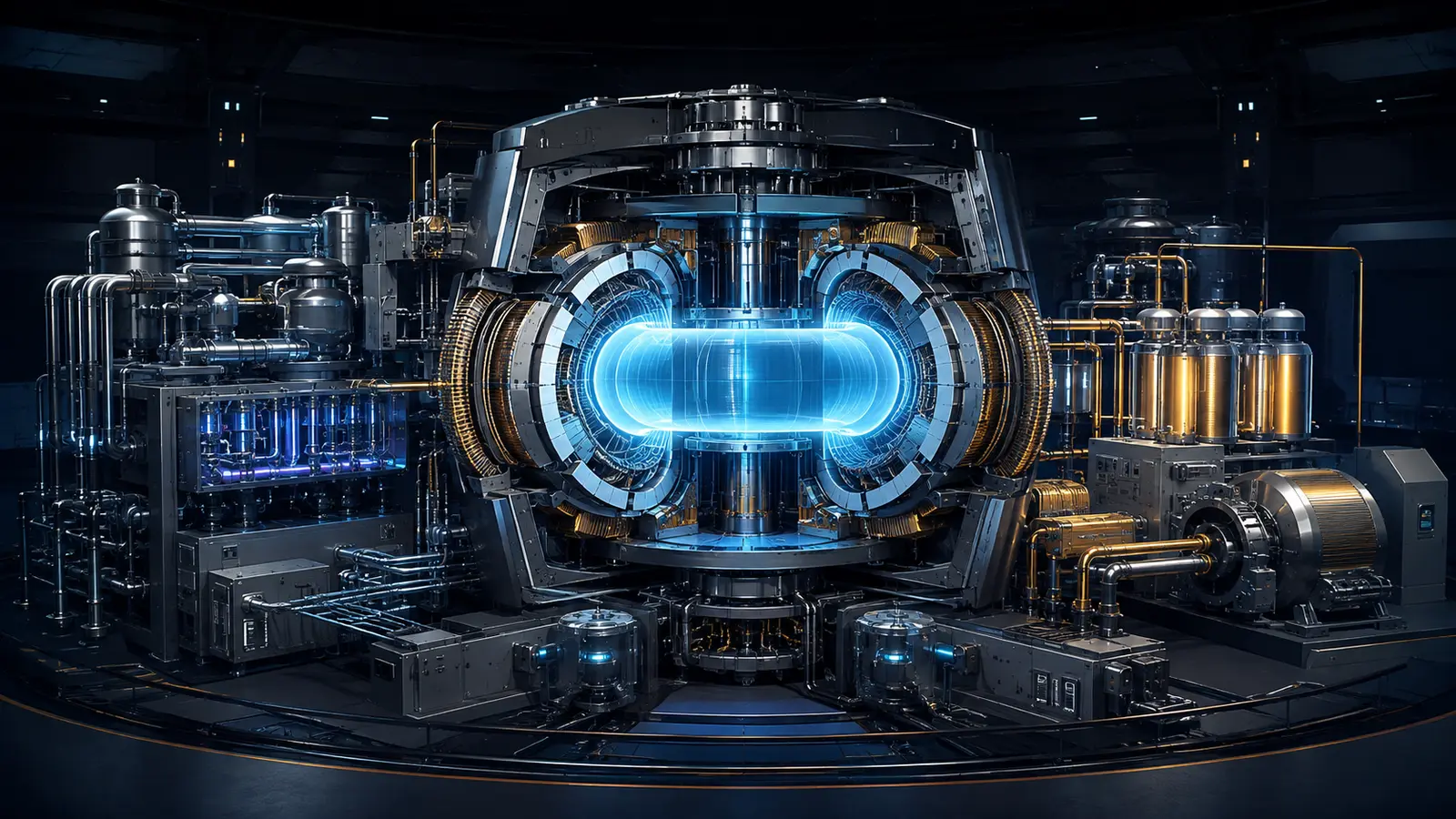
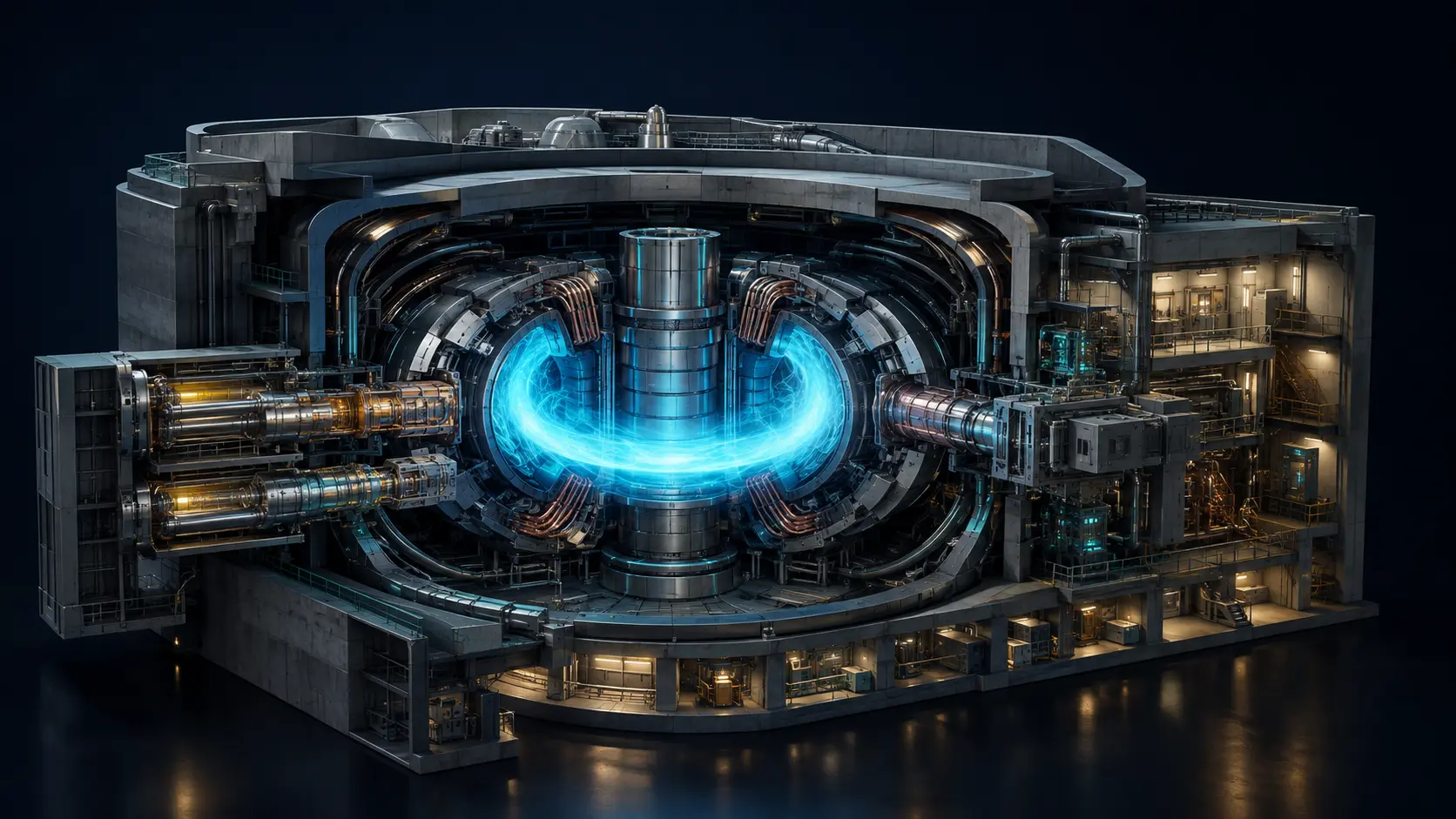
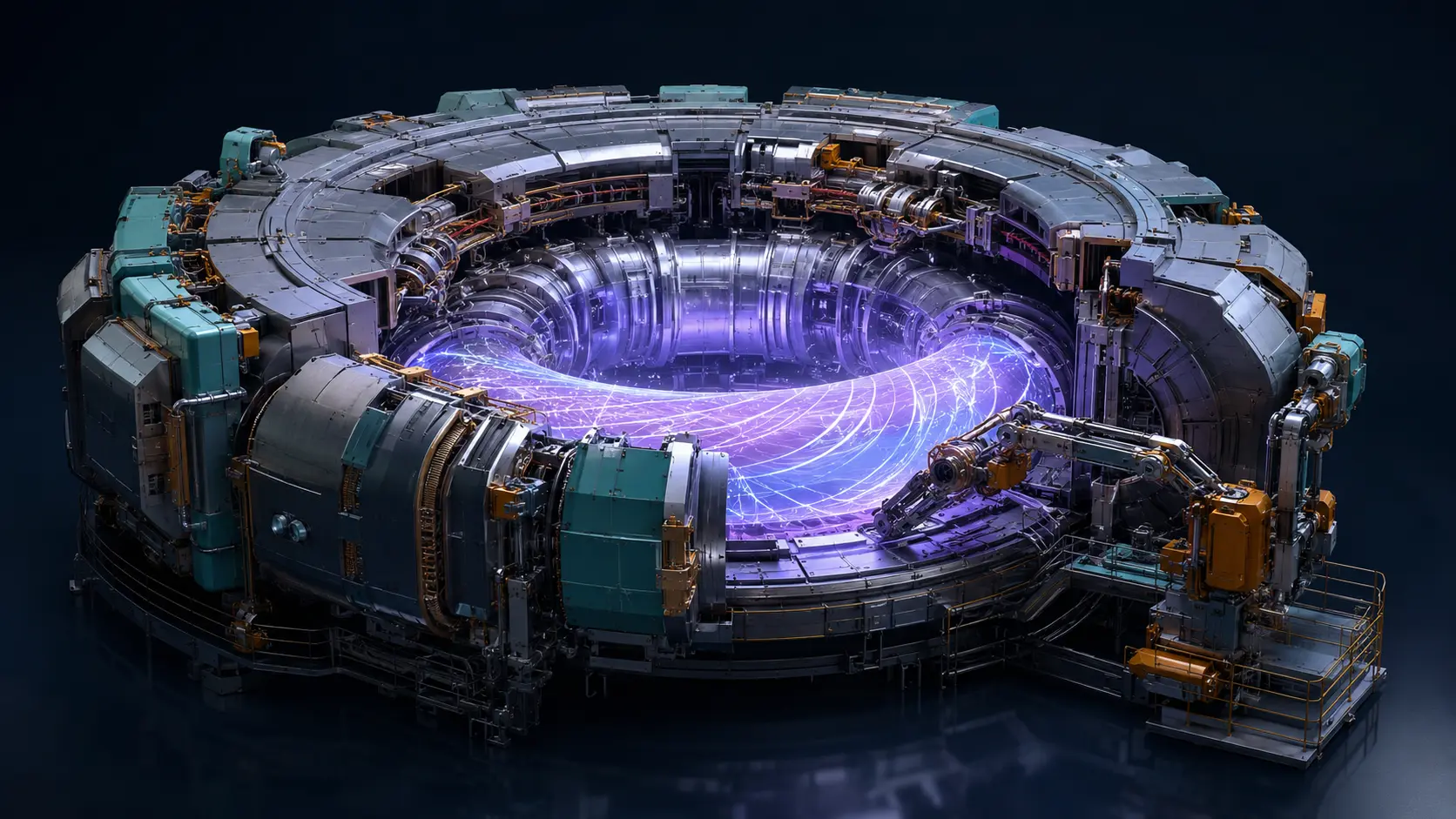
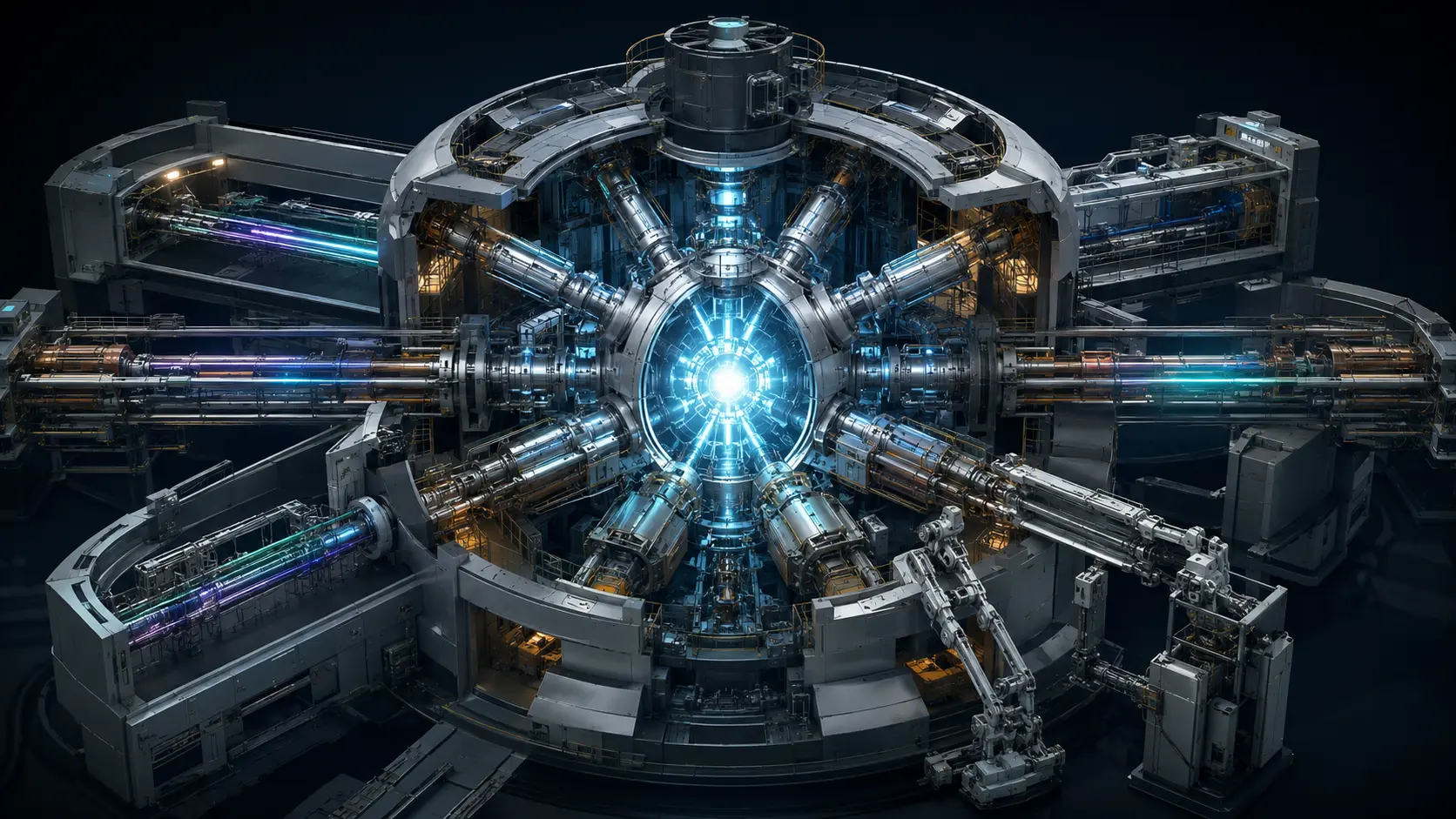
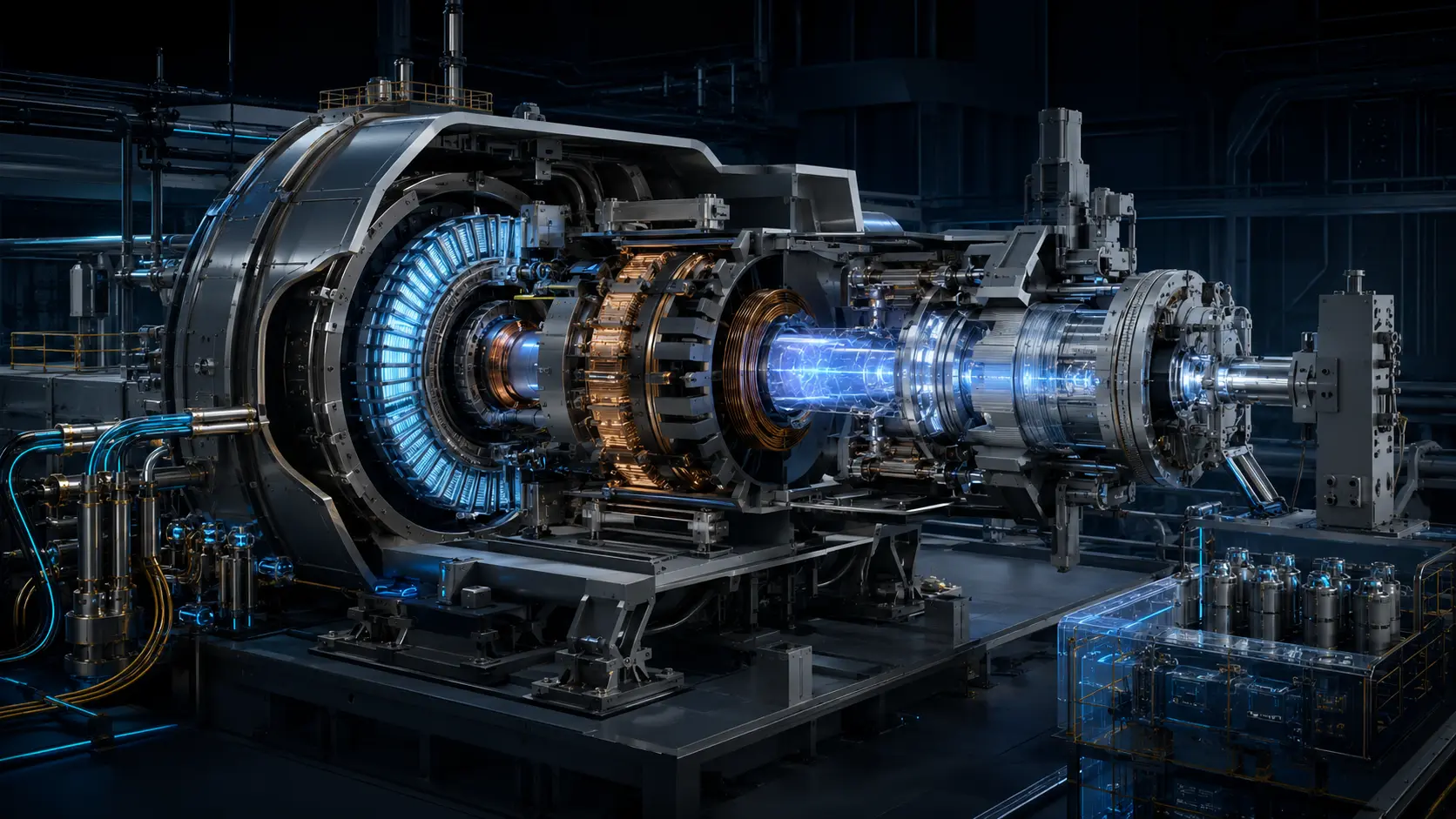
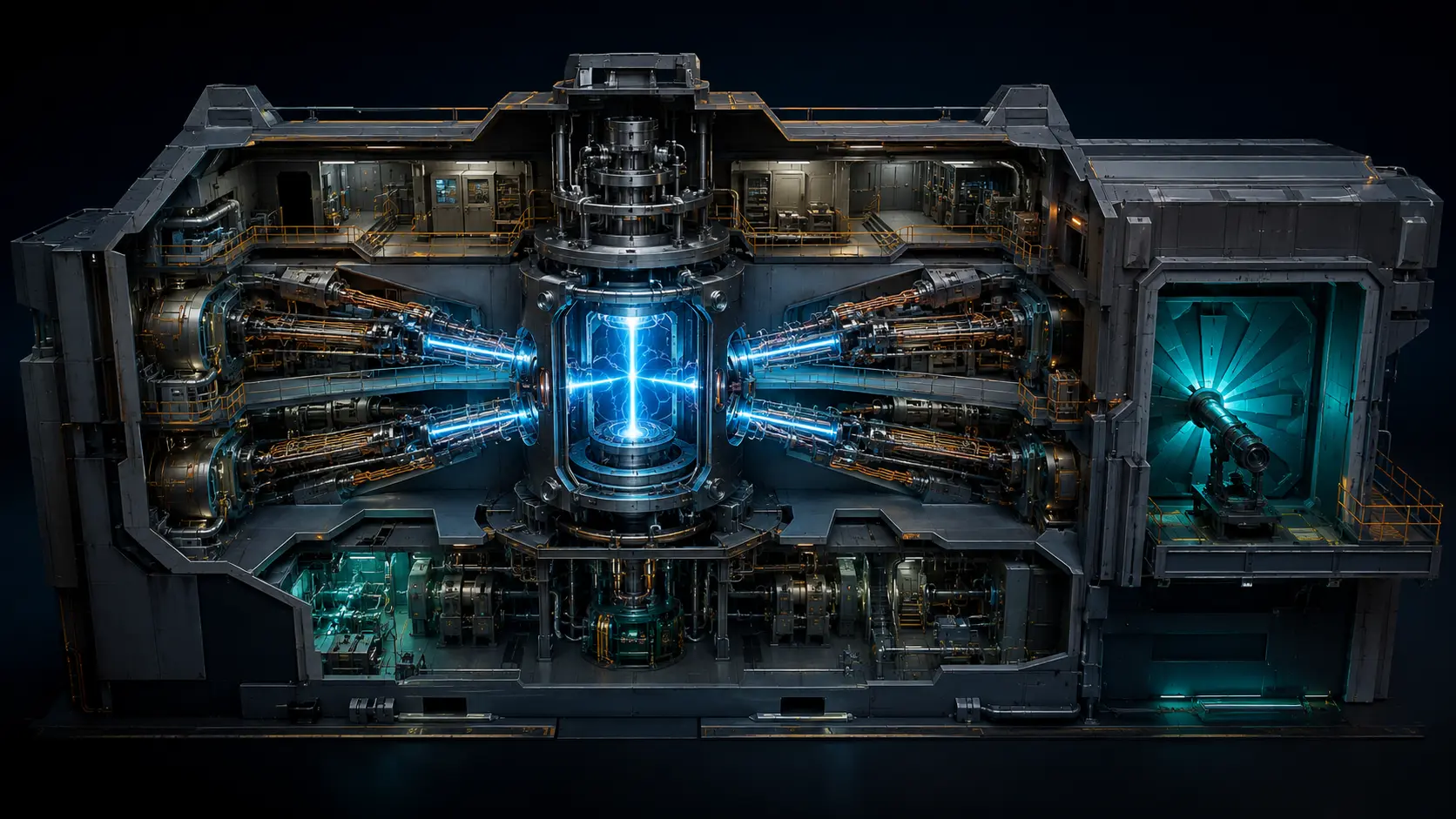
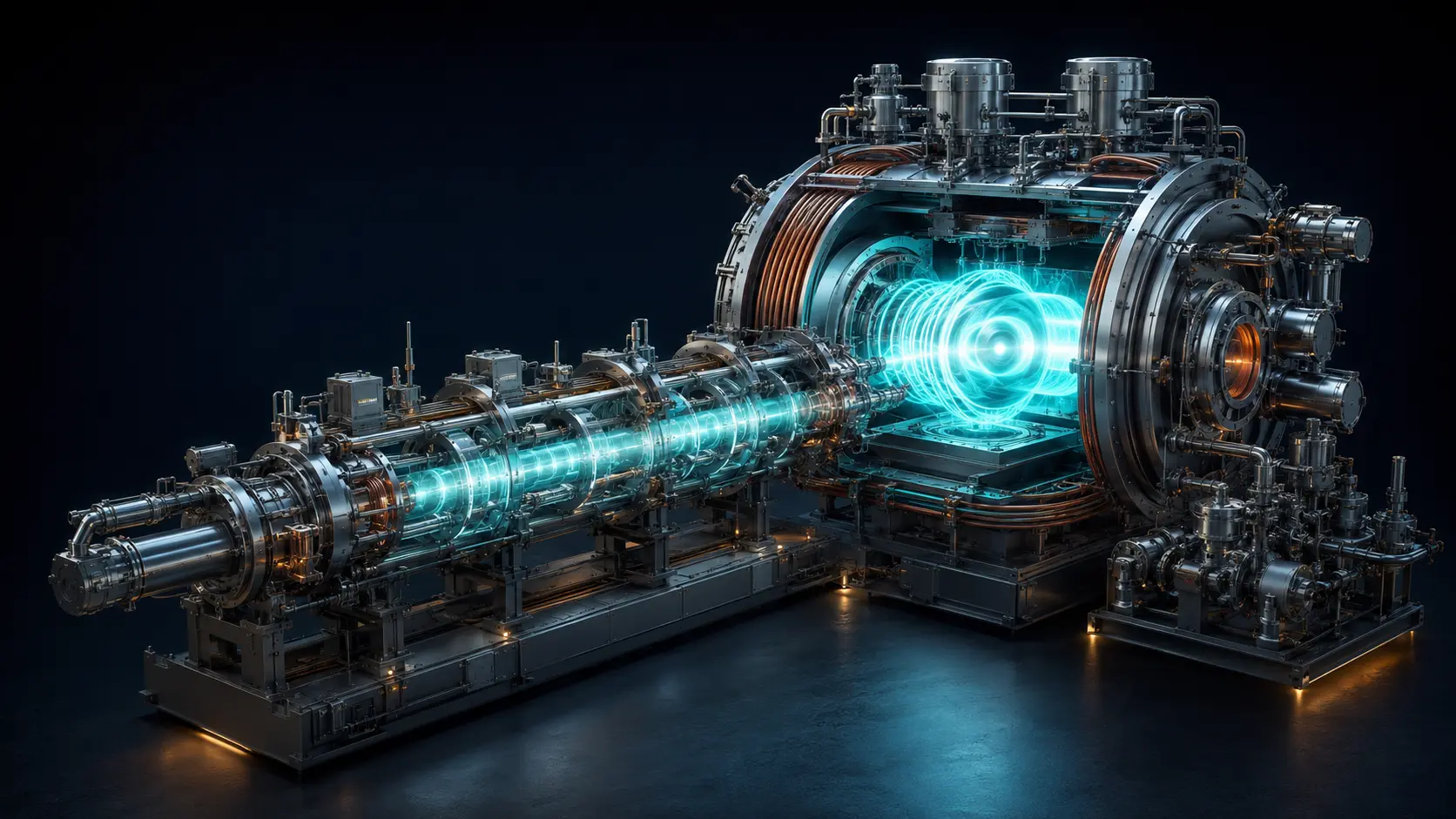
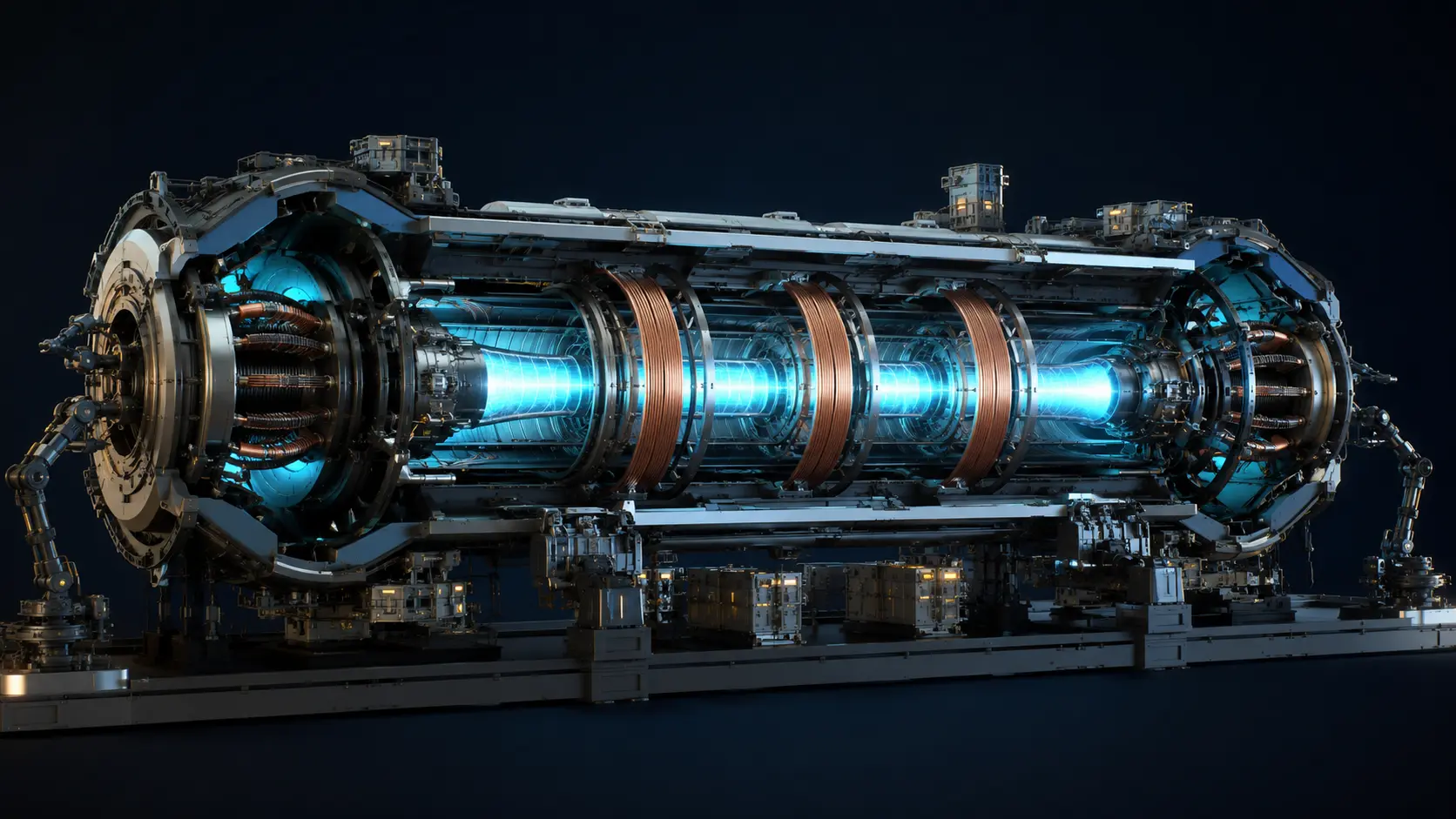
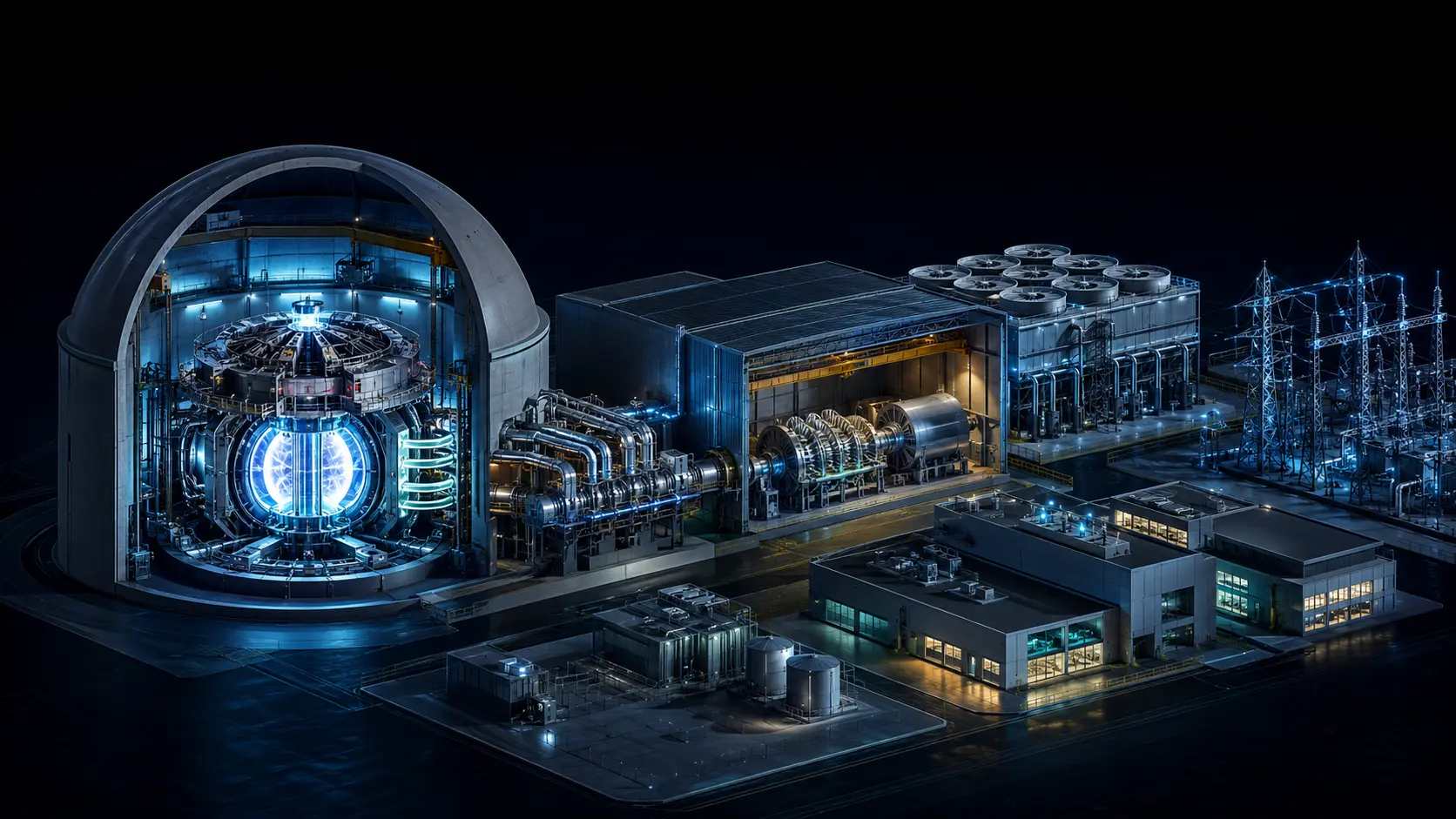
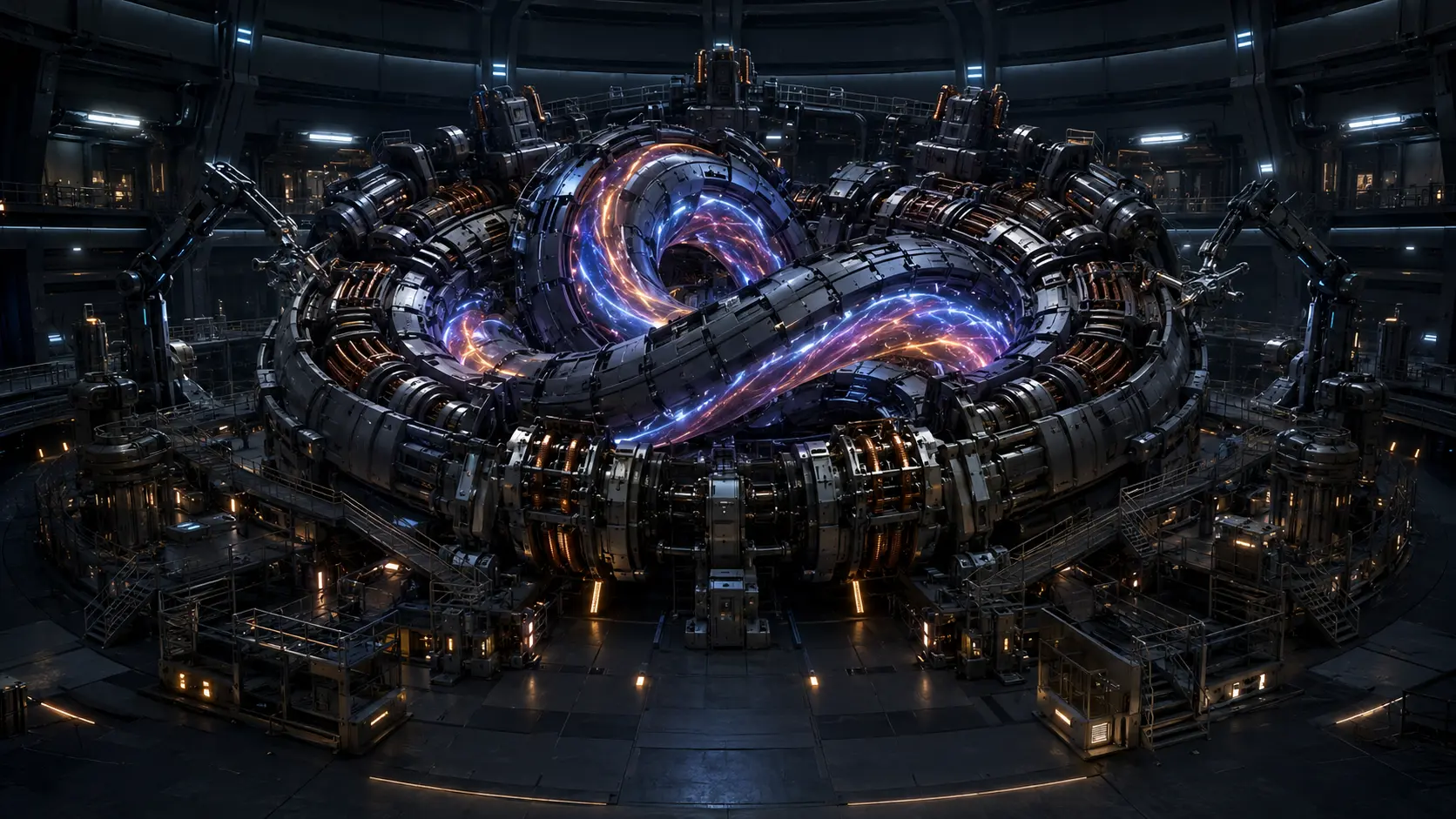
Concept rendering for public orientation. Fusion maturity varies by confinement family and subsystem; the page text below controls technical, maturity, safety, and deployment claims.
Research Family • Fusion
Fusion Reactor Systems
Fusion is a systems-engineering field, not a single machine. Confinement physics must work together with magnets, pulsed power, diagnostics, plasma-facing materials, fuel handling, heat extraction, controls, maintenance, safety, and a credible path to useful energy.
ADS 43.9 • Phase 5 • Layout Rev 1.3
Research & DemonstrationMultiple Confinement PathsSystem-Level ViewNo Commercial-Readiness Claim
Approved Public Taxonomy
Five fusion system cards
These branches preserve the prior Aurora fusion architecture: magnetic confinement, inertial confinement, magneto-inertial or pulsed fusion, advanced fusion research, and full power-plant integration.
This learning layer explains the system in public engineering language. Definitions are intentionally conceptual: they teach terminology and relationships without providing operating procedures, design set-points, construction dimensions, or protected implementation details.
Maturity checkpoint: Active global research and development field. As of 2026 there is no operating commercial fusion power plant.
System walkthrough
How it works — at a safe public level
Fusion fuel is heated to plasma or compressed to extreme density depending on the confinement approach.
A confinement system holds the reacting fuel long enough for significant fusion reactions to occur.
Diagnostics and controls measure rapidly changing plasma or target conditions.
Neutrons and charged fusion products carry energy out of the reaction region.
A future power plant must capture that energy, breed or supply fuel, maintain components, and convert heat to electricity with acceptable availability.
Key distinction: Fusion is a portfolio of confinement approaches plus an entire power plant. Achieving high fusion gain in an experiment is not the same as delivering net electricity from an integrated commercial plant.
Technical vocabulary
Terms worth knowing
Magnetic confinement
Use of magnetic fields to restrict the motion of charged plasma particles and keep hot plasma away from material walls.
Inertial confinement
Fusion approach in which a small fuel target is rapidly compressed and heated so fusion occurs before the target can expand apart.
Lawson criterion
A relationship among plasma density, temperature, and energy-confinement time that indicates the conditions required for net fusion-relevant performance.
Fusion gain Q
A ratio comparing fusion power produced to external heating power delivered to the plasma or target. Definitions must state the system boundary.
Burning plasma
A plasma in which fusion-produced alpha particles provide a substantial fraction of the heating needed to maintain fusion conditions.
First wall
The material surface closest to the fusion plasma and directly exposed to heat and particle loads.
Blanket
Structures surrounding a fusion plasma that absorb neutron energy, protect equipment, and in future power plants may breed tritium and transfer heat.
Divertor
A plasma-facing system in many magnetic-confinement devices that exhausts heat, helium ash, and impurities from the edge of the plasma.
Tritium fuel cycle
The systems that store, process, account for, recover, and return tritium for fusion use.
Remote handling
Robotic or remotely operated maintenance used where radiation, activation, vacuum boundaries, or geometry make direct human access impractical.
Fusion pilot plant
A proposed intermediate facility intended to demonstrate integrated electricity production and plant technologies beyond standalone plasma-physics experiments.
DEMO
A generic name used internationally for demonstration fusion power plants intended to follow major experimental devices and demonstrate integrated power-plant capability.
Established engineering Magnets, cryogenics, vacuum systems, lasers, pulsed power, diagnostics, remote handling, and power conversion have real industrial and research heritage—but not yet as a commercially complete fusion plant.
Engineering extrapolation Blankets, tritium breeding, component lifetimes, repetitive targets, plant availability, and integrated heat conversion require further demonstration at fusion-relevant conditions.
Frontier and speculative concepts Alternative confinement, advanced fuels, and direct conversion remain research branches and are not presented as shortcuts to commercial readiness.
Plasma initiation, heating, current drive, imaging, spectroscopy, and real-time state measurement.
Materials
First Wall & Blanket
Plasma-facing materials, neutron environment, shielding, heat capture, maintainability, and component life.
Fuel Cycle
Fuel Accountability
Public-level treatment of fuel supply, tritium stewardship, inventory control, recovery, and containment.
Energy
Thermal & Power Conversion
Heat transport, balance of plant, conversion efficiency, grid connection, and residual-heat management.
Operations
Control, Safety & Maintenance
Human authority, machine protection, remote handling, inspection, replacement planning, and safe shutdown.
Maturity Discipline
Separate experiment, demonstration, and deployment
Fusion results should be described by the evidence actually achieved: plasma performance, energy delivered to the target or plasma, total facility energy, repeatability, component lifetime, fuel-cycle closure, maintainability, and net electricity exported to a grid are different milestones. This page makes no claim that any fusion family is presently a commercially mature power source.
Public boundary: This is a high-level technology map. It excludes detailed device parameters, target or fuel preparation, operating sequences, magnet specifications, control logic, materials recipes, CAD, calculations, and build instructions.
Phase 5 · Lifecycle + Public Trust
Fusion safety must follow the actual machine
Fusion does not use a self-sustaining fission chain reaction, but real machines can still involve tritium, neutron activation, cryogens, magnets, pulsed power, high voltage, vacuum systems, heat rejection, activated components, and radioactive waste.
Regulatory status
The NRC published a proposed fusion-machine rule in 2026 under the byproduct-material framework; research milestones are not commercial licenses.
Waste reality
Fusion can avoid spent fission fuel while still producing activated and tritium-bearing materials that require controlled handling and disposal.
Claims discipline
Plasma gain, target gain, engineering gain, net electricity, plant availability, and commercial readiness are separate claims.
Phase 5 treats safety as a full lifecycle obligation: site and license basis, fuel/material supply, operation, environmental controls, safeguards, emergency preparedness, waste, decommissioning, and disciplined public claims.
Safety case
Stored energy, radioactive inventories, heat and particle exhaust, radiation, activation, magnets or drivers, vacuum, cryogens, high voltage, maintenance, and balance-of-plant hazards must be addressed for the actual fusion machine.
Licensing & jurisdiction
U.S. fusion regulation is evolving under the byproduct-material framework. The NRC published a proposed fusion-machine rule in February 2026 and draft possession-license guidance; exact jurisdiction may involve the NRC or an Agreement State depending on location and material authority. A research milestone is not a commercial operating license.
Environmental boundary
Evaluate site electricity demand, heat rejection, tritium or other radioactive inventories, activated components, coolant and chemical systems, cryogens, magnets, pulsed-power systems, construction, waste storage, and decommissioning. Fusion avoids a fission chain reaction but is not automatically impact-free.
Fuel / material lifecycle
Fuel-cycle obligations depend on the fusion reaction and facility. D-T concepts require tritium inventory control, processing, confinement, accountability, and potentially breeding-system integration. Other fuel concepts have different materials and performance constraints.
Waste & decommissioning
Fusion does not create spent fission fuel from the plasma, but neutron-producing concepts can activate structural materials and generate radioactive components, tritium-bearing waste, contaminated maintenance equipment, and decommissioning waste. Waste classification and disposal remain design- and jurisdiction-specific.
Safeguards & information security
Apply graded material control and accounting, physical protection, cybersecurity, transport controls, insider-risk controls, and international safeguards as applicable to the material, facility, mission, and jurisdiction. Public pages must not reproduce Safeguards Information, sensitive security layouts, response tactics, or adversary-useful detail.
Emergency preparedness
Emergency planning should be based on actual radioactive inventories, credible energy releases, chemical and cryogenic hazards, activated material, and site conditions under the applicable materials/facility framework. Lower source terms cannot be translated into 'no emergency plan' without analysis and regulatory acceptance.
Claims discipline
State the maturity actually achieved, name the applicable authority, separate family-level evidence from project approval, and distinguish demonstrated performance from projections or marketing.
Defensible public claim
May describe achieved plasma, target, magnet, driver, materials, or subsystem milestones and the emerging U.S. materials-based regulatory framework. Keep physics gain, target gain, engineering gain, net electricity, plant availability, and commercial licensing as separate claims.
Blocked public claim
Do not claim radiation-free, waste-free, self-sustaining, commercially licensed, net-electric, maintenance-free, or 'just a small sun.' A Q or ignition milestone does not prove a power plant, grid export, economic competitiveness, or licensing readiness.
Public classification only: This is not a safety finding, licensing opinion, environmental permit, emergency plan, security plan, safeguards determination, waste-acceptance decision, or legal advice. Exact obligations belong to the applicable regulator and project authority.
Phase 6 • Publication Authority & Final Integration
Publication authority
Research & Development
This page has passed the Reactor Programs Phase 6 publication review for source hierarchy, terminology, maturity labeling, metadata, cross-linking, and public-claims consistency. Page text controls over illustrative artwork.
Production boundary: this certification covers the Reactor Programs branch package. Parent-site shared CSS, navigation, search, logo, and global assets remain controlled by the Aurora website root and must already exist in production. Live deployment is not implied until the package is uploaded and the production URLs are rechecked.