Validated Physics
Proper time, clock comparison, relativity, causal cones, thermodynamic behavior, quantum dynamics, and cosmological observation.
A public research architecture asking whether the question “What is time?” is underspecified. The framework separates proper time, causal order, thermodynamic direction, quantum temporal structure, information, biology, experience, and cosmology before asking whether they arise from a deeper architecture.
The project does not claim demonstrated time travel. Every page distinguishes validated physics, theoretical frontier, proposed synthesis, speculative engineering, and fictional extrapolation.
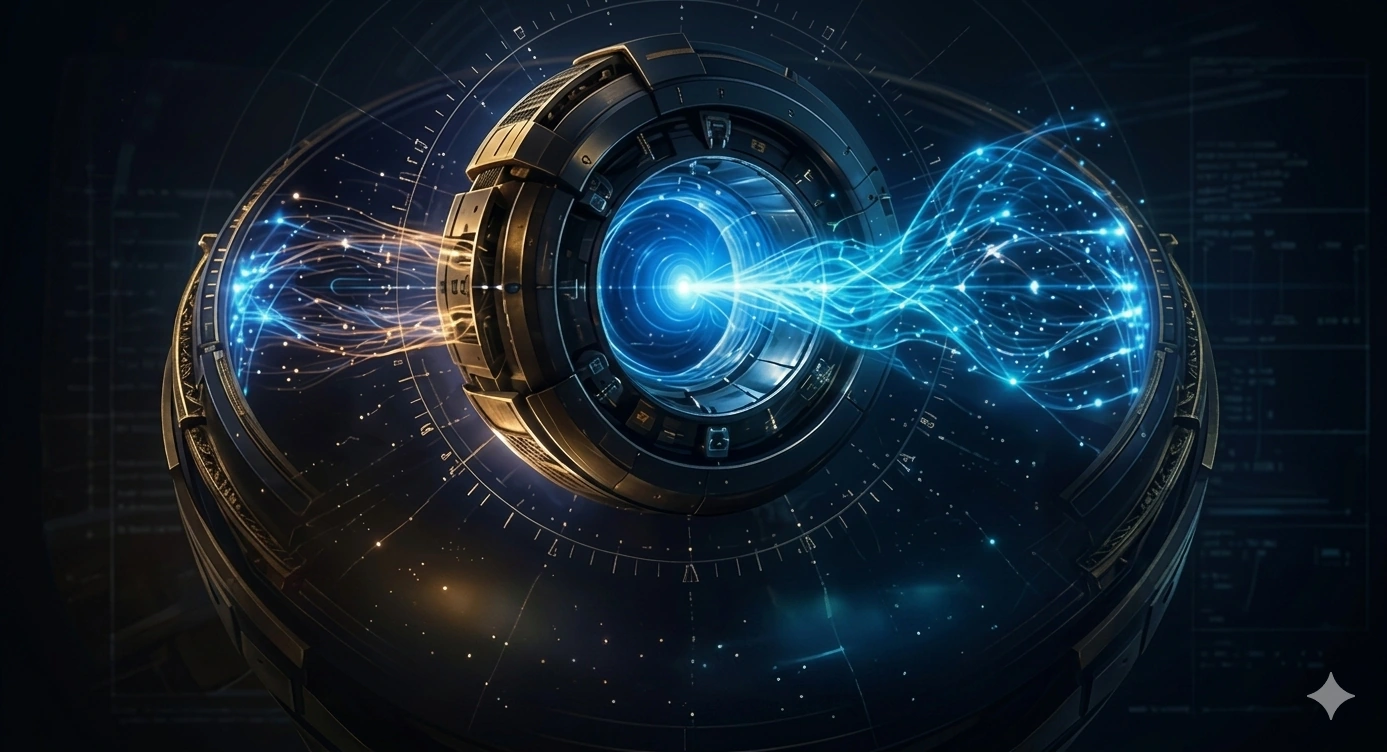
Clocks measure physical change and proper-time relationships. Causality determines accessibility. Entropy supplies macroscopic direction. Quantum theory uses time differently from relativity. Records make the past knowable. Biology and cognition create lived temporality. Cosmology may orient the entire structure.
Proper time, clock comparison, relativity, causal cones, thermodynamic behavior, quantum dynamics, and cosmological observation.
Temporal State Topology and Multi-Layer Temporal Architecture organize open questions without claiming a solved theory.
Temporal engineering is treated as a ladder with explicit validation gates, not as one imagined machine.
Three newly matured public modules connect the current Chrono-Anchor technical architecture to the latest controlled source package without attempting the later full Temporal Encyclopedia rebuild.
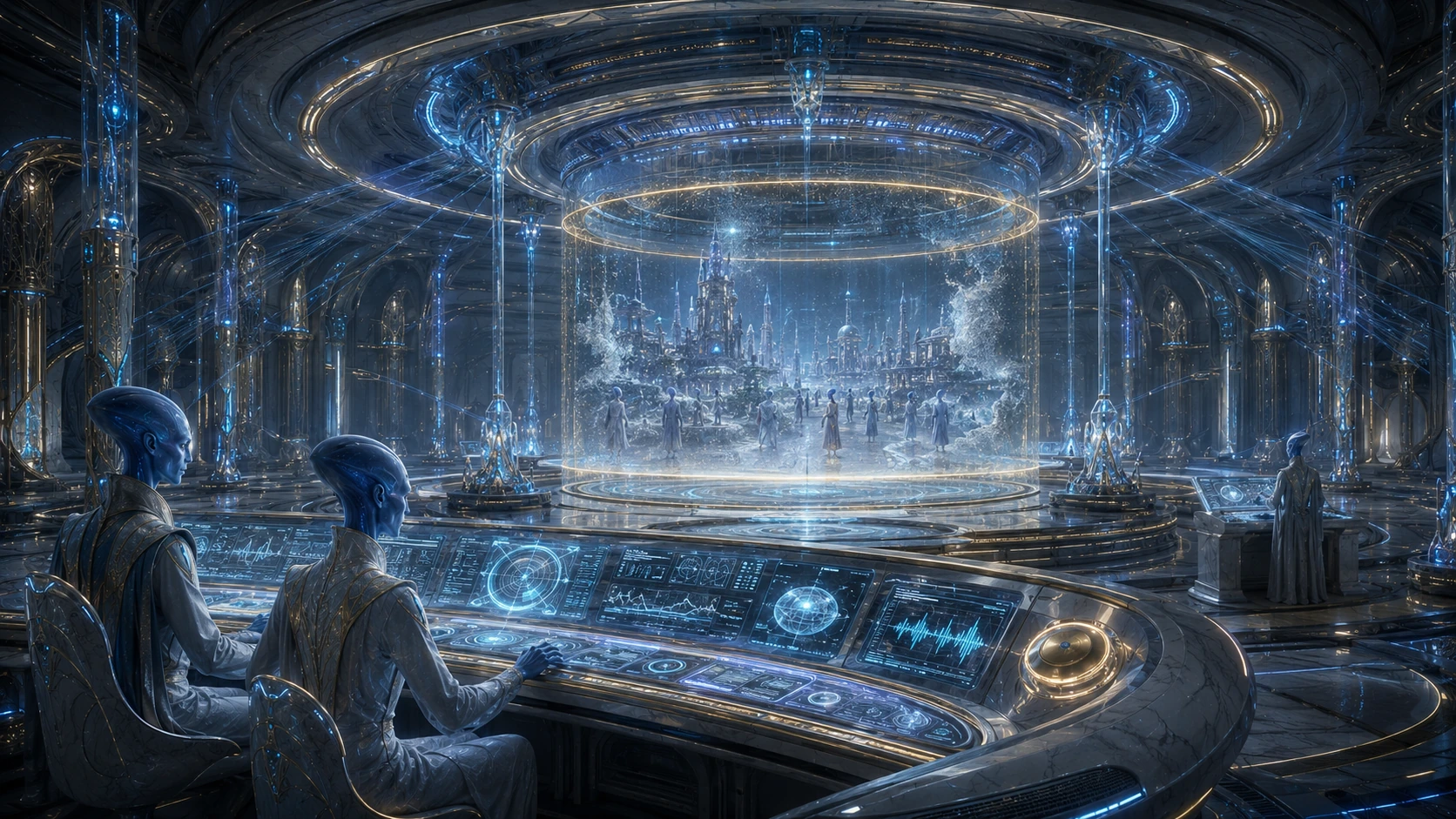
Receive-only modes, event addressing, evidence provenance, uncertainty, privacy, causal isolation, and safe collapse.
Open Module →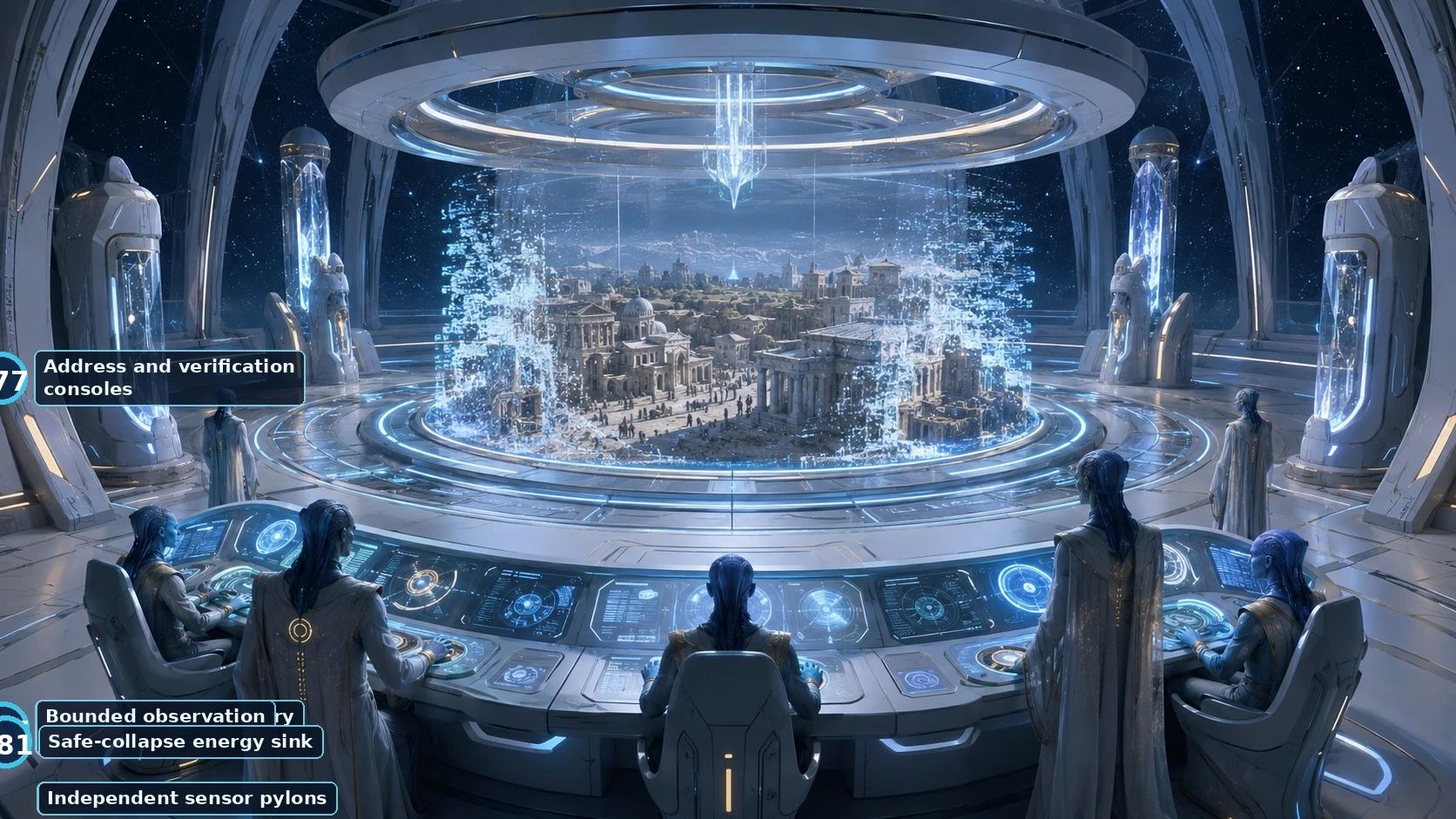
Operator consoles, citizen units, display honesty, authority separation, event addressing, refusal, and evidence custody.
Open Module →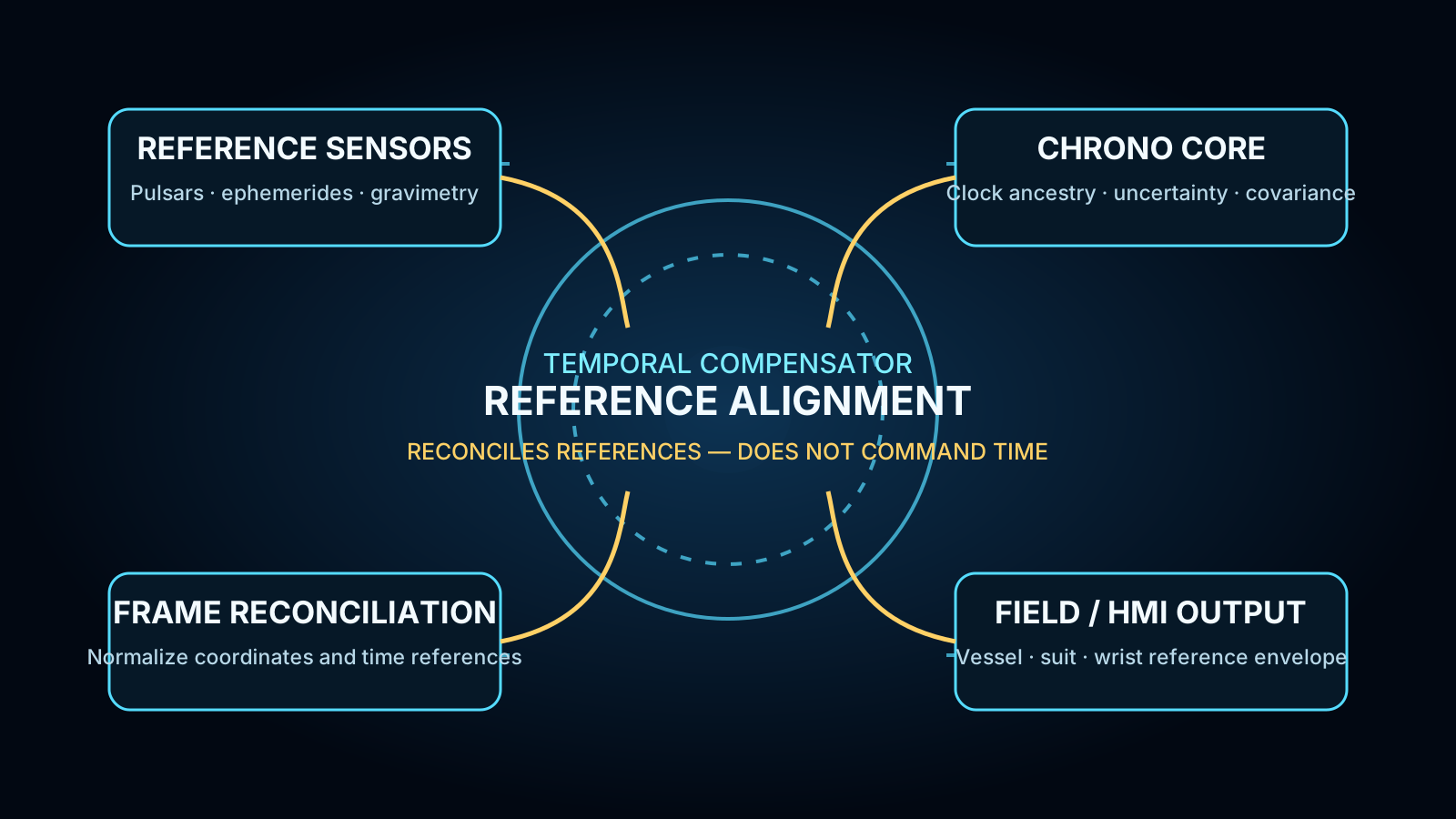
Clock ancestry, reference-frame alignment, ephemerides, uncertainty, field use, and personal/wrist implementations. Reconciles references; does not command time.
Open Module →The completed internal architecture contains 32 top-level sections. These public pages compress the strongest concepts into readable, claim-safe research modules.
Proper time, coordinate time, causal ordering, arrows, experience, and why “time” may refer to several structures.
Open Module →
Extra dimensions, compactification, branes, holography, emergent dimension, and why hyperspace is not simply “the fifth dimension.”
Open Module →
Accessibility between physical states as an alternative to the simplistic time-highway metaphor.
Open Module →
Geometric, causal, thermodynamic, quantum, informational, biological, experiential, and cosmological layers.
Open Module →
What clocks, interferometers, causal witnesses, gravitational waves, and cosmological observations would actually need to measure.
Open Module →
From precision time measurement and relativistic control to speculative topology and observer translation.
Open Module →
Horizons, frame dragging, information, cosmic time, expansion, entropy, beginnings, endings, and deep-time limits.
Open Module →
Core books, philosophy handbooks, relativity sources, quantum-time research, and the internal architecture boundary.
Open Sources →Synchronization/reference alignment and Temporal Viewer architecture now have public closure modules. Verification, JANUS coordination, and historical infrastructure remain separately controlled and will be integrated only as their own documents reach closure.
Proper time, declared coordinate frames, uncertainty, provenance, distributed chronology, transit quarantine, and the boundary between timing evidence and historical truth.
Open Public Module →Authentication, competing evidence, causal interpretation, dissent preservation, and refusal when the record cannot support certainty.
Receive-only observation, historical privacy, event addressing, uncertainty, causal isolation, psychological limits, and the boundary between viewing and access.
Open Public Module →Distributed photonic intelligence, refusal authority, independent references, governance limits, and human oversight.
Deep-time archives, continuity vaults, anti-entropy memory, cultural custody, and access rights.
Physics, philosophy, experimental architecture, claim boundaries, technical white papers, and public-safe systems design.
The separate story/IP branch presents the Aionari, Epoch Vaults, Temporal Rescue, Continuity Law, JANUS, characters, places, and the novel series.
Open the Story Universe →