← Back to Methalox Orbital Engine

Turbomachinery · Module 3

LOX Turbopump Assembly

Oxygen turbopump assembly vocabulary: inducer, impeller, bearings, seals, turbine drive, instrumentation, and thermal boundaries.

Public-safeAssembly-levelNo proprietary dataInterview-ready vocabulary
LOX Turbopump Assembly technical rendering

Architecture Role

The LOX turbopump page communicates that oxygen-side machinery is not just a pump bolted to an engine. It is a rotating cryogenic subsystem with oxygen compatibility, start-transient behavior, cavitation margins, rotor dynamics, seal strategy, thermal gradients, and health monitoring.

The visual treatment should look like aerospace hardware, but the text should stay disciplined. A credible public page can discuss why bearings, seals, inducer conditions, discharge stability, and vibration monitoring matter. It should not claim a specific impeller design or reveal internal clearances, speeds, materials, coatings, or manufacturing process details.

Public boundary: this page intentionally avoids private CAD, dimensions, line sizing, materials trade data, performance margins, control logic, injector geometry, pump maps, and verification results.

Subsystem Focus

Focus 1Treat the LOX turbopump as a high-risk subsystem with bearings, seals, rotor dynamics, cavitation, and oxygen compatibility.
Focus 2Show assembly-level awareness without implying proprietary pump geometry.
Focus 3Include sensor placement logic: speed, vibration, inlet pressure, discharge pressure, temperature, and health monitoring.
Focus 4Keep material selection and detailed clearances out of the public web layer.

Professional Discussion Frame

For a technical audience, the strongest posture is to discuss interfaces, requirements flow-down, failure modes, manufacturability, inspection access, and verification strategy. That keeps the conversation grounded and prevents the page from sounding like unsupported propulsion claims.
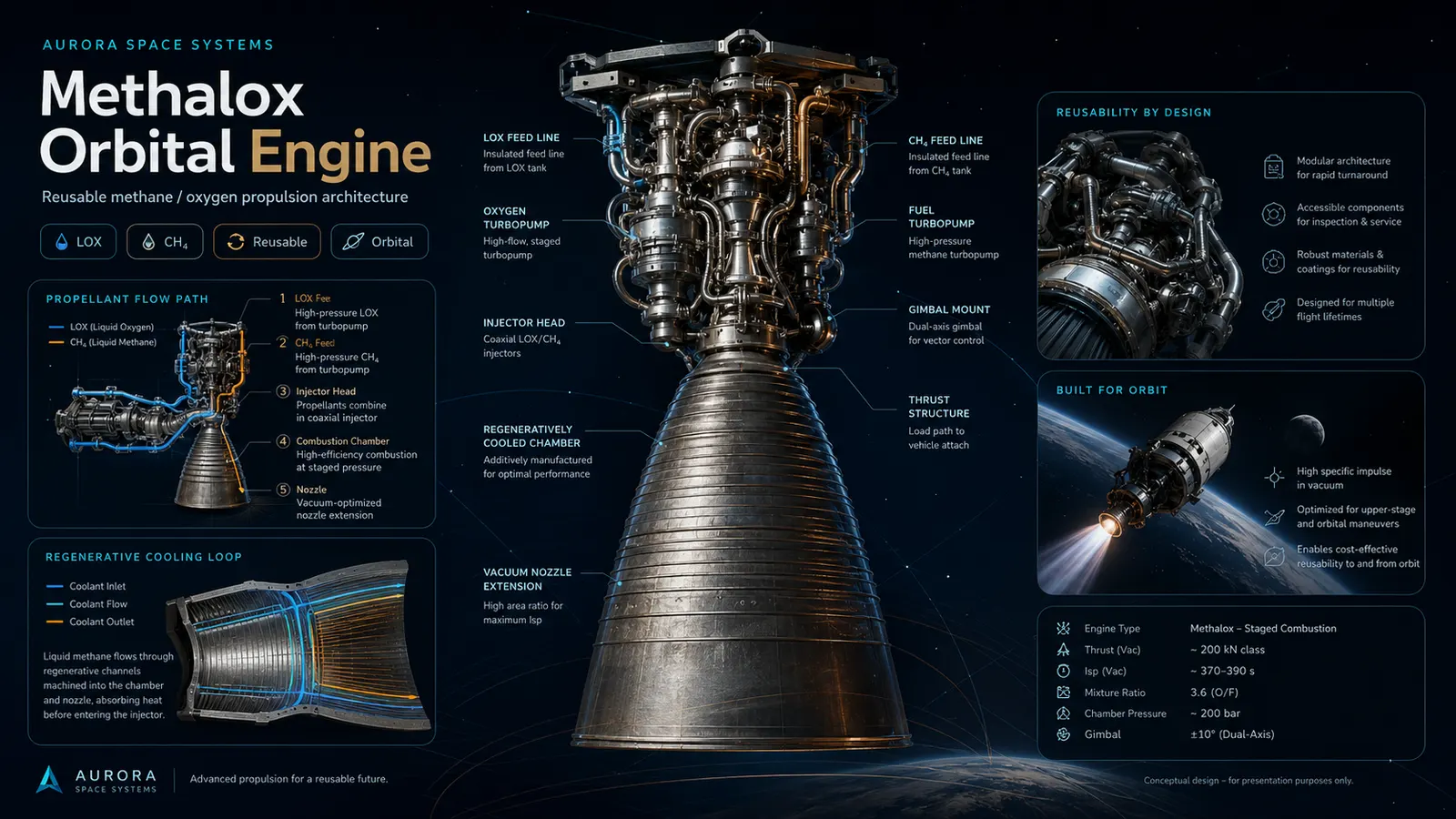
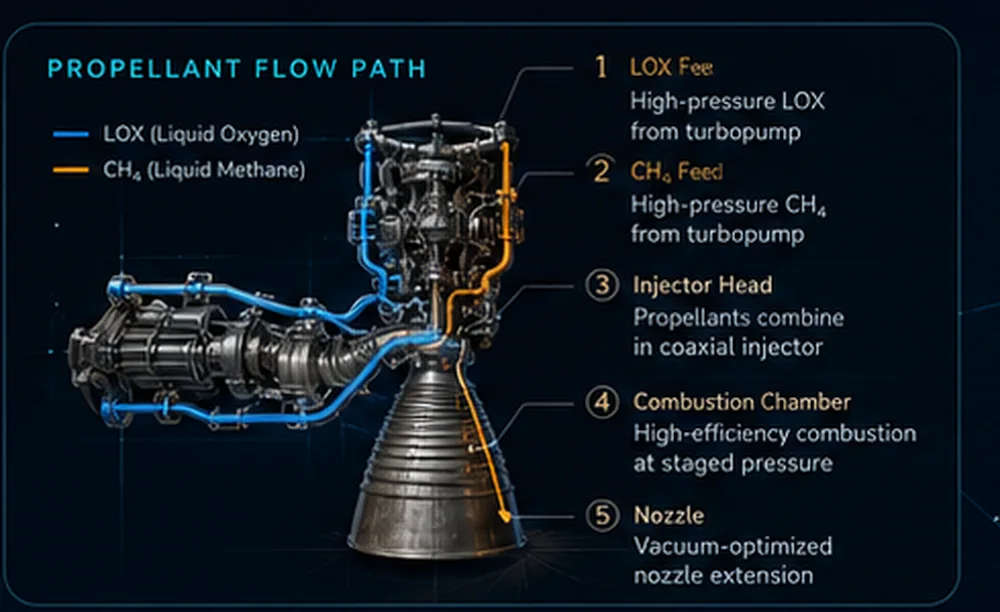
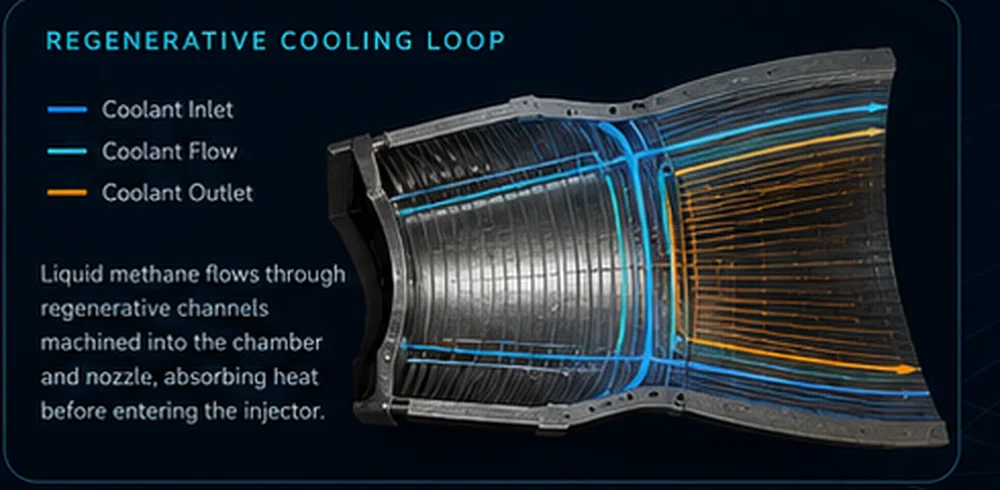
System overview boardFeed system diagramRegenerative cooling loop
i
Concept layer only.
Use this as a public-facing architecture explanation, not as certified engine design data.