← Back to Methalox Orbital Engine

Testing · Module 13

Test & Integration

Subsystem qualification, cold-flow, chilldown, ignition tests, hot-fire progression, data review, and vehicle integration.

Public-safeAssembly-levelNo proprietary dataInterview-ready vocabulary
Test & Integration technical rendering

Architecture Role

The test page is where the concept becomes disciplined. A credible path moves through analysis, parts inspection, cold-flow, chilldown, valve timing, ignition tests, short-duration hot-fire, full-duration hot-fire, vibration/loads evaluation, post-test inspection, and integration with the stage.

The page should not pretend that the system is qualified. It should show the ladder that a real program would need, and make clear that verified data, anomaly reviews, and acceptance thresholds remain private.

Public boundary: this page intentionally avoids private CAD, dimensions, line sizing, materials trade data, performance margins, control logic, injector geometry, pump maps, and verification results.

Subsystem Focus

Focus 1Show a staged verification ladder rather than jumping from concept to flight.
Focus 2Discuss cold-flow, chilldown, valve actuation, ignition, short-duration hot-fire, long-duration hot-fire, and post-test inspection as categories.
Focus 3Avoid test data, pass/fail thresholds, and internal anomaly logic.
Focus 4Connect instrumentation and manufacturing inspection to test readiness.

Professional Discussion Frame

For a technical audience, the strongest posture is to discuss interfaces, requirements flow-down, failure modes, manufacturability, inspection access, and verification strategy. That keeps the conversation grounded and prevents the page from sounding like unsupported propulsion claims.
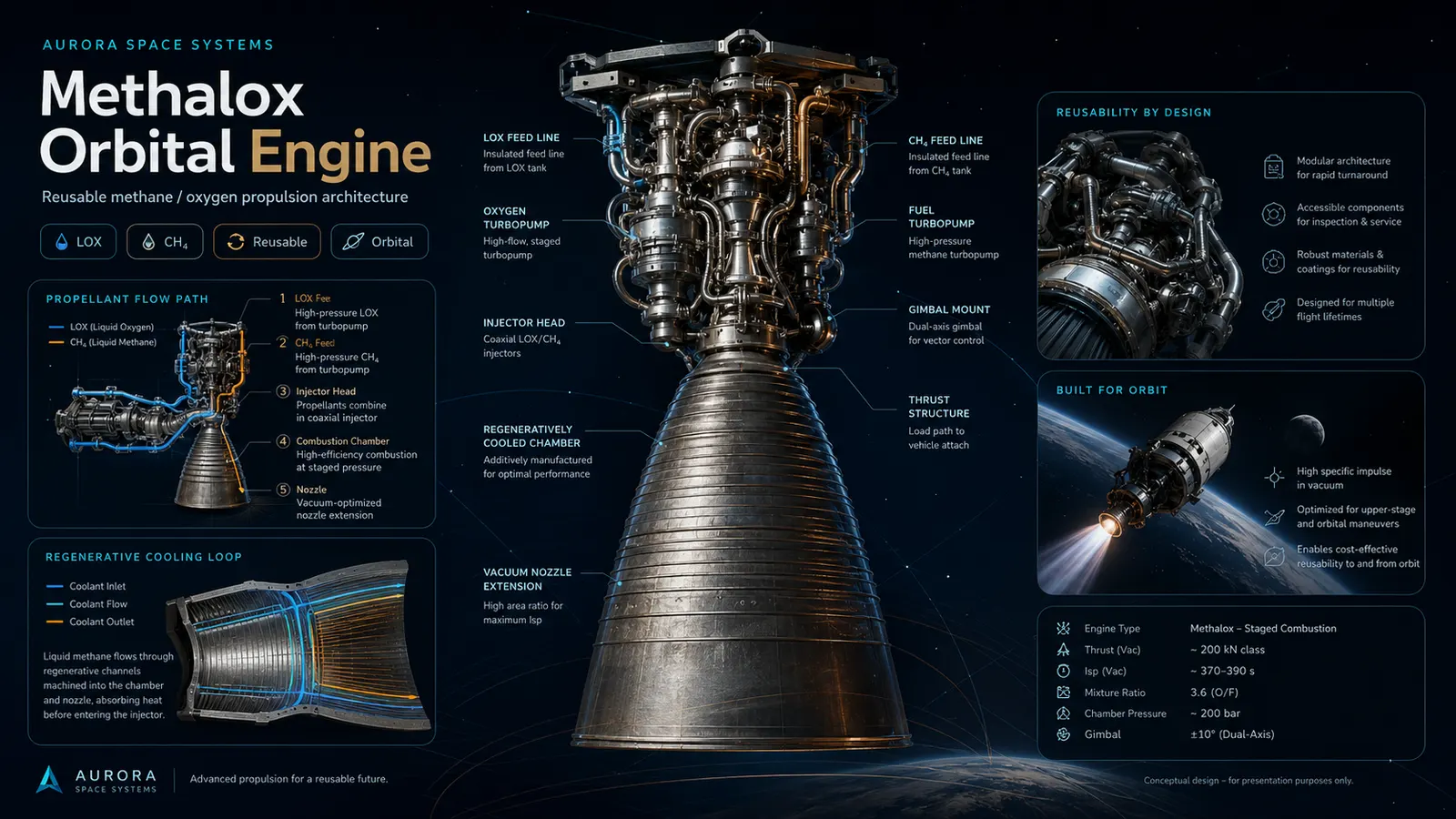
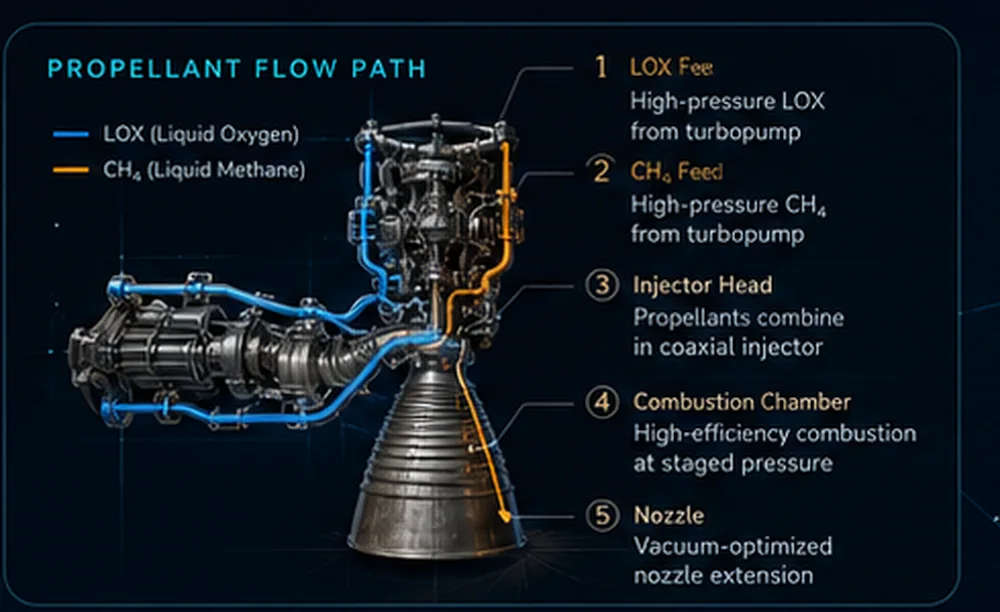
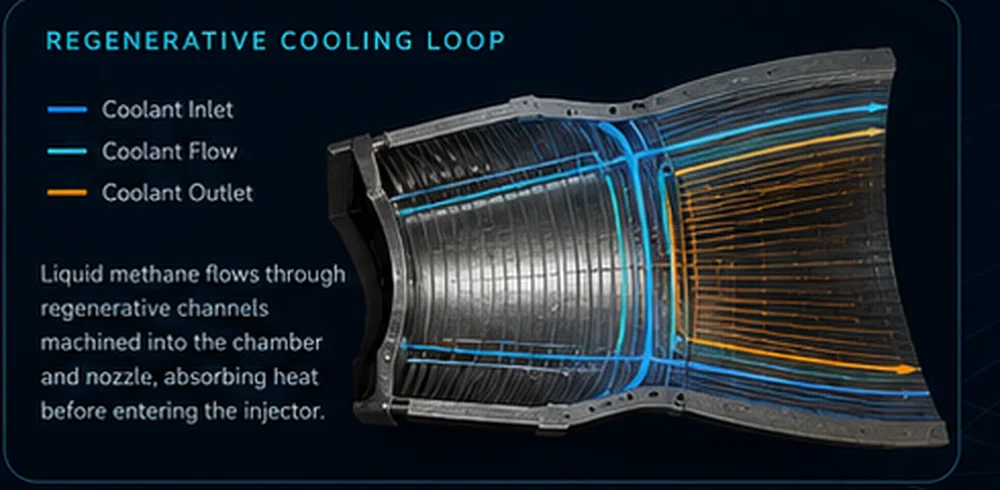
System overview boardFeed system diagramRegenerative cooling loop
i
Concept layer only.
Use this as a public-facing architecture explanation, not as certified engine design data.