← Back to Methalox Orbital Engine

Nozzle · Module 8

Nozzle & Vacuum Extension

Nozzle contour, expansion ratio trade space, extension packaging, thermal gradients, and vacuum operation framing.

Public-safeAssembly-levelNo proprietary dataInterview-ready vocabulary
Nozzle & Vacuum Extension technical rendering

Architecture Role

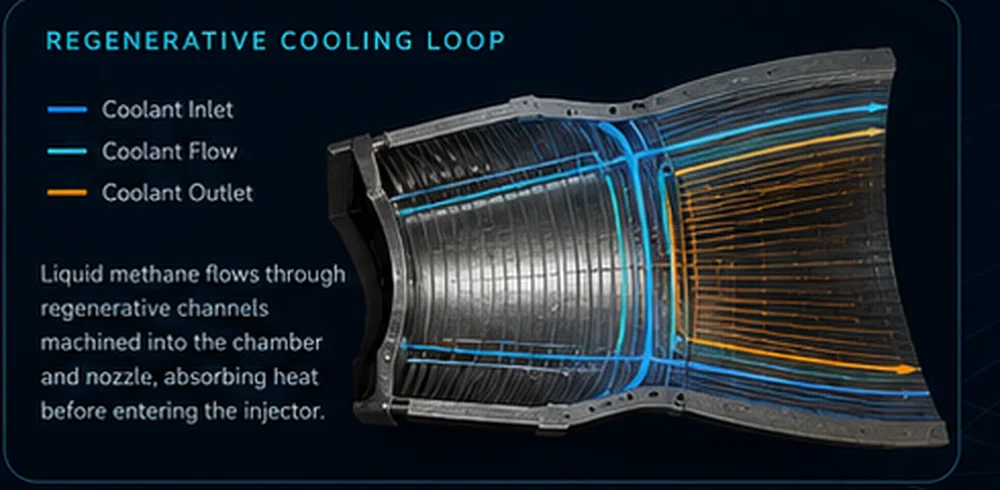
The nozzle page should signal that vacuum performance is a systems trade. A larger extension can improve expansion in vacuum, but it also creates packaging, stiffness, thermal, acoustic, fabrication, and handling challenges. A professional audience will expect the page to recognize these tradeoffs.

A credible public treatment shows the nozzle extension, throat-to-bell transition, thermal protection concepts, and service inspection areas. It does not claim a final contour or expansion ratio without verified analysis and test data.

Public boundary: this page intentionally avoids private CAD, dimensions, line sizing, materials trade data, performance margins, control logic, injector geometry, pump maps, and verification results.

Subsystem Focus

Focus 1Frame the nozzle as an expansion and integration trade, not just a giant cone.
Focus 2Discuss vacuum performance, length constraints, thermal loads, vibration, and serviceability.
Focus 3Avoid stating expansion ratio, Isp, contour math, or proprietary material choices.
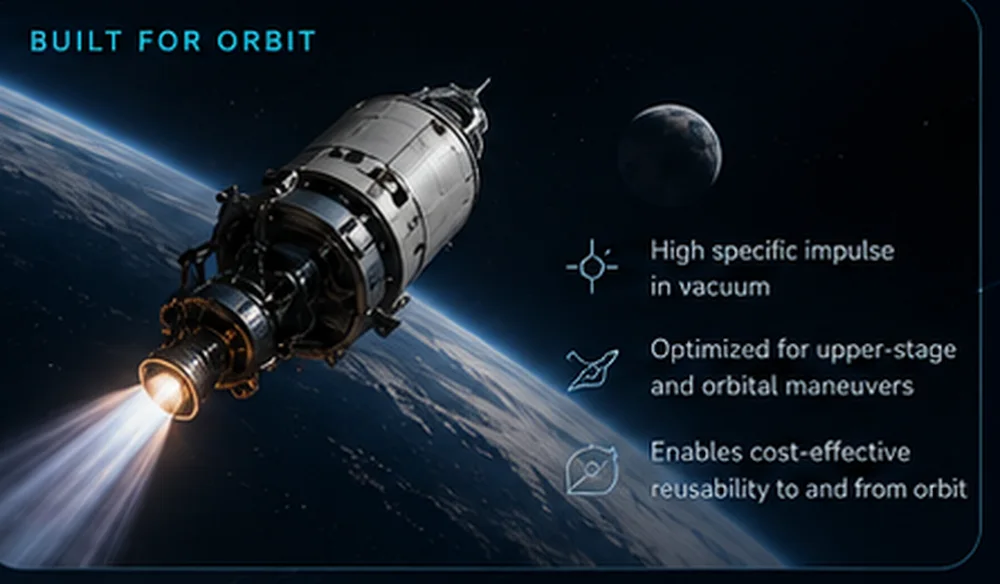
Focus 4Connect nozzle design to orbital transfer, upper-stage packaging, and reuse inspection.

Professional Discussion Frame

For a technical audience, the strongest posture is to discuss interfaces, requirements flow-down, failure modes, manufacturability, inspection access, and verification strategy. That keeps the conversation grounded and prevents the page from sounding like unsupported propulsion claims.
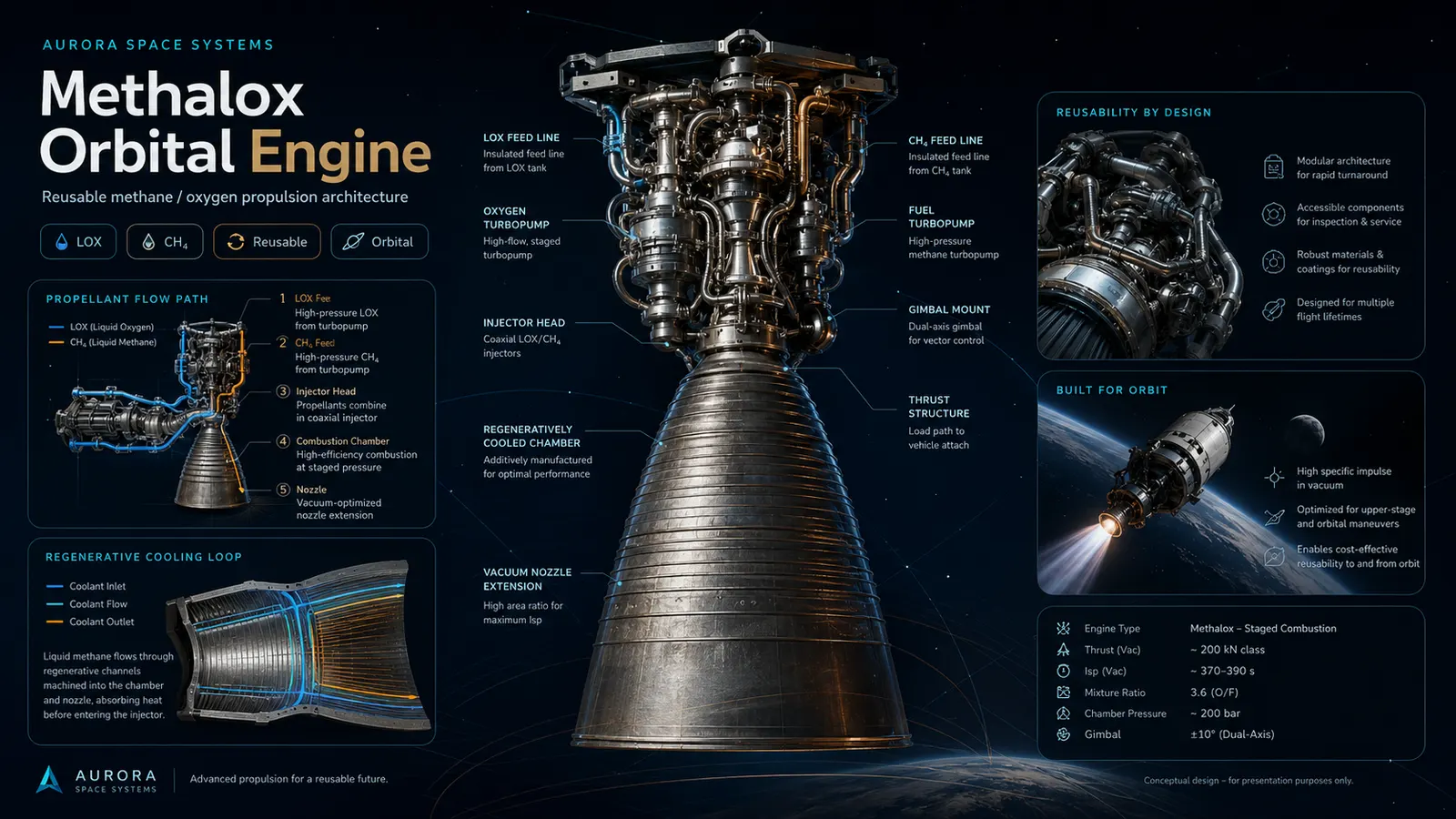
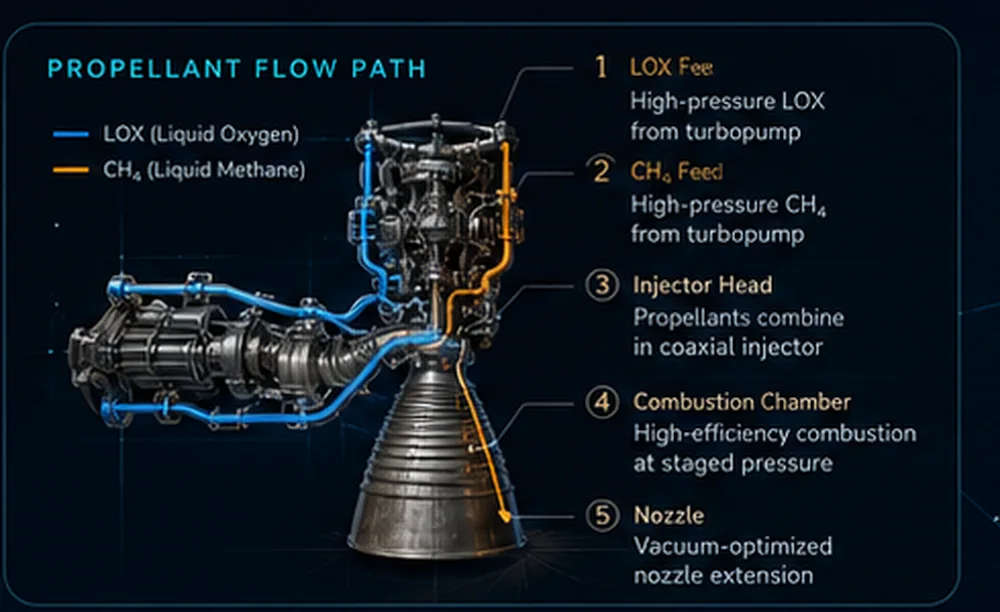
System overview boardFeed system diagramRegenerative cooling loop
i
Concept layer only.
Use this as a public-facing architecture explanation, not as certified engine design data.