← Back to Methalox Orbital Engine

Cooling · Module 7

Regenerative Cooling Network

Cooling-channel routing, methane heat pickup, manifold strategy, throat-zone thermal margins, and inspection considerations.

Public-safeAssembly-levelNo proprietary dataInterview-ready vocabulary
Regenerative Cooling Network technical rendering

Architecture Role

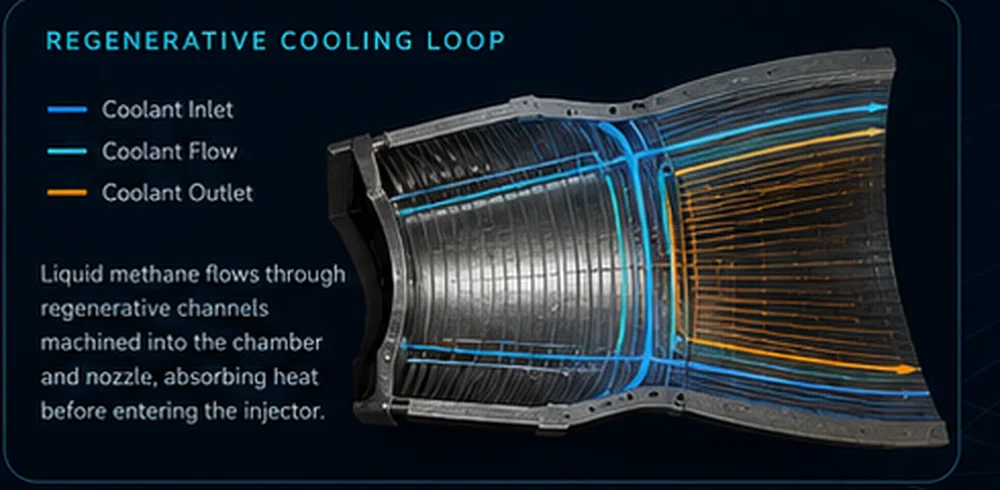
Regenerative cooling is the engine's survival system. A methane-cooled methalox chamber can use the fuel path to absorb heat before the propellant reaches the injector, but the cooling system is only credible when it is treated as a network with manifolds, channel routing, pressure drop, thermal gradients, inspection risk, and manufacturing constraints.

The page should show clear visual flow without pretending the graphic is a build drawing. It should explain that throat-region heat load, channel uniformity, wall thickness, manifold design, additive manufacturing quality, and nondestructive inspection all matter. Detailed channel geometry and margin calculations remain private.

Public boundary: this page intentionally avoids private CAD, dimensions, line sizing, materials trade data, performance margins, control logic, injector geometry, pump maps, and verification results.

Subsystem Focus

Focus 1Show coolant paths as a full network: inlet, distribution manifold, throat/chamber channels, collection manifold, and injector feed path.
Focus 2Emphasize thermal gradients, pressure drop, manufacturability, and clog/defect inspection.
Focus 3Use blue/orange flow overlays only as conceptual visualization.
Focus 4Avoid publishing channel counts, dimensions, flow rates, or thermal-margin calculations.

Professional Discussion Frame

For a technical audience, the strongest posture is to discuss interfaces, requirements flow-down, failure modes, manufacturability, inspection access, and verification strategy. That keeps the conversation grounded and prevents the page from sounding like unsupported propulsion claims.
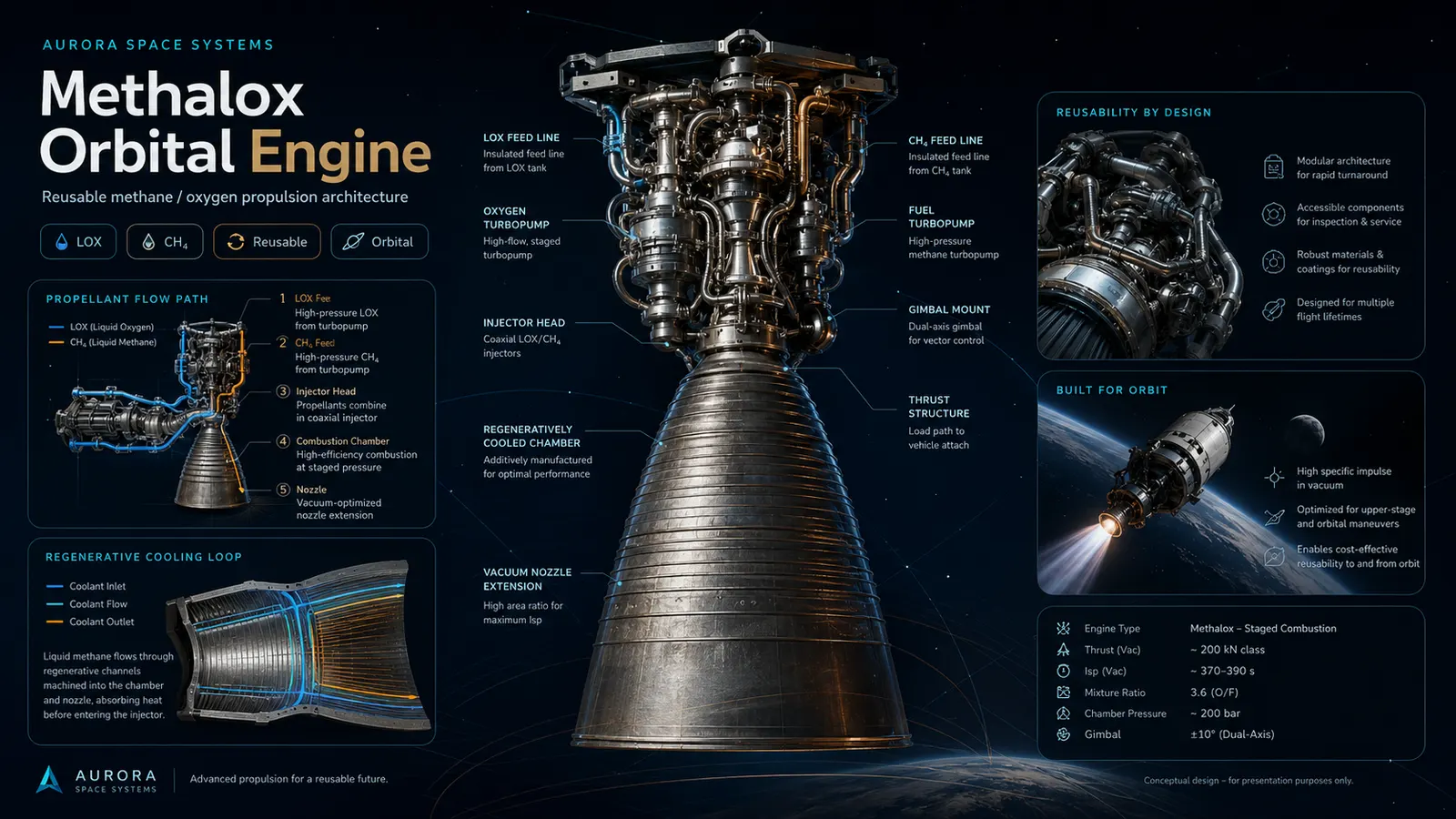
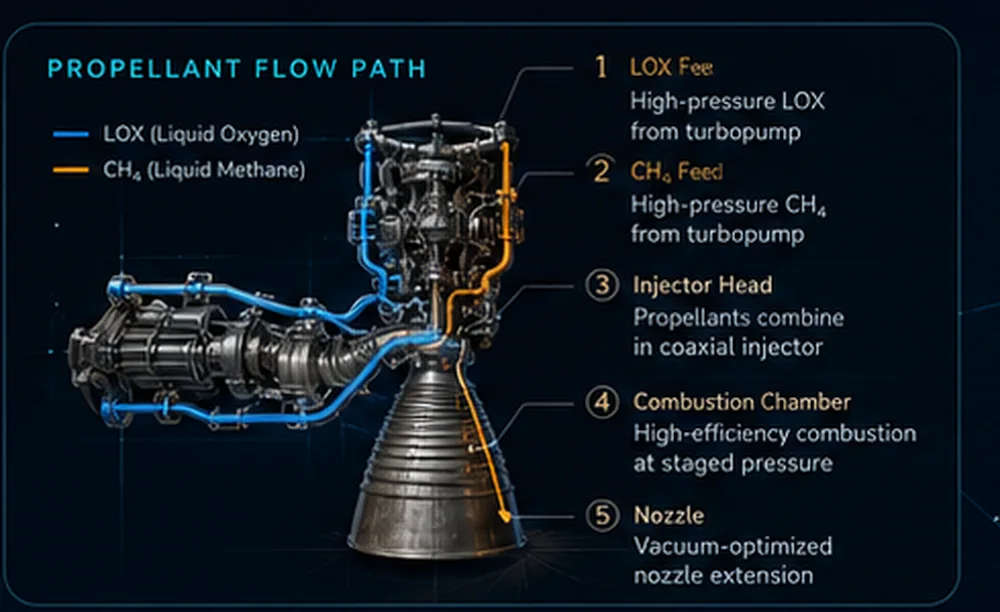
System overview boardFeed system diagramRegenerative cooling loop
i
Concept layer only.
Use this as a public-facing architecture explanation, not as certified engine design data.