← Back to Methalox Orbital Engine

Turbomachinery · Module 4

Methane Turbopump Assembly

Fuel turbopump assembly with methane-side thermal conditioning, seal strategy, drive integration, and control interfaces.

Public-safeAssembly-levelNo proprietary dataInterview-ready vocabulary
Methane Turbopump Assembly technical rendering

Architecture Role

The methane turbopump must be presented as more than a mirrored version of the oxygen turbopump. Methane may serve as a fuel, a coolant path, a thermal-management medium, and a start-transient participant depending on engine-cycle choices. That means the methane side touches feed architecture, cooling architecture, combustion stability, control logic, and serviceability.

A strong public explanation focuses on interfaces and failure modes: inlet conditioning, shaft/seal isolation, discharge stability, turbine-drive integration, sensor access, and maintenance pathways. Exact cycle choices, pump maps, rotational speeds, clearances, and efficiency assumptions remain private.

Public boundary: this page intentionally avoids private CAD, dimensions, line sizing, materials trade data, performance margins, control logic, injector geometry, pump maps, and verification results.

Subsystem Focus

Focus 1Separate methane-side risks from oxygen-side risks.
Focus 2Address methane conditioning, density management, start transient control, and pump discharge stability.
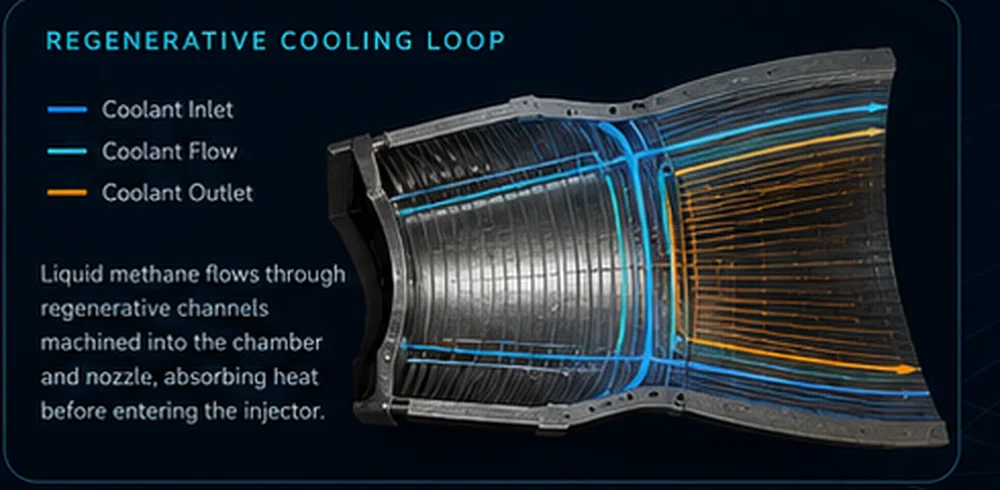
Focus 3Show the methane pump as part of both propulsion and regenerative cooling strategy.
Focus 4Avoid claiming exact cycle details if the public architecture has not been locked.

Professional Discussion Frame

For a technical audience, the strongest posture is to discuss interfaces, requirements flow-down, failure modes, manufacturability, inspection access, and verification strategy. That keeps the conversation grounded and prevents the page from sounding like unsupported propulsion claims.
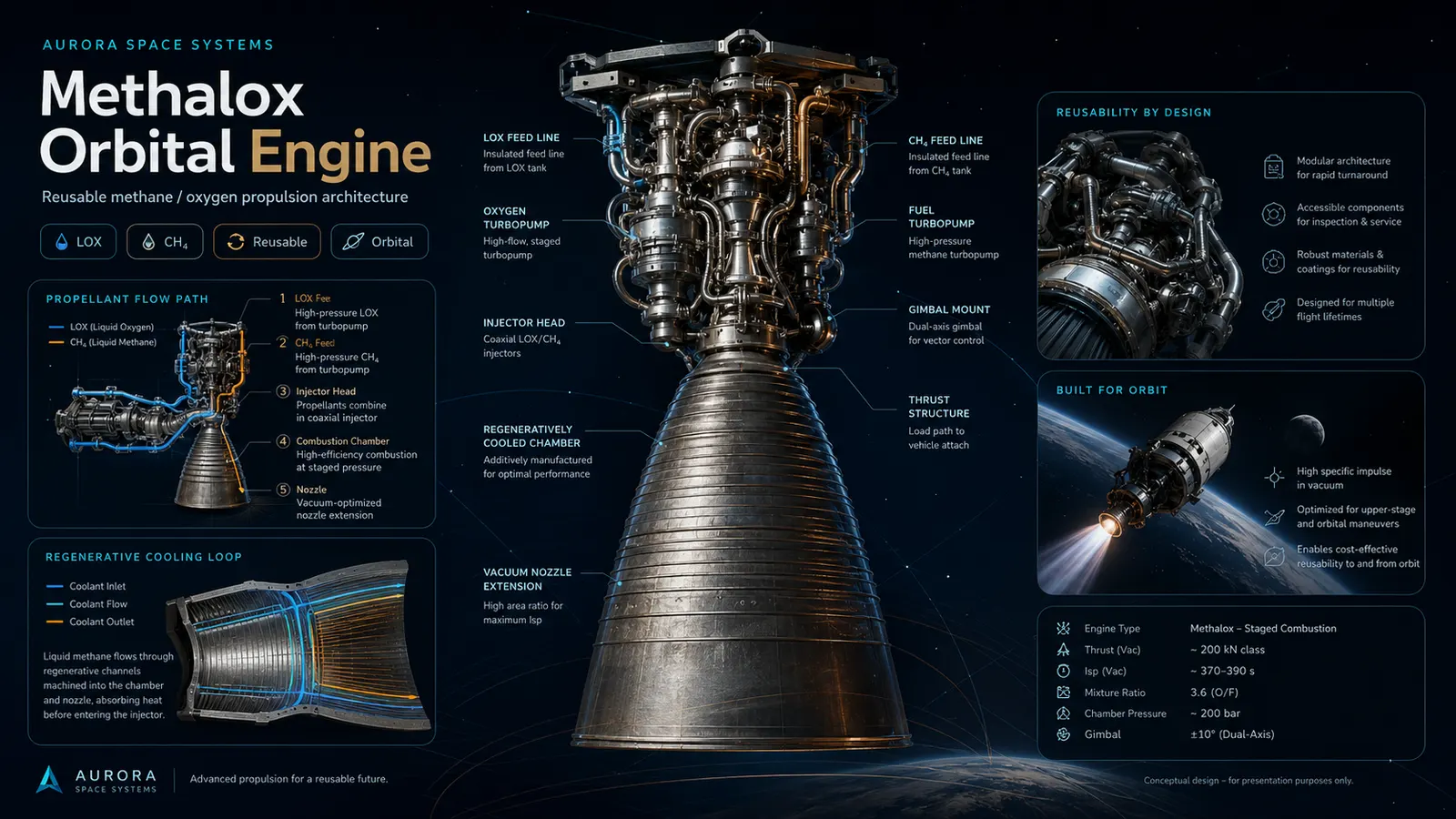
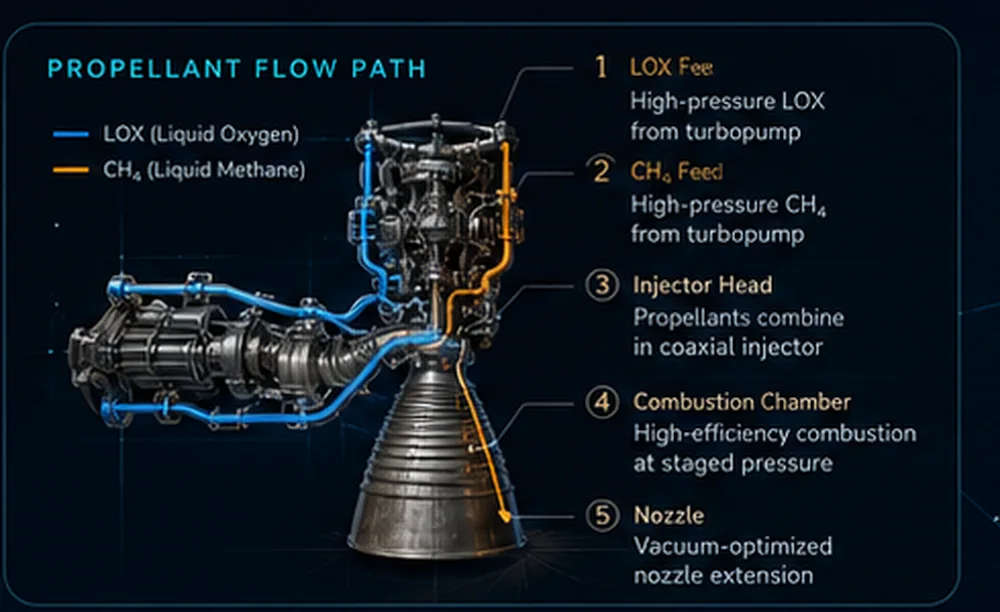
System overview boardFeed system diagramRegenerative cooling loop
i
Concept layer only.
Use this as a public-facing architecture explanation, not as certified engine design data.