
Sensing
Structural Health Monitoring
Public-facing sensing and condition-awareness concepts track structural trends, environmental exposure, and maintenance indicators across critical crossings.
Condition awareness AURORA DESIGN SYSTEMSEngineering Systems • Applied Research • Product ArchitectureContact
← Back to Sustainability & Infrastructure

Bridge infrastructure becomes more valuable when durability, structural health monitoring, inspection access, climate resilience, and multimodal transportation are designed as one lifecycle system.
The six existing bridge architecture areas are preserved and organized around service life, resilience, mobility continuity, and public value.
Public-facing sensing and condition-awareness concepts track structural trends, environmental exposure, and maintenance indicators across critical crossings.
Condition awareness
Advanced material systems, protective strategies, and corrosion-resistant structural concepts target longer service life and lower lifecycle maintenance burden.
Long-life structures
Bridge systems support road, rail, pedestrian, emergency, freight, and utility movement as part of complete regional transportation networks.
Multimodal continuity
Access planning, monitoring interfaces, inspection intervals, replacement pathways, and maintainability are treated as core architecture—not afterthoughts.
Maintainability by design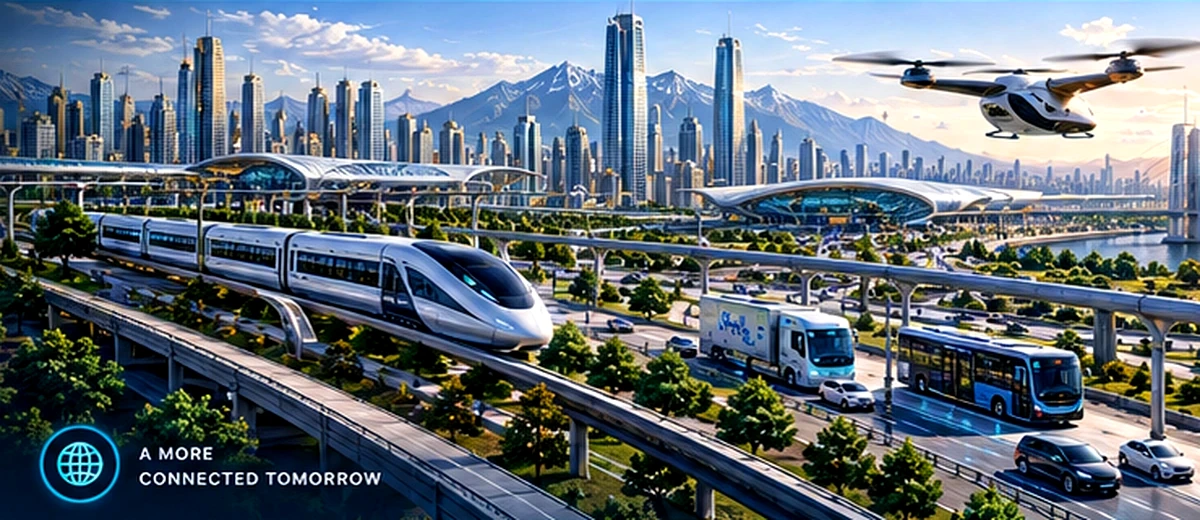
Future bridge systems must account for weather extremes, thermal movement, flood and scour risk, seismic loading, and long-term environmental variability.
Hazard-aware design
Reliable crossings sustain commerce, emergency access, public transit, logistics, and community continuity while reducing disruptive closures and detours.
Community continuity
Bridge value depends on the full service life: materials, inspection access, sensor integration, repairability, operational continuity, and responsible end-of-life planning.
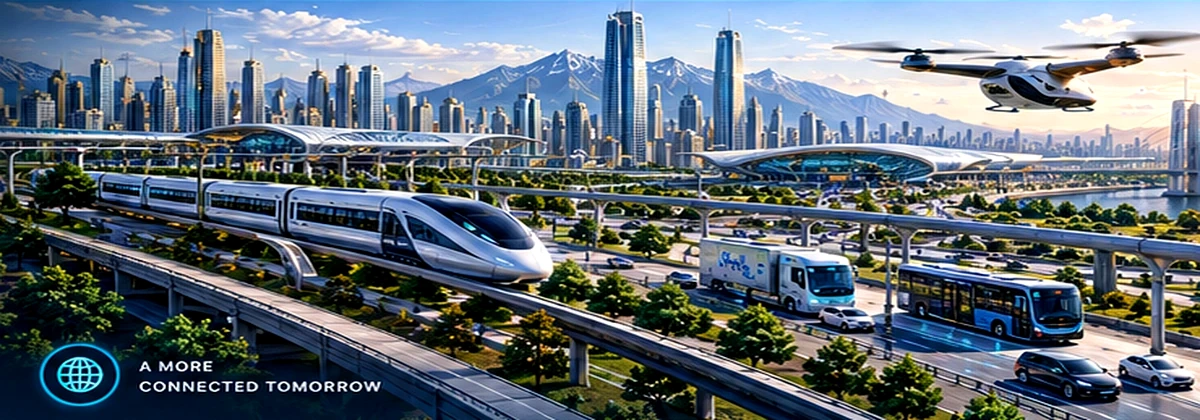
Road, rail, utilities, emergency movement, water management, and regional logistics can share coordinated corridor planning without turning the bridge into an isolated structure.
A durable bridge still fails its public mission if approaches, utilities, transit, drainage, emergency routes, or inspection systems cannot function with it. Bridge planning therefore belongs inside a broader mobility and infrastructure architecture.