
Membrane
Seawater Reverse Osmosis
Municipal and industrial seawater desalination architecture centered on membrane treatment, energy recovery, pretreatment, and reliable large-scale freshwater production.
Coastal membrane systems AURORA DESIGN SYSTEMSEngineering Systems • Applied Research • Product ArchitectureContact
← Back to Sustainability & Infrastructure
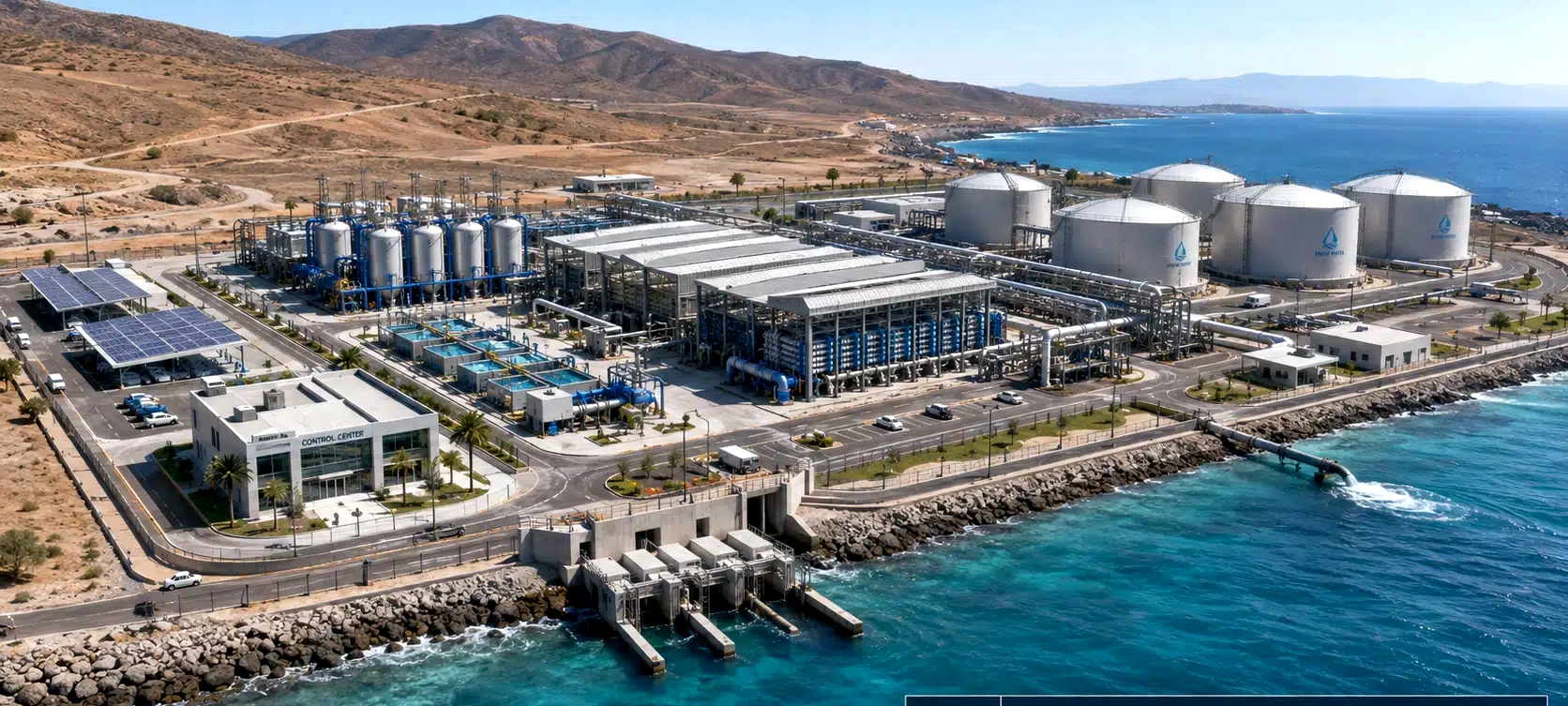
Desalination is treated as a full water-security system: seawater and brackish purification, thermal and renewable pathways, dependable energy coupling, brine recovery, and distribution into resilient municipal, industrial, and agricultural infrastructure.
The six established desalination architecture areas are preserved and given distinct roles across coastal, inland, thermal, renewable, hybrid-energy, and resource-recovery pathways.
Municipal and industrial seawater desalination architecture centered on membrane treatment, energy recovery, pretreatment, and reliable large-scale freshwater production.
Coastal membrane systems
Lower-salinity treatment for inland aquifers, industrial water, agricultural support, distributed systems, and drought-resilience programs.
Regional freshwater supply
Thermal desalination pathways can serve high-reliability coastal plants, industrial complexes, and energy-water systems where dependable heat is available.
Thermal water production
Photovoltaic, solar-thermal, and hybrid renewable architectures can reduce grid demand and support remote, island, arid-region, and lower-emissions water production.
Renewable water systems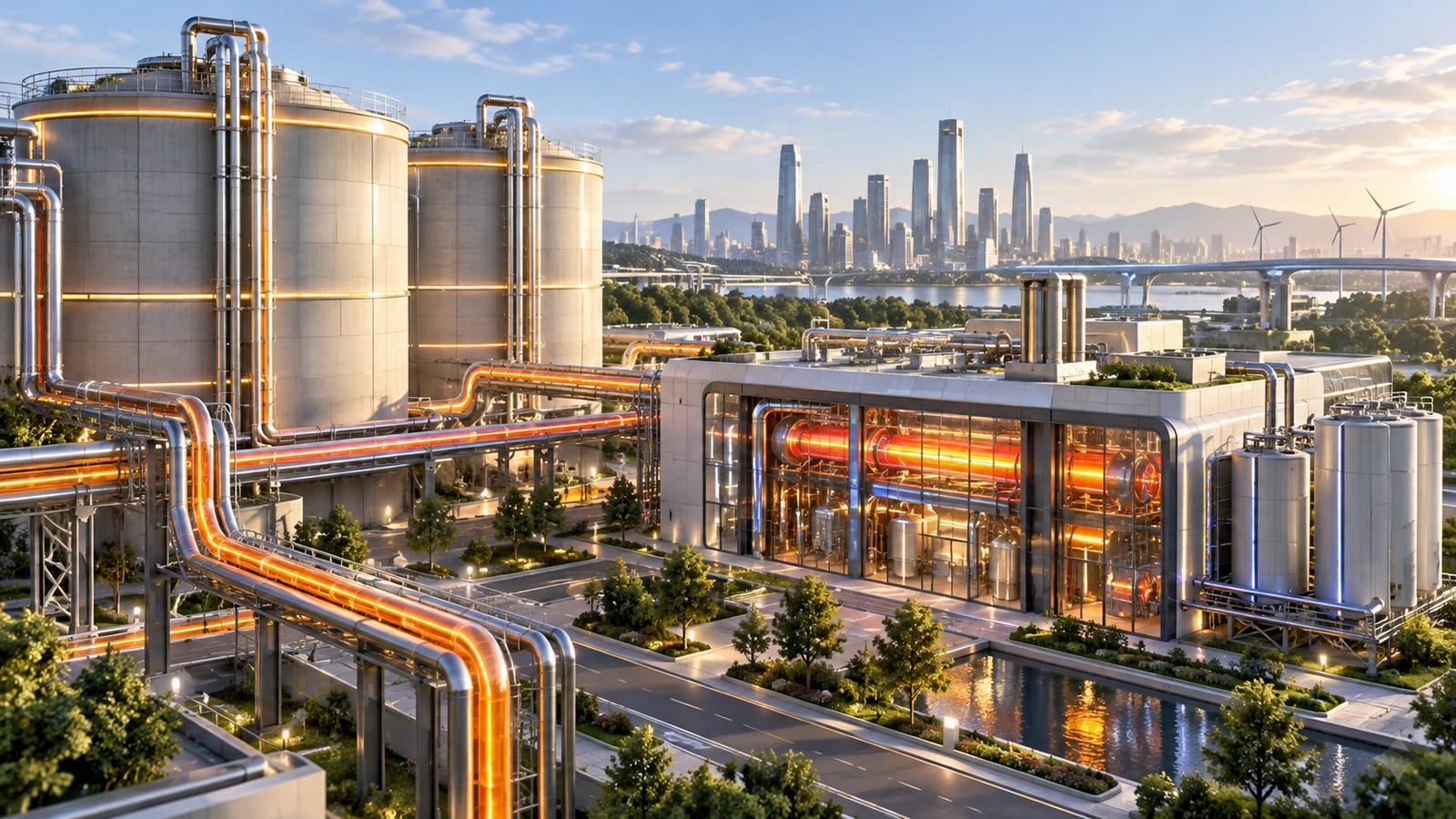
Co-located water production can use dependable electrical or thermal resources where integrated infrastructure improves resilience, efficiency, and continuity.
Energy + water integration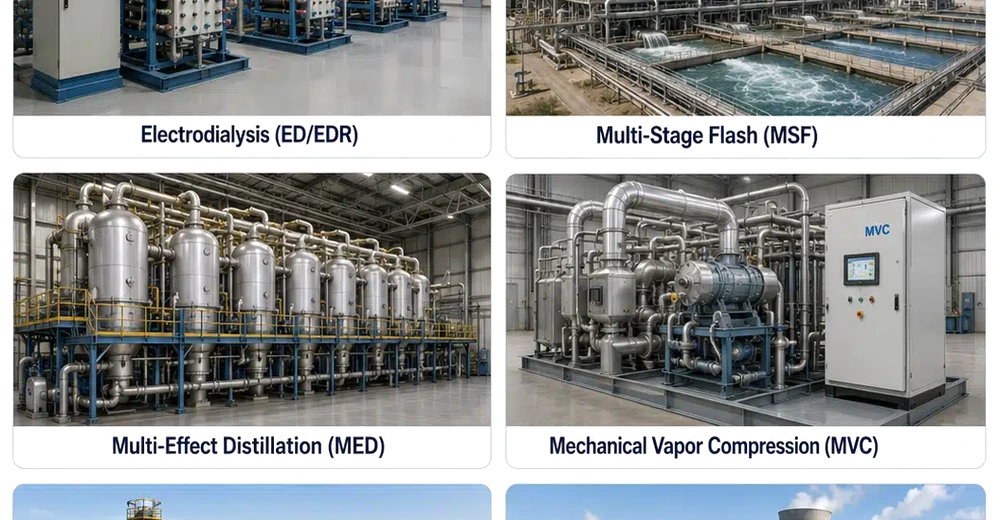
Public-safe brine-management architecture includes dilution, discharge planning, mineral recovery, resource reuse, and zero-liquid-discharge concept pathways without operating recipes.
Marine stewardship + recovery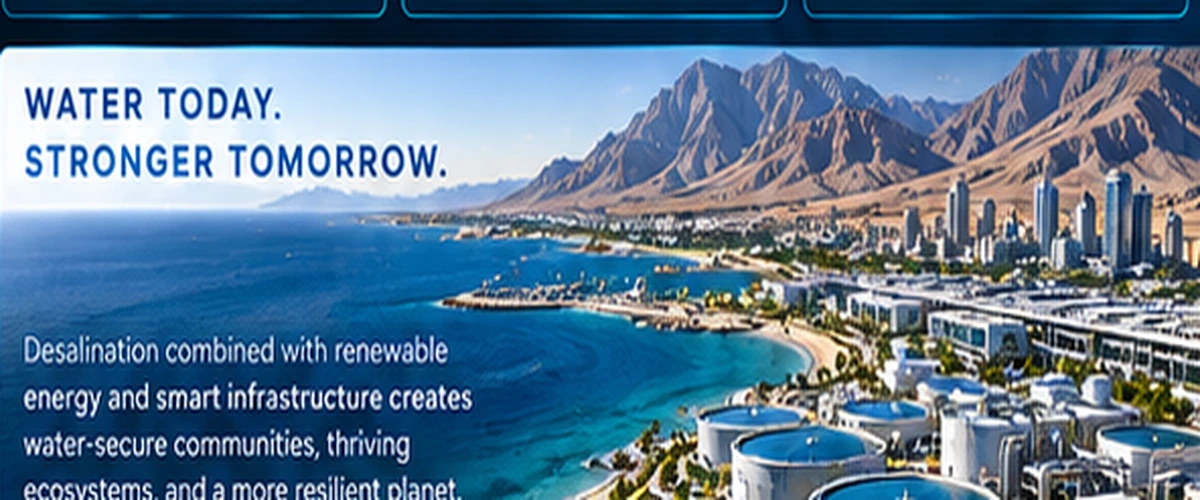
Desalination becomes most valuable when it is integrated with storage, distribution, drought planning, emergency supply, industry, agriculture, and long-term community infrastructure rather than treated as an isolated plant.
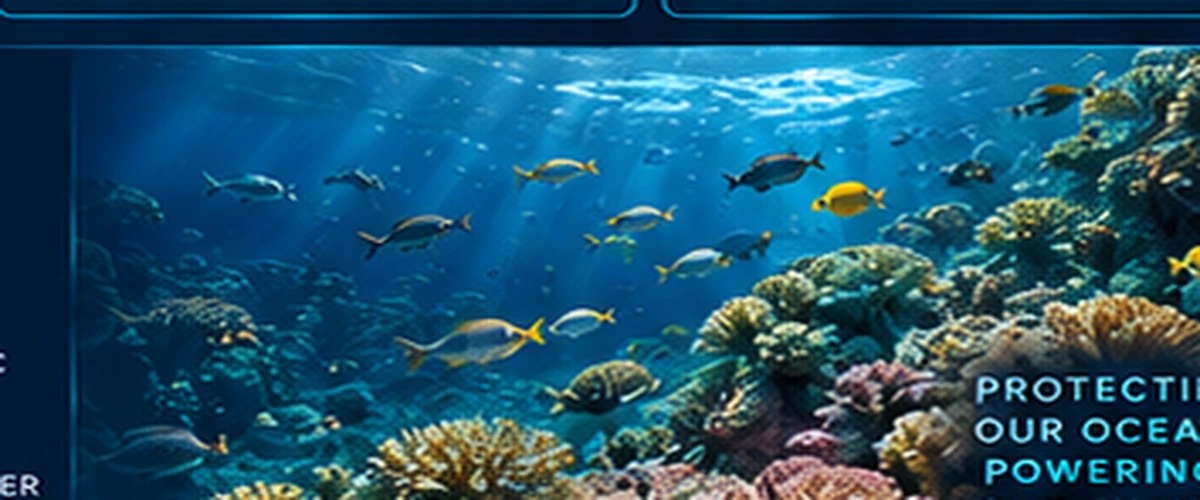
Intake siting, discharge design, monitoring, energy efficiency, and brine-management choices all affect how a desalination program interacts with coastal and marine ecosystems.
Salinity, source-water quality, climate, energy availability, distribution distance, ecological constraints, demand profile, and lifecycle requirements determine whether an application emphasizes SWRO, BWRO, thermal systems, hybrid energy, or distributed modular plants.